Qubit Without a Polymer Mask express
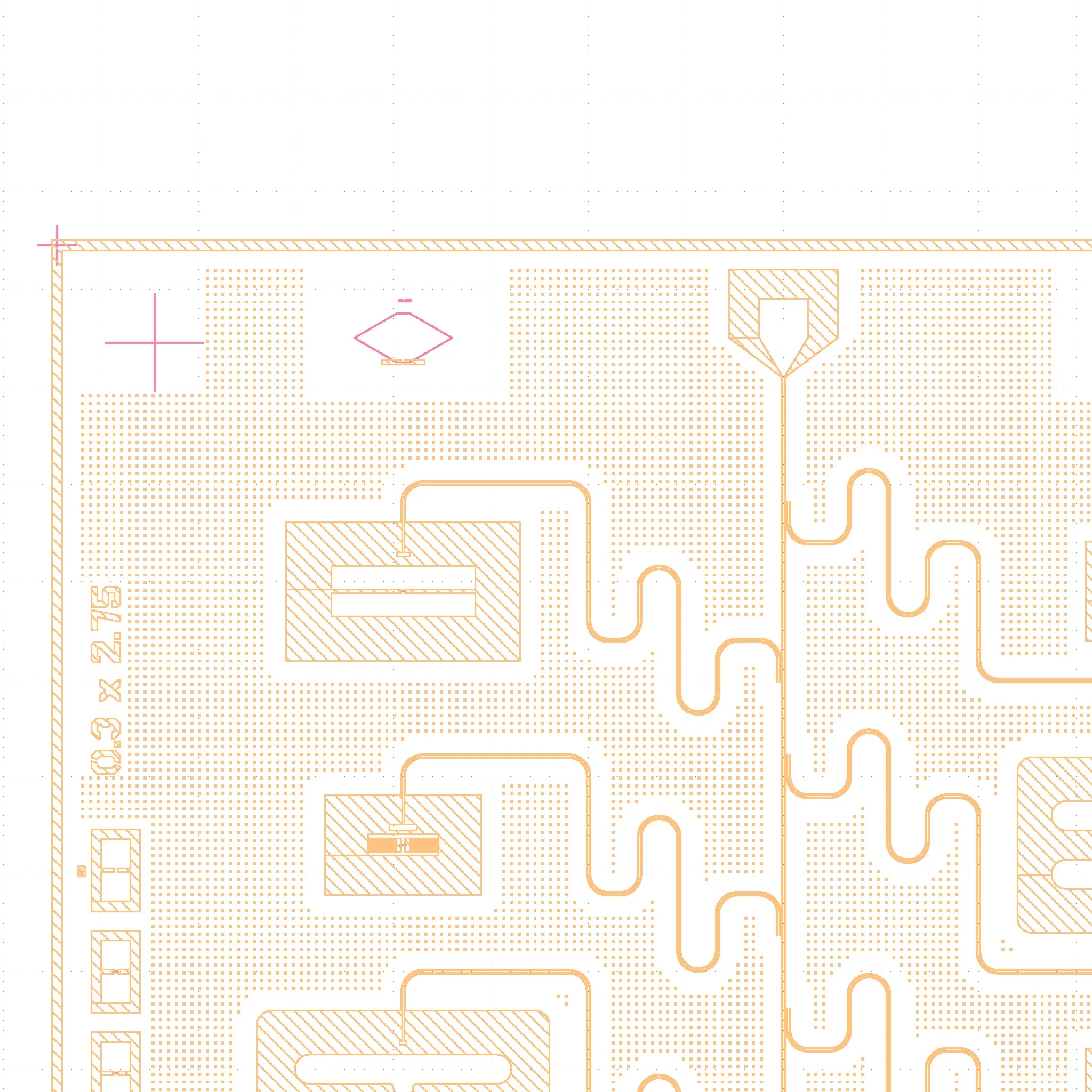
A quantum chip is like a layered cake: superconducting metal, a thin insulator layer, and more metal. Previously, layers were applied through a polymer mask, like a stencil for paint. The polymer left invisible droplets on the surface that degraded superconductivity and compromised cleanliness.
Now, the mask is gone. Instead, grooves are etched into the silicon, like furrows in a garden bed. Metal is deposited directly into these grooves, settling evenly without chemical residue. The method is compatible with standard chip fabrication: the same machines, the same technology.
Almost no contaminants were found at the metal-silicon interface. And the variation in qubit lifetime over 35 hours was narrow and steady, like a healthy person's pulse. This means the qubits behave predictably.
This approach expands the choice of materials and substrate cleaning methods. Quantum computers are getting closer to mass production, just like transistors once did.
Original abstract
as written by the authors arXiv:2604.09796
Superconducting qubit fabrication innovations continue to be explored to achieve higher performance. Despite improvements to base layer fabrication and processing, resist-based Josephson junction (JJ) schemes have largely remained unchanged. The polymer mask during deposition causes chemical contamination and limits in situ and ex situ surface preparation, junction materials, and scalability. Here, we demonstrate a resist-free approach to junction fabrication based on etched silicon trenches that is CMOS compatible and easily integrated into existing innovations in qubit base layer fabrication and chemical processing. We fabricate Al-AlOx-Al JJs and qubits using this method, measuring median energy relaxation times up to 184 microseconds. We find minimal contamination at the substrate-metal interface and fluctuations of energy relaxation on a 35 hour timescale that are narrow and normally distributed. The method widens the process window for substrate preparation and new materials platforms.
A superconducting qubit operates at temperatures below -272°C — colder than outer space.