How a key-shaped molecule picks the virus's lock express
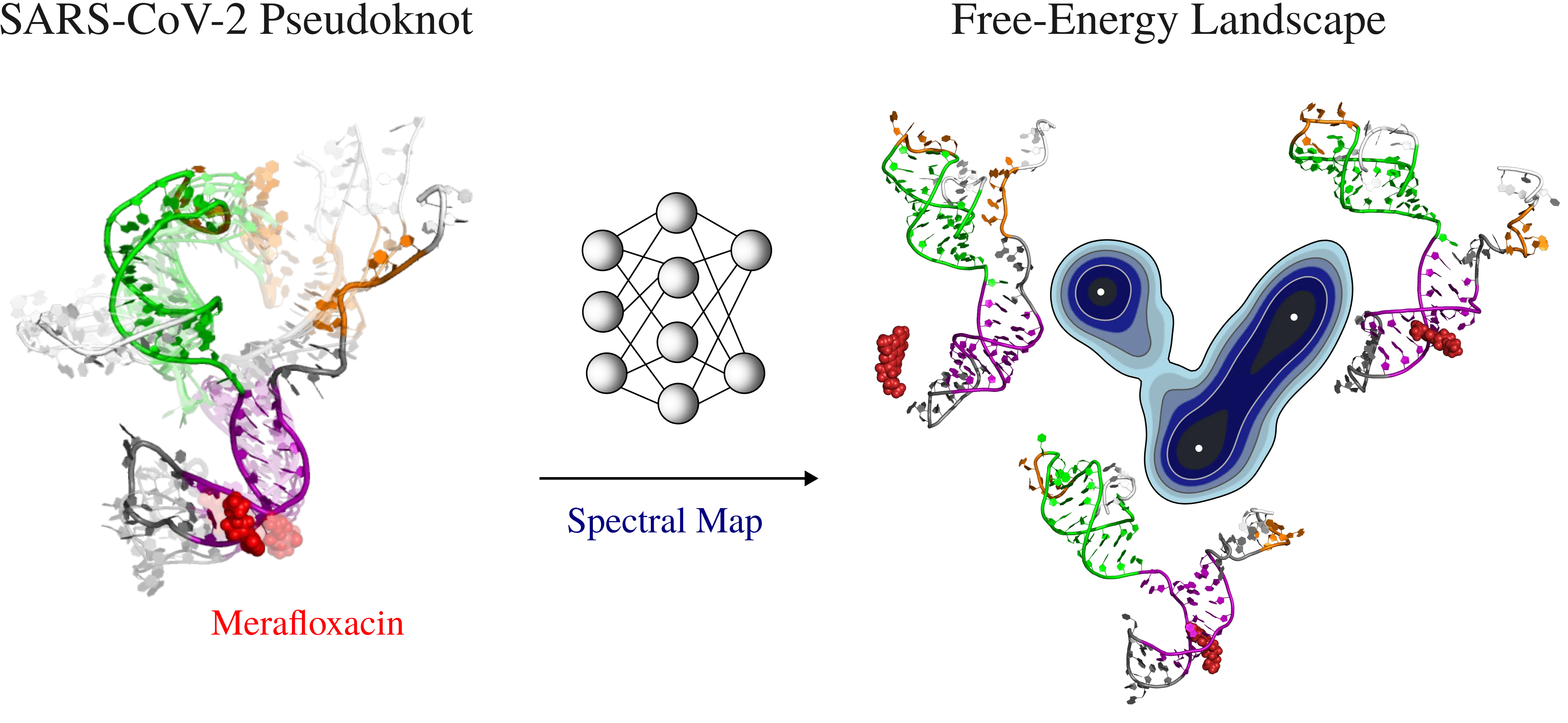
The RNA of SARS-CoV-2 is not just a chain but a complex structure. It contains a region that ties itself into a knot, much like a tangled shoelace. This knot helps the virus produce two proteins from a single stretch of genetic code. Without such a knot, the virus replicates less efficiently, so scientists are hunting for compounds that can undo it.
Computer simulations showed that three similar drugs act on the knot in different ways. If the knot is tied one way, the drugs break apart one part of it; if tied another way, they break two other parts. Moreover, the strength of this disruption matches exactly how well the drug stops the virus in a test tube. It's as if one key only fits one of two locks on the same door.
Now scientists know: to design a drug against the virus, you must consider both the knot's shape and the acidity. It's like fixing a clock mechanism: it's not just about replacing the spring, but also knowing which position the gears are stuck in.
Original abstract
as written by the authors arXiv:2604.14906
The pseudoknot secondary structure in SARS-CoV-2 RNA is essential for regulating protein synthesis through $$-$$1 programmed ribosomal frameshifting ($$-1$$ PRF), a mechanism that allows the virus to generate both structural and non-structural proteins from overlapping reading frames. This pseudoknot exhibits both threaded and unthreaded long-lived topologies. The influence of ligand binding on its folding is a process critical for the development of $$-$$1 PRF small-molecule inhibitors. Understanding this process through unbiased molecular dynamics (MD) simulations can be facilitated by introducing collective variables (CVs) that capture the corresponding slowest dynamical modes. Here, we use spectral map (SM), a thermodynamics-driven machine learning technique, to learn such CVs directly from all-atom MD trajectories of the SARS-CoV-2 RNA pseudoknot in complex with the $$-$$1 PRF inhibitor merafloxacin and its two structural analogs in neutral and ionized forms. Free-energy landscapes (FELs) derived from the learned CVs indicate that ligand-induced destabilization is topology-selective. In the threaded pseudoknot, the inhibitors destabilize the S2 stem, while in the unthreaded pseudoknot, destabilization occurs in the S1 and S3 stems. Furthermore, the extent to which each ligand reshapes the FEL matches experimentally reported antiviral potency, whereas the protonation state qualitatively alters dynamics within the same RNA topology. Overall, our results show how pseudoknot topology, ligand type, and protonation state collectively influence the slow conformational dynamics of viral RNA and establish physiological protonation as a critical factor for modeling RNA-targeted drug action.
The knot in coronavirus RNA makes the ribosome (the cell's protein-building machine) sometimes slip one step backward: this glitch is what lets the virus get two proteins from one stretch of code.
In science fiction, viruses are often shown hacking into a cell like a hacker into a program. Here, scientists are literally looking for an 'antivirus' that prevents malicious code from executing.