The fundamental question — how sequence determines structure — was posed by Christian Anfinsen in the 1950s, who showed that ribonuclease can refold spontaneously in vitro, earning him the 1972 Nobel Prize in Chemistry. The computationalprediction of folding from sequence alone remained a grand challenge until the advent of deep learning tools like AlphaFold in 2020.
How it works
Folding is driven by the hydrophobic effect (nonpolar side chains cluster away from water), hydrogen bonding, van der Waals interactions, and disulfide bonds. The process is not a random search: proteins fold via a funnel-shaped energy landscape, where partially folded intermediates guide the chain downhill toward the native state. Molecular chaperones assist by preventing aggregation, and some proteins require cofactors or post-translational modifications to fold correctly. The entire process occurs on timescales from microseconds to seconds, depending on the protein's size and complexity.
In practice
Understanding folding is used in drug design (targeting misfolded proteins), in engineering novel enzymes and biomaterials, and in developing treatments for protein misfolding diseases. It also enables the design of de novo proteins with functions not found in nature.
Fun fact
A typical protein folds in milliseconds, but if it tried every possible conformation randomly, it would take longer than the age of the Universe — a paradox known as Levinthal's paradox, resolved by the energy landscape concept.
A droplet the size of a pea hangs in the air, held up by inaudible sound. Inside it, the protein ferritin, the very one that stores iron in our bodies, begins its dance. The water leaves, the dancers get crowded, and they line up in neat rows: that is how a crystal is born. But this dance has a conductor: polyethylene glycol, a long chain of repeating units.
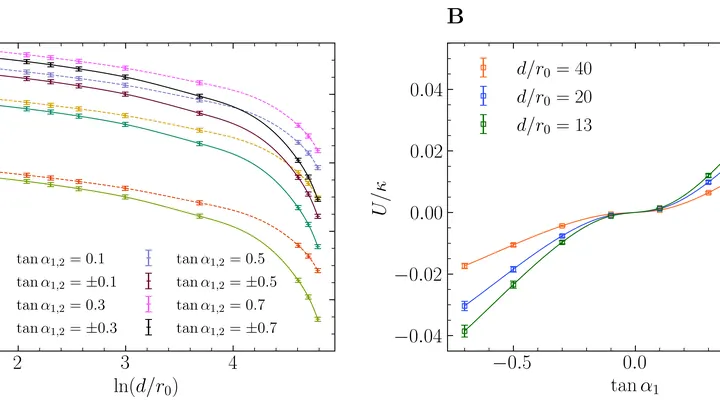
A cell monolayer resembles a crowd of people lined up one behind the other. If there are obstacles in the crowd, say two pillars, people must go around them, and vortices appear in the flow. In living tissue, such vortices are called topological defects, and they are not just a random occurrence but a way for the tissue to adapt to the shape of its surroundings.
A courier carrying a package enters a dense forest of intertwined ropes. He needs to deliver the cargo deep inside, but along the way he loses strength, and each step becomes harder. This is what an enzyme looks like as it degrades a dense gel of biological molecules. Until recently, no one could simultaneously see how the courier moves and how the forest thins out.
When an antibody meets a virus, it doesn't latch on with a single death grip. Rather, it's like two bunches of grapes tumbling in water, catching each other with dozens of short tendrils. Each tendril is weak on its own, easily torn by the thermal jitter of water molecules, but together they hold tight.
A protein chain folds into a working tool in a fraction of a second, and almost never makes a mistake. For a long time, it was thought that evolution specifically polishes amino acid sequences so that a protein not only works but also easily finds its unique shape. New work turns this idea on its head.
A protein in a cell is not a frozen sculpture but a restless mechanism. Its parts are constantly vibrating, and these movements determine how it grabs molecules, transmits signals, or builds the cellular scaffold. But filming the life of a single protein was hampered by two nuisances at once. First, the movements last millionths of a second — ordinary cameras simply cannot catch them.
Imagine a vast library where every book is a precise instruction manual for assembling one protein molecule. AlphaFold2 read millions of such books and learned to instantly produce a ready-made 3D model. But inside this network, in its very 'brain,' something more remained — not just assembly rules, but an entire atlas of possible protein motions, its hidden life.
In a world where Reynolds numbers are minuscule, water turns into thick syrup, and the swimming tricks we know stop working. Here reigns the insidious scallop theorem: reciprocal motions produce no net displacement. Microorganisms found a way out: they grow polymer tails.
Think of a massive cookbook: each recipe is a protein, and the finished dish is its job in the cell. To whip up a complex treat, you often need to mix several ingredients and let them 'set' into the right shape. Until now, scientist-chefs could only guess how someone else's recipes would fold.
A cell is like a library where thousands of books are copied every day. Molecular machines, polymerases and ribosomes, slide along a template chain and assemble a copy, link by link. These machines have several states: they can slow down, make mistakes, or switch. Previously, calculating such a process took hours.
A torn telephone wire is a nuisance, but a torn DNA is a catastrophe. A double-strand break, when both strands of the helix snap at the same spot, threatens the cell with death or transformation into cancer. Fortunately, the cell has its own 'glue': special proteins that gather into a droplet right at the accident site.
A crowd in a city square behaves differently depending on whether people hold hands. If each person only lightly touches a neighbor's elbow, people easily spread out in all directions — the crowd expands as a smooth carpet. But if they interlock fingers, movement slows down and the crowd breaks into clumps: dense clusters form here and there, with empty corridors between them.
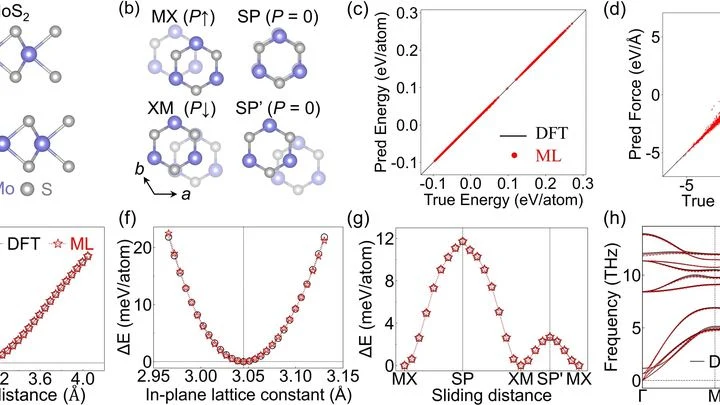
Two sheets of paper stacked together start to creep ever so slightly over each other when heated. That's roughly how layers of molybdenum disulfide, a material one atom thick, behave. At room temperature, they spontaneously slide at a speed of about one meter per second.
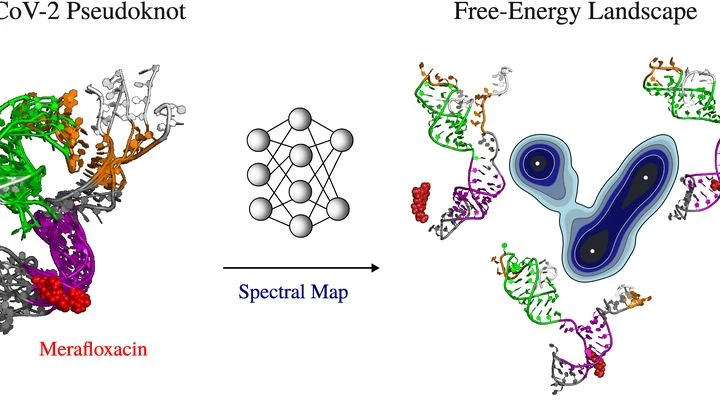
The RNA of SARS-CoV-2 is not just a chain but a complex structure. It contains a region that ties itself into a knot, much like a tangled shoelace. This knot helps the virus produce two proteins from a single stretch of genetic code. Without such a knot, the virus replicates less efficiently, so scientists are hunting for compounds that can undo it.
Brain aging is like the wear and tear on a bridge: cracks appear unnoticed, but if you reinforce the supports in time, the structure lasts longer. Three ordinary things turned out to be such supports — handgrip strength, the ability to move for a long time without breathlessness, and lung capacity.
Alzheimer's disease begins quietly: deep in the brain, two proteins, tau and amyloid-beta, start to accumulate. They behave like weed seeds: one clump that appears causes neighboring cells to produce similar clumps. Gradually, the proteins spread along nerve fibers, like water through the capillaries of a paper towel, and invade new areas.
A piece of dough, when pulled from the sides, doesn't stretch evenly: in one spot it thins and tears. Living tissue behaves similarly, but instead of a tear, shear bands appear — narrow zones where cells begin to slide past each other, like cards in a deck when cut.
An octopus tentacle bends, grabs, and stretches — all without a single bone. The secret is that inside it, sections that contract alternate with sections that remain passive. Scientists have long tried to replicate this trick in artificial materials, but until now they couldn't precisely dictate how a material would change shape.
Now researchers have proposed 3D-printing elastic threads from two materials at once.
Inside every cell, there is a scaffold of filaments, like construction scaffolding that gives the cell its shape and allows it to move. These filaments are connected by crosslinking proteins: some simply hold them together like ropes, while others act as tiny motors that crawl along the filaments and pull them toward each other.
Every human brain is covered with folds, much like a fingerprint: each with its own unique pattern. In dementia, this pattern changes, but for two similar diseases, Alzheimer's and dementia with Lewy bodies, the changes are nearly indistinguishable to the eye. Doctors need a reliable way to separate them, because the treatments differ.
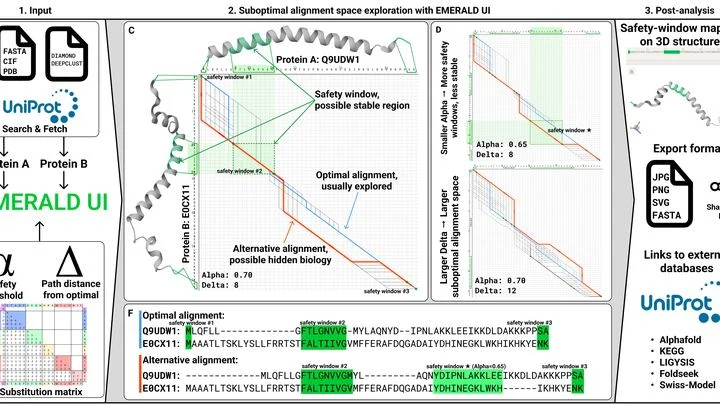
Proteins are the molecular machines of life. They fold into complex three-dimensional shapes, like a sheet of paper into origami. But if you fold the paper a bit differently, you get a different figure. Likewise, a protein can take on several forms, and that determines how it works.
Usually, scientists compare proteins by their sequences — chains of amino acids.
A rubber band is stretched, and suddenly snaps. In the atomic world, a similar picture emerges: the string binding particles can break. In a new study, physicists took a chain of Rydberg atoms and tracked how such a string breaks.
Under weak tension, the string breaks completely, and the system splits into several independent pieces, as if a rubber band shattered into segments.
Inside every muscle is a team of rowers: myosin proteins that grab actin filaments, take a stroke, and let go. The fuel for the stroke is the ATP molecule. When the rowers work in sync, the muscle contracts and the body moves.
For decades, two models existed: one explained why the boat moves slower with increasing load, the other — how the rowers move their arms.
Every breath you take and every muscle twitch runs on a stream of electrons flowing through proteins inside your cells. These proteins aren't static: they constantly change shape, like a spring that compresses and releases. But until now, no one has seen exactly how these movements open or close the path for electrons.