A Two-Color Laser: The Infrared Orchestra express
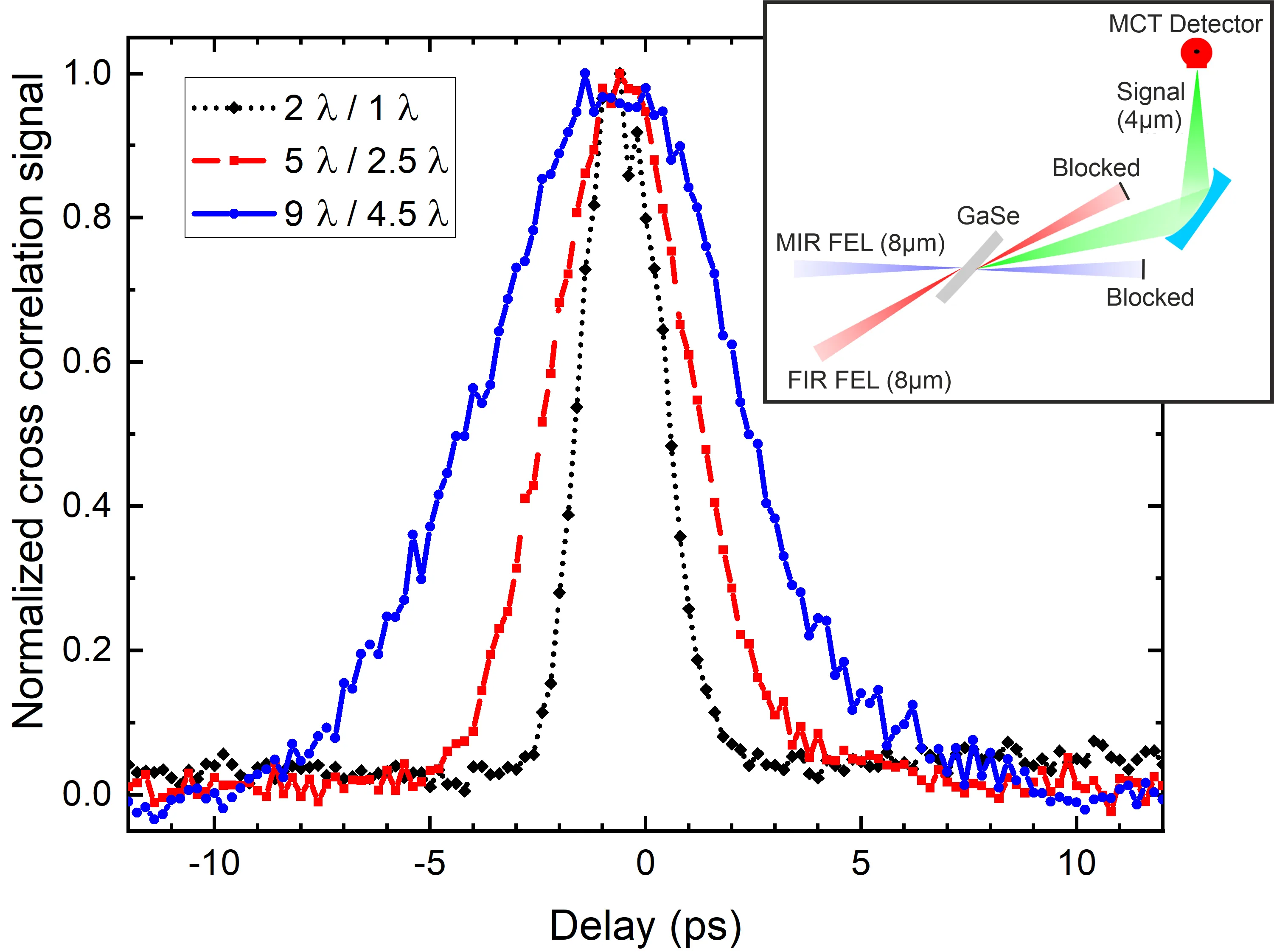
The infrared laser at the Fritz Haber Institute now works like a conductor with two batons. Previously, it produced a single beam in the mid-infrared range, where molecules vibrate. Now, a second oscillator has been added, emitting far-infrared light, where entire molecular frameworks "breathe."
Spectroscopy loves such pairs: one beam breaks a hydrogen bond, the other watches how the molecule falls back. To achieve this, the electron beam from the accelerator is split into two streams using a rocking cavity: it pushes electrons left and right, like a switchman on a railway. Each stream enters its own laser, and both beams emerge strictly simultaneously.
Such an instrument opens the door to pump-probe experiments: the first beam triggers a process in the material, the second captures it a billionth of a second later. Previously, this required two separate lasers and complex synchronization. Now everything is in one corridor, and the time between pulses is known with exquisite precision.
Far-infrared light with a wavelength of 175 micrometers is already close to radio waves. The human eye can see only up to 0.75 micrometers.