The Mystery of Hidden Temperature express
Hot tea cools down, and its temperature is the same throughout the cup. But in many systems (for example, in the rarefied gas between stars or in plasma) temperature is not uniform: in one place particles are faster, in another slower. Physicists call such systems "superstatistical": it's as if the tea consisted of many small regions, each with its own temperature.
The problem is that this "local" temperature cannot be measured directly: it is not tied to a single quantity that you can probe with an instrument. So scientists have to guess its distribution, which is unreliable. The authors of the new work found a way out: they showed that the hidden temperature can be linked to the system's energy. Energy can be measured, and thus temperature can be computed.
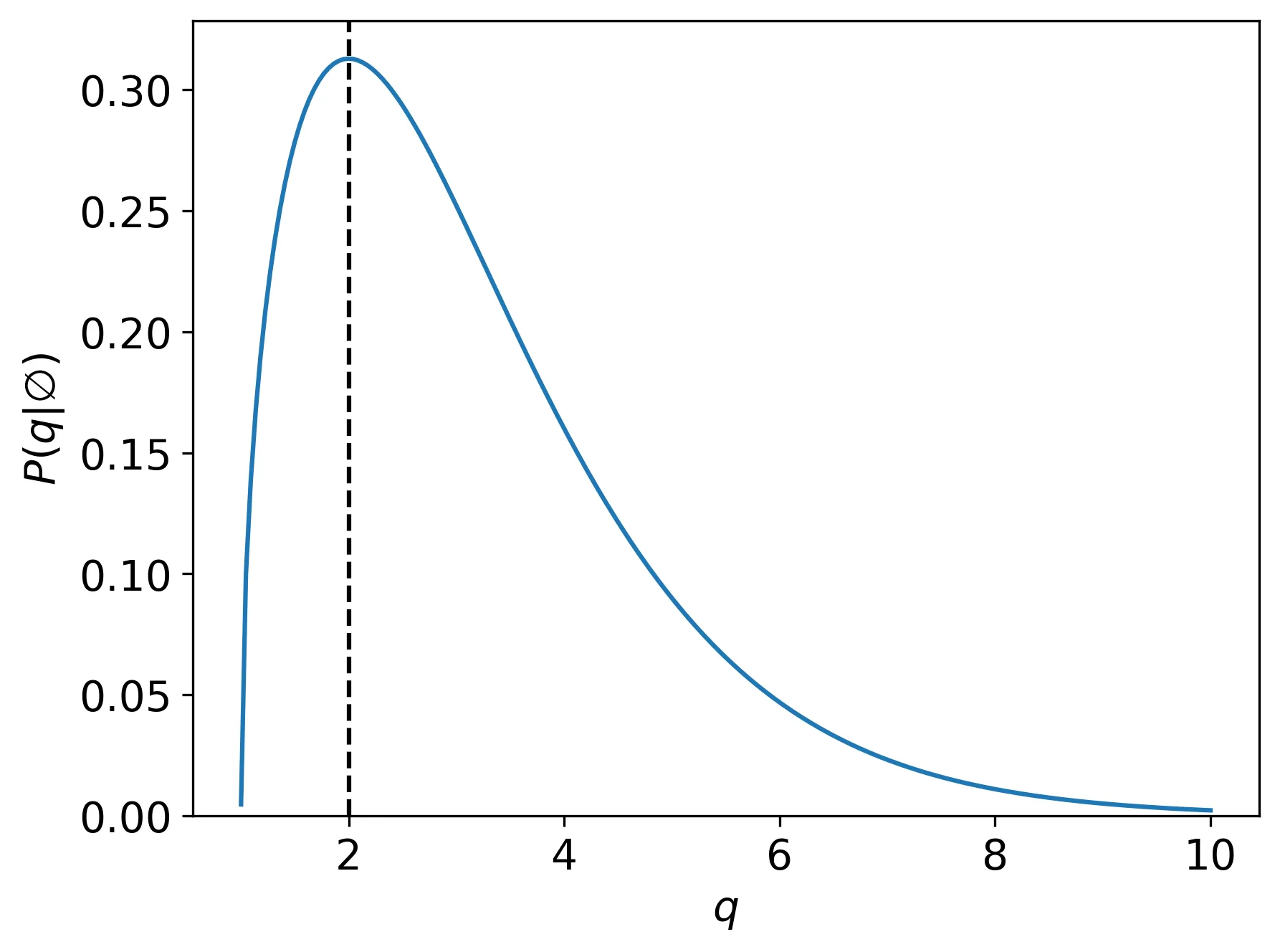
The authors tested their method on a concrete example — the so-called q-canonical ensemble, which describes systems with unusual statistics. They computed how temperature is distributed at a given energy and obtained the full distribution without complicated mathematical transformations. It's as if, instead of emptying the bag, you learned to determine the size of the candies by the sound they make when poured.
Now physicists have a tool to look inside complex non-equilibrium systems — from plasma in the lab to distant star clusters. And perhaps better understand how order emerges from chaos.
Original abstract
as written by the authors arXiv:2604.17035
Among the statistical mechanical frameworks able to describe systems in non-equilibrium steady states such as collisionless plasmas, self-gravitating systems and other complex systems, superstatistics have gained recent attention. Superstatistics postulates a superposition of canonical systems with inverse temperatures $$\beta$$ described by a probability distribution depending on the external conditions. Unfortunately, the uncertainty about $$\beta$$ cannot be attributed to fluctuations of a phase space function, and this suggests that the distribution of $$\beta$$ is purely of statistical nature and must be inferred rather than measured. This lack of direct observability of the superstatistical temperature then becomes a conceptual issue in need of resolution. In this work we address this issue, showing that a mapping exists between functions of the superstatistical temperature and functions of the recently proposed fundamental temperature, a model-dependent function of the energy, in such a way that their expectation values coincide. We illustrate the use of this mapping by computing the conditional distribution of inverse temperature given energy for the $$q$$-canonical ensemble, as well as the full inverse temperature distribution, without the use of Laplace inversion.
In superstatistics, temperature can be not just a number but an entire probability distribution, like a weather forecast that doesn't say "it will be 20 degrees" but "with 60% probability it will be between 18 and 22."