The partition function is like a catalog of tickets in an energy lottery: it lists all possible energy states of a system and indicates the chance of each occurring.
History
Boltzmann introduced the concept of statisticalweight and entropy in the 1870s, but the explicit formula Z = Σ e^{-βE_i} for the canonical ensemble was introduced by Gibbs in 1902 in his book 'Elementary Principles in Statistical Mechanics'. Einstein and Bose in 1924 generalized it to quantum gases with integer spin, and Fermi and Dirac to half-integer spin, leading to Bose–Einstein and Fermi–Dirac statistics.
How it works
All thermodynamic quantities are expressed through Z: internal energy U = -∂ ln Z/∂β, heat capacity C_v = ∂U/∂T, pressure P = k_B T (∂ ln Z/∂V)_T. In the quantum case, Z = Tr(e^{-βĤ}), where Ĥ is the Hamiltonian. For non-interacting systems, it factorizes over single-particle states, but in general requires approximate methods.
Fun fact
Knowing just this sum, you can extract from it temperature, pressure, and even how a kettle on the stove will behave—everything that can be measured macroscopically.
In a pot of boiling soup, light fat droplets rise to the top, while heavy vegetable chunks sink to the bottom. Particles in the tenuous hot gas around the Sun and other stars behave much the same way — except instead of broth, there's a mixture of charged particles: electrons, protons, and alpha particles.
Inside every cell, logistics is in full swing: tiny protein motors, like couriers, haul cargo along a network of microtubules. One of the main workhorses is kinesin, which steps using the energy of ATP (the cell's main energy currency). For a long time, researchers tried to evaluate it like a car: how much fuel it burns, how fast it gets there.
After the Big Bang, the universe underwent a rapid expansion — inflation, smoothing out the cosmic microwave background and sowing the seeds of galaxies. But at the quantum level, chaotic fluctuations brewed in the inflaton field.
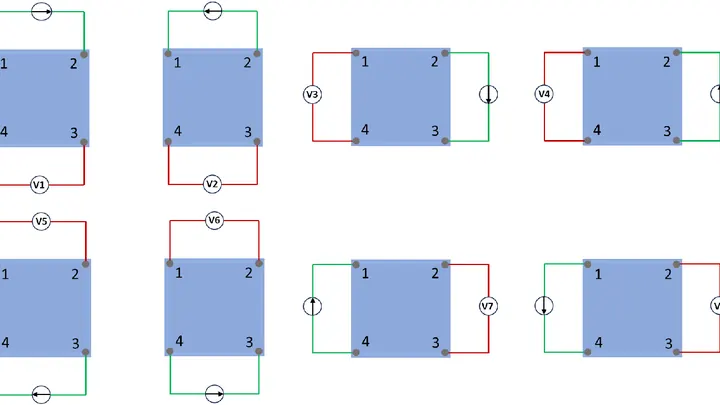
Heat is all around us: from a car's exhaust pipe to the casing of a running laptop. Thermoelectric materials could turn that waste heat into electricity.
Textbooks divide particles into two camps: bosons love to crowd into the same state, fermions absolutely refuse. But nature allows a third option. Anyons are quasiparticles whose behavior lies somewhere in between. They can 'remember' how they were exchanged and obey a nonstandard exclusion principle.
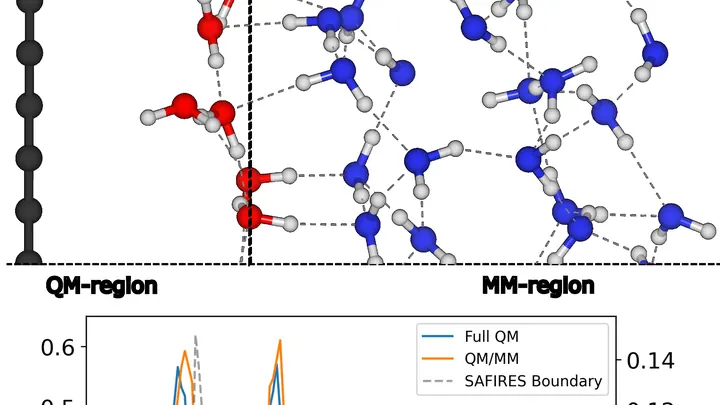
Imagine a huge swimming pool. In one corner, a chemical reaction is underway that needs to be calculated with jeweler-like precision. But the surrounding water is not just decoration: its molecules jostle, attract, and influence the reaction. How do you account for this endless dance of particles without drowning in calculations?
A pot of water on the stove eventually settles down: the temperature evens out, the liquid stops boiling. Physicists call this thermal equilibrium — a state where energy is distributed in the most probable way.
A heat engine doesn't have to be made of iron. In the microworld, a single electron can play the role of a piston, and the measurement process itself can serve as fuel. Two neighboring 'pockets' for electrons are connected by a narrow bridge.
Water churns behind a rock in a river, air swirls behind an airplane wing: it seems like completely random motion. But the authors of the study found a rigid kitchen recipe in this chaos.
They decomposed the fluid's rotation (angular momentum) into two independent parts.
Hot tea cools down, and its temperature is the same throughout the cup. But in many systems (for example, in the rarefied gas between stars or in plasma) temperature is not uniform: in one place particles are faster, in another slower. Physicists call such systems "superstatistical": it's as if the tea consisted of many small regions, each with its own temperature.
A piece of aluminum alloy is heated, and it quietly tells you about its strength. You just need to listen to that story in how the metal absorbs heat.
The usual way to find out how strong an alloy is — pull it until it breaks. That takes time and destroys the sample.
In the 19th century, James Clerk Maxwell imagined a tiny demon. It knows the speed of every gas molecule and opens a door: fast ones to the left, slow ones to the right. This creates a temperature difference without expending energy, seemingly violating the laws of physics.
A seismograph records underground tremors: the smooth line suddenly jerks and changes its character. Similarly, functional data, such as ocean temperature maps or brain signals, may shift their shape at some point. The new algorithm FSBS catches such breakpoints, even when each curve is measured at only one point and noise drowns the signal.