Scales That Hear an Echo in a Drop express
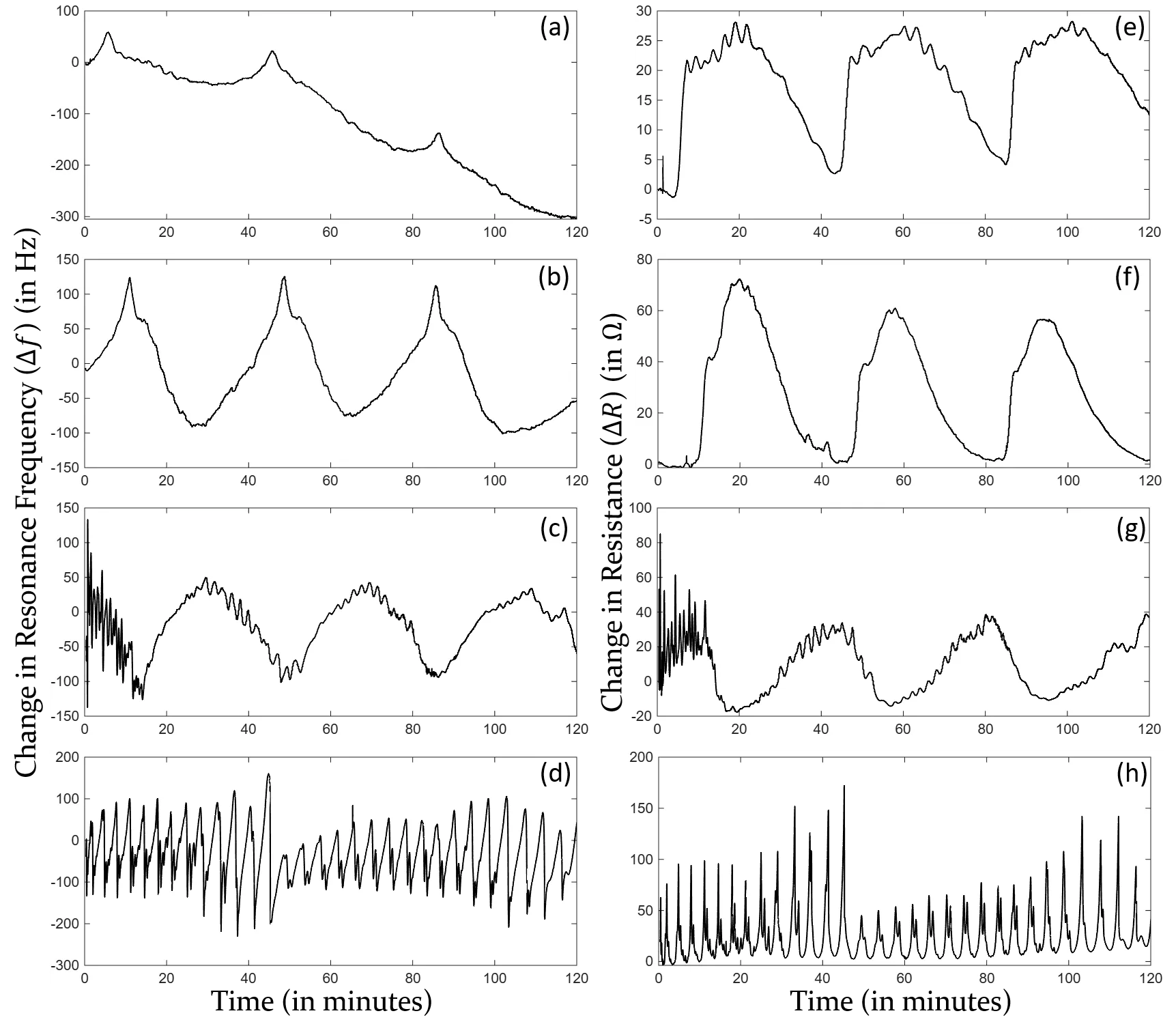
Quartz microbalances are thin plates that vibrate at a frequency of five million times per second. When a drop of liquid lands on the plate, the vibration changes: from these changes, you can determine the drop's mass and its elasticity. But in small drops, an unexpected effect arises: the sound that the plate sends into the liquid reflects off the drop's upper surface and returns. This creates an echo that tugs at the plate and confuses the readings.
The scientists took two common cell culture media — DMEM and RPMI-1640—and dropped them onto the scales in different volumes. It turned out that the echo depends on the volume: in small drops (about 40 minutes per echo cycle), it is slow, while in larger drops, it is fast (about 5 minutes). The vibration amplitude changed by 100–150 hertz in frequency and by 40–60 ohms in resistance. There is a time shift between the frequency and resistance oscillations — approximately 10 minutes.
Now biologists who monitor cells with such scales can subtract the echo from their measurements in advance. Otherwise, they might mistake the reflected sound for a signal from the cells themselves and draw incorrect conclusions.
Quartz microbalances are so sensitive that they can detect one billionth of a gram — about the weight of a single bacterium.