Layers Slide on Their Own: Warm Motion in Two-Dimensional Crystals express
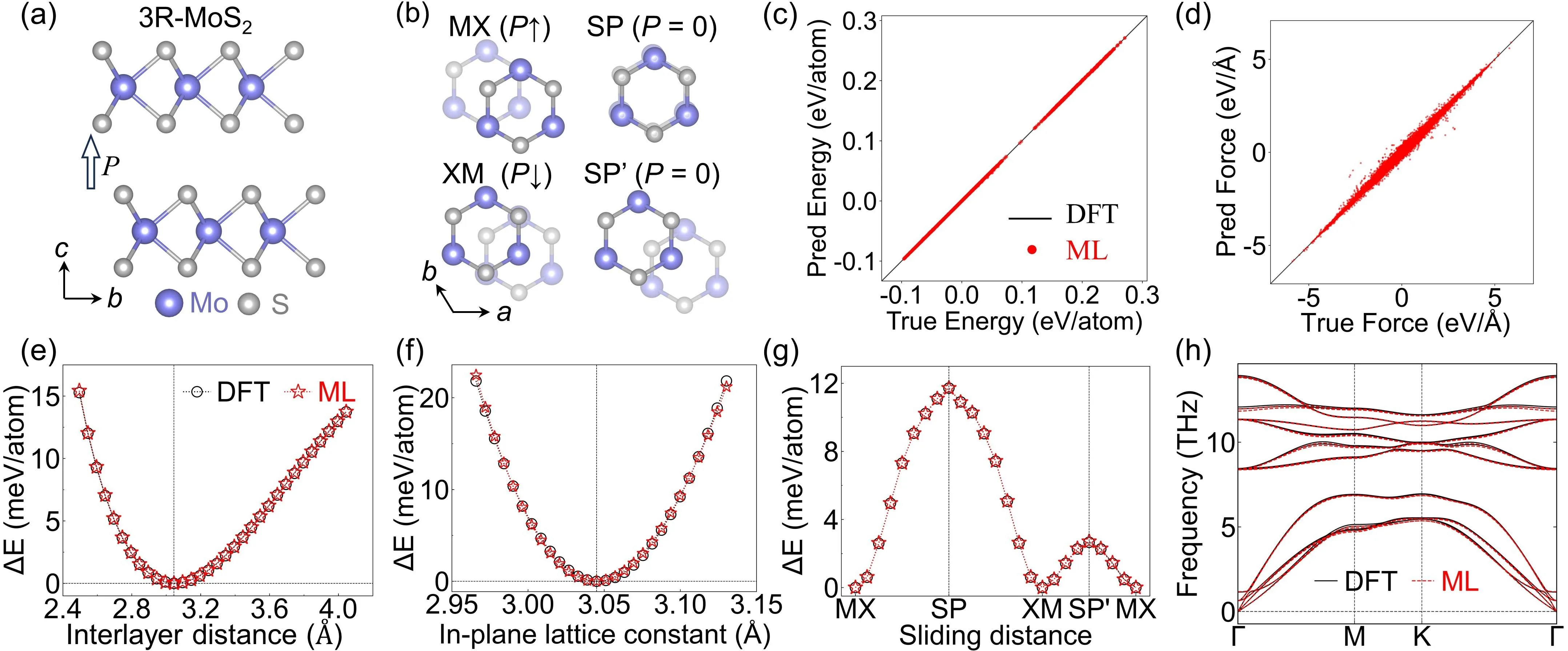
Two sheets of paper stacked together start to creep ever so slightly over each other when heated. That's roughly how layers of molybdenum disulfide, a material one atom thick, behave. At room temperature, they spontaneously slide at a speed of about one meter per second.
Previously, it was thought that shifting layers required overcoming a barrier, like dragging a heavy box over a threshold. But atomic-level calculations show there's almost no barrier. The motion doesn't happen as a shift of the whole sheet but as a wave of rearrangement at the boundaries between regions with different orientations. It's like a wrinkle moving across a carpet without the carpet itself shifting.
This behavior opens the way to memory devices where information is written by shifting layers with almost no energy cost.
The speed of spontaneous layer sliding at room temperature is about 1 m/s, similar to a leisurely walking person.