How a Shell Builds Itself express
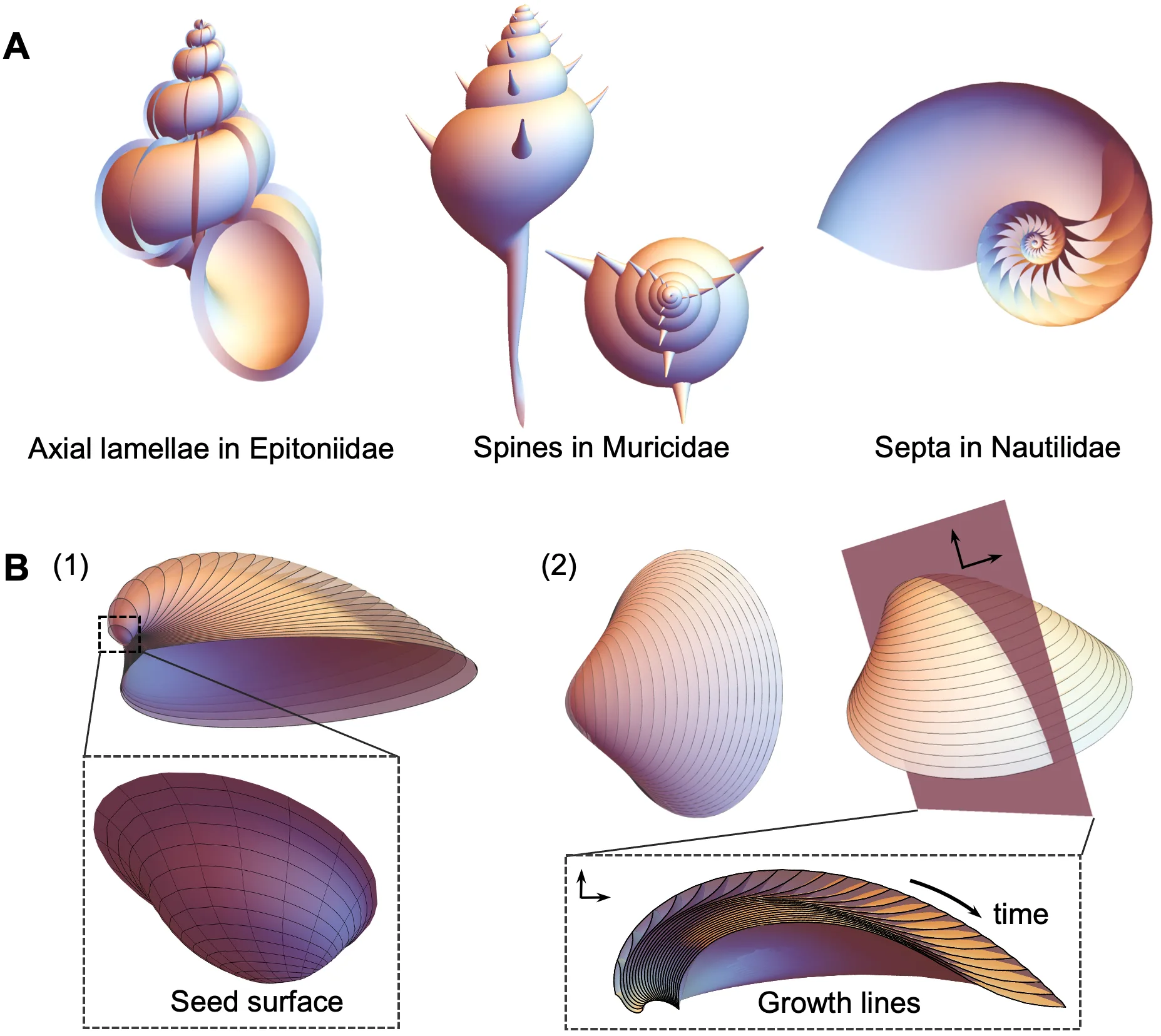
Every shell is a stone diary of growth. The mollusk doesn't build it from a blueprint like an architect; it simply adds material along the edge, following the same rule over and over. It's as if a snail glued a new strip to its house each day, nudging it slightly sideways and making it a bit bigger. It's this repetition, not complex control, that creates the species' characteristic shape.
Scientists described this rule in the language of mathematics. It turns out that almost any shell can be produced if you know just three things: how strongly the shell grows, which direction it turns, and what shape its very first edge was. These three parameters, like three adjustment knobs, yield all the variety of forms — from flat spirals to tall towers.
This discovery isn't just about snails. If nature builds complex shapes from simple local rules, engineers can use the same principle: grow parts by adding material along the edge according to a simple law, instead of cutting them from a solid block.
A shell can consist of millions of layers, but all of them result from repeating the same step, like building a tower by placing each brick slightly to the right and slightly above the previous one.