Water Exchange in Tumors: What MRI Can Reveal express
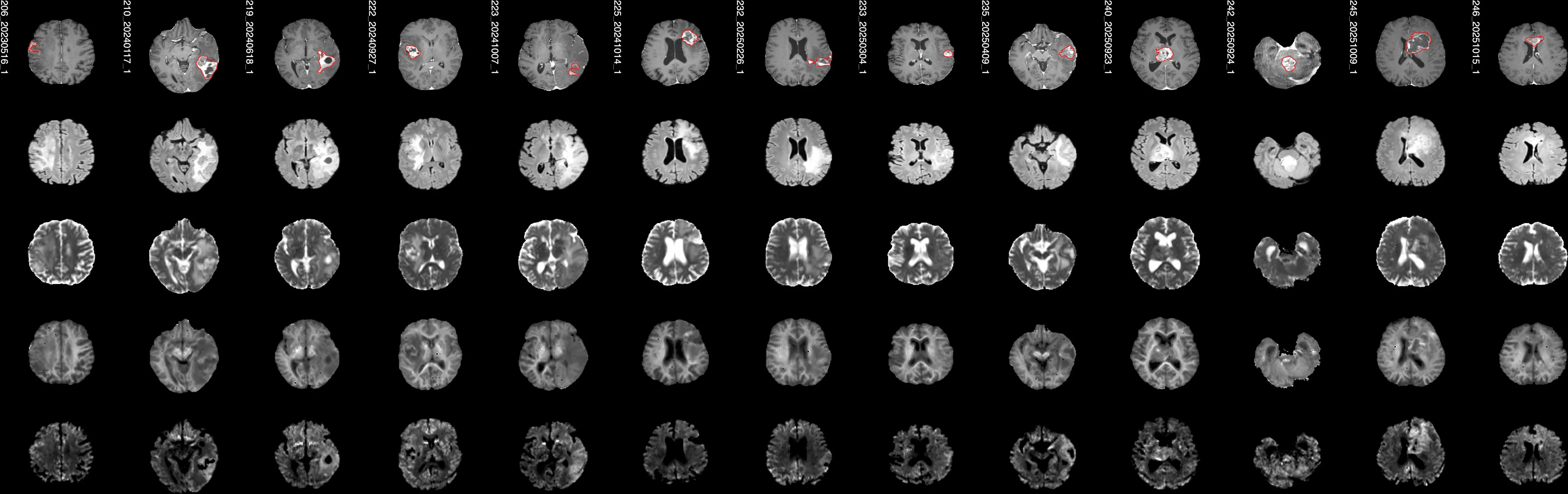
Imagine a water park with many pools connected by narrow passages. Visitors, water molecules, splash around in each pool, but occasionally move to the next one. In a brain tumor, these "passages" are protein channels in cell membranes. Their abundance determines how quickly water moves between cells.
Standard MRI only sees water accumulation, not its movement. A new approach called Restriction-Exchange uses cleverly tuned magnetic fields (gradients). It's like changing the width of the passages in the water park and watching how much faster or slower the visitors flow through. This allowed, for the first time, direct measurement of water exchange rates in gliomas, without confusing it with simple mixing within a single "pool."
In the edema zone around the tumor, exchange was also slightly accelerated. This hints at possible tumor cell infiltration or membrane disruption. Such a water exchange map could become a new tool for assessing glioma aggressiveness. It would aid in planning surgery or radiation therapy and even in tracking treatment response. And then, returning to the water park analogy, a doctor could see where the passages between pools have become too wide and the movement of visitors suspiciously lively.
Original abstract
as written by the authors arXiv:2605.01918
Transmembrane water permeability, which regulates cellular water exchange and is influenced by water channels such as aquaporin-4 (AQP4), has been implicated in glioma progression and may affect tumour infiltration and treatment response. Non-invasive mapping of water exchange may therefore provide biomarkers of glioma pathology. This study investigates the feasibility of characterizing water exchange in gliomas using diffusion MRI with free gradient waveforms, known as the Restriction-Exchange (ResEx) approach, which enables exchange quantification independent of restricted diffusion effects. Thirteen patients with histologically confirmed gliomas (ten glioblastomas, three astrocytomas) underwent preoperative MRI at 3T using a custom ResEx protocol. Multiple diffusion-weighted acquisitions with selective exchange sensitivity were performed to estimate voxel-wise maps of the apparent diffusion coefficient (ADC), diffusion kurtosis, and water exchange rate. ResEx-derived maps revealed heterogeneous spatial patterns across and within tumours. Elevated exchange rates were commonly observed in enhancing tumour margins, potentially reflecting smaller cells, increased membrane permeability or AQP4 upregulation. In some cases, elevated exchange extended into non-enhancing peritumoural regions. Exchange values in oedema were slightly higher than in healthy tissue, suggesting potential infiltration or membrane disruption. Diffusion MRI with free gradient waveforms permits non-invasive mapping of water exchange in gliomas and reveals physiological information not captured by standard imaging. Exchange rate mapping may offer novel biomarkers of tumour aggressiveness, infiltration, and treatment response, and holds promise for surgical and radiotherapy planning.
Aquaporin-4 is the most abundant water channel in the brain, and its levels surge in fast-growing gliomas, helping cells change volume and migrate.