How Modified Gravity Explains Our World express
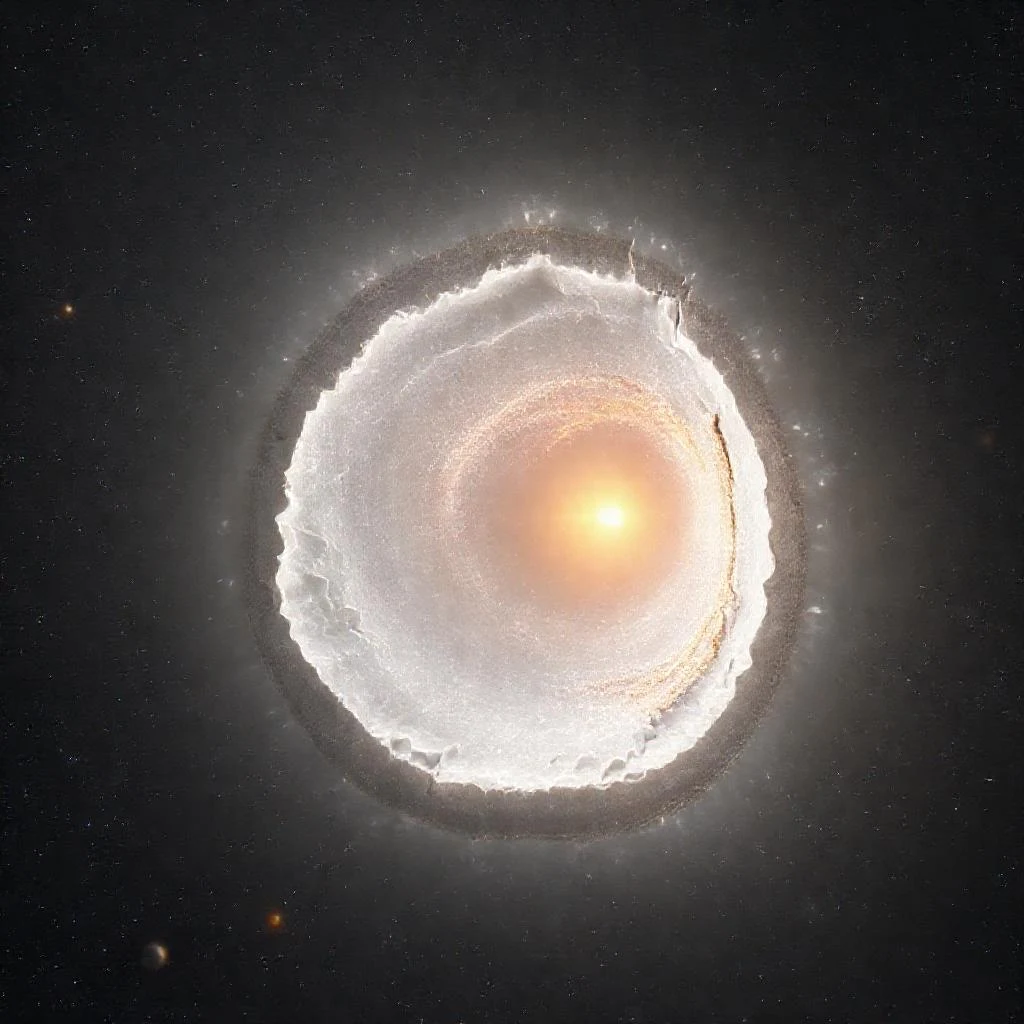
In the first second after the Big Bang, the universe was a boiling cauldron of energy. Particle-antiparticle pairs were born and instantly annihilated each other. But for every billion such pairs, one particle of matter survived, and that leftover became stars, planets, and people.
New research blames modified gravity for this. If spacetime isn't just curved but has an extra geometric feature (like stirring soup with a spatula instead of a spoon), then gravity tips the balance in favor of matter. The key turned out to be the expansion rate, which affects entropy (a measure of disorder). At the observed expansion speed, the model yields the required excess without fine-tuning.
The energy released during the annihilation of the first particles was trillions of times brighter than all starlight. We are the ashes of that magnificent fire.