Gauge invariance is a rule by which certain changes in the description of particles do not alter the predictions of physics. A direct analogy: if you measure the height of a mountain from sea level or from its base, the mountain itself does not change—similarly in physics, shifting the "reference point" of a field does not affect real effects.
History
The concept of gauge invariance arose from the work of Hermann Weyl in 1918, who attempted to unify gravity and electromagnetism through scale stretching ("gauge"). The modern form of gauge symmetry as local phase invariance was recognized after the advent of quantum mechanics; Vladimir Fock and Fritz London showed that electromagnetic interaction is introduced through the requirement of gauge invariance of the wave function. The development of non-Abelian gauge theories by Chen-Ning Yang and Robert Mills in 1954 led to the creation of quantum chromodynamics. Emmy Noether's 1918 theorem established the connection between symmetries and conservation laws, fundamental for understanding gauge theories.
How it works
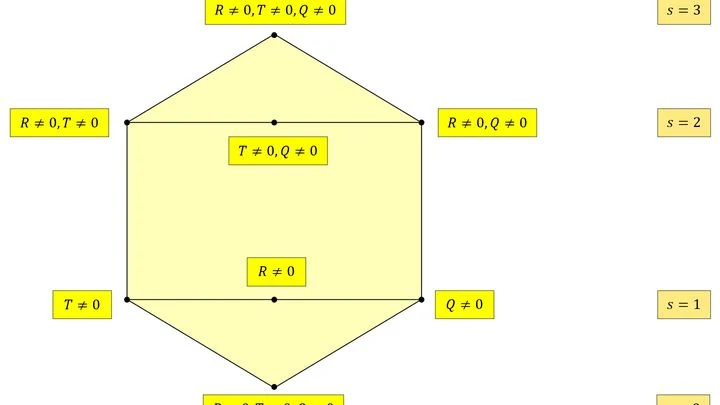
Gauge invariance is implemented by replacing the ordinary derivative with a covariant derivative: ∂_μ → D_μ = ∂_μ - i g A_μ, where A_μ is the gauge field, g is the coupling constant. Under a local phase transformation of the wave function ψ → e^{iα(x)}ψ, the gauge field transforms as A_μ → A_μ - (1/g) ∂_μ α(x), which preserves the invariance of the Lagrangian. In non-Abelian symmetry groups, the fields themselves interact with each other, leading to complex dynamics such as confinement in quantum chromodynamics. According to Noether's theorem, gauge symmetry ensures current conservation ∂_μ J^μ = 0 and the corresponding charge.
Fun fact
Thanks to gauge invariance, electric charge is always conserved—nothing can appear out of nothing.
In 2017, detectors picked up a gravitational wave from the collision of two neutron stars. Just 1.7 seconds later, telescopes saw a flash of gamma-ray burst from the same spot. That tiny delay became a treasure for physicists.
A quantum chain is like a string of lights, where the bulbs are the spins of particles. Ideally, all bulbs glow in sync, following a common rhythm: that's symmetry. But if you cut off a piece of the string, the rhythm can get out of step: within that segment, symmetry is broken.
Physicists study a chain of strongly interacting particles (the XYZ model).
A quantum particle can be a wave, and pass through two paths at once. But if something 'peeks' at which path it took, the wave disappears. This effect is called loss of interference. Usually, photons or air molecules do the peeking.
Gravity in our world is curved spacetime. That's how Einstein's general theory of relativity describes it. But what happens to gravity at the level of atoms and particles, where quantum mechanics rules? This question has remained unanswered for nearly a century.
A snowflake grows, an oil slick spreads, a crowd moves — each case has its own equations. But the end result is often the same: shape, speed, and pattern follow a simple scheme that repeats across scales. This is universality — when a common law hides behind the details.
A runner on the middle of a track suddenly switches to a walk — not speeding up or slowing down, but maintaining a constant pace. Something similar may have happened to the universe itself shortly after the Big Bang.
A ball sits in a pit. It won't roll out on its own: it needs a push. But in the quantum world, a particle can leak through a barrier without extra energy. This trick is called tunneling.
The thinner the ferroelectric film, the stronger the depolarizing field — a dictate of classical physics. Imagine a pencil balancing on a fingertip: the shorter it is, the harder to keep it upright. Nanoscale polarization likewise strives to vanish.
When a grain of sand falls on a table, its impact is predictable. But if you squeezed it down to the size of an atomic nucleus, the familiar laws of gravity would break down — the force of gravity would grow without bound.
Toss a handful of phosphorus into silicon, and at a certain impurity concentration the material suddenly starts conducting electricity. This is a metal-insulator phase transition, and it happens abruptly. But what exactly changes in the electron wave functions when an insulator becomes a metal?
Gravity is usually explained through the curvature of spacetime. Massive bodies press it down like a bowling ball on a stretched rubber sheet. But this approach has two lesser-known twins. In one, gravity arises from torsion (twisting) of spacetime; in the other, from its non-metricity (when lengths and angles change during transport).
In the microcosm, long-range forces, gravity or electricity, do not switch off even at enormous distances. Therefore, any particle drags behind it a trail of soft (i.e., very low-energy) photons or gravitons. This trail is called the "dress"; without it, calculations fall apart and infinities appear.
In the hot early universe, like in an overcrowded dance hall, magnetic monopoles swirled — loner particles carrying only a north or only a south pole. In an ordinary magnet, poles always come in pairs, but here each one is on its own. Theories that unify all forces of nature predict that such particles should have been produced in vast numbers, yet today we don't see them.
An ice cube in a glass of water doesn't just float: it gets pushed. Water molecules bombard it from all sides, and this bombardment gives rise to a force you can measure. In physics, there's a similar force, but it acts not on ice but on anything with mass, and it arises not from molecular jostling but from information. It's called entropic force.
If you check where an electron is every second, its quantum properties change. It's like a child playing hide-and-seek but constantly being called by name: they freeze and stop running. In the particle world, such a "caller" is a measurement. It prevents particles from freely forming a shared quantum state, or entanglement.
In the first second after the Big Bang, the universe was a boiling cauldron of energy. Particle-antiparticle pairs were born and instantly annihilated each other. But for every billion such pairs, one particle of matter survived, and that leftover became stars, planets, and people.
New research blames modified gravity for this.
In particle physics, it has long been taken for granted that the forces of nature (electromagnetism, the weak and strong interactions) obey a strict symmetry called gauge symmetry. It's like a set of rules by which particles exchange force carriers. But where do the rules themselves come from?
Throw a stone into a pond — ripples spread out, changing the scale of the wave. The new theory works much the same way: it gives each particle its own "scale ripple," and it's this curvature of an invisible space that turns out to be the source of mass.
A distant orchestra plays a symphony, but the recording is full of noise. The melody is written for two instruments, yet a third voice seems to break through the static — quiet and unfamiliar. This is how astrophysicists listen to gravitational waves, trying to catch the slightest deviations from Einstein's predictions.
A tailor cuts a suit, but the seams pucker and the buttons won't align. In quantum field theory, similar glitches are called anomalies: they appear when a symmetry of the equations breaks down in the transition to a quantum description. Usually, they are fixed by sewing in extra patches, the so-called Bardeen–Wess–Zumino counterterms.
In an orchestra where every musician plays the same note, the sound merges into a powerful unison. This is how a Bose–Einstein condensate is born: many boson particles at extremely low temperatures behave as a single entity.
A beam of light travels through the void, and its own 'ticking'—an invisible clock embedded in the very fabric of spacetime. Physicists have taken this beam and allowed it to measure itself: the gravitational field on the beam is quantized, and the role of the clock is played by the so-called dressing time — the time that the field 'puts on' like a coat.
A radiation sensor in the city is like a street musician: it has to hit the right notes even when fingers go numb from cold or the instrument is baked by the sun. Usually, such devices are kept in greenhouse conditions, with heating or cooling, otherwise the energy scale (which distinguishes harmless potassium in concrete from dangerous cesium) starts to lie.
You can edit a cell perfectly, and it still turns out useless. The gene is fixed exactly as planned, yet the cell behaves unpredictably: it drifts, changes fate, loses safety. It's like fixing one gear in a watch, but the watch still runs wrong because the whole mechanism is out of sync.
Previously, a cell was viewed as a list of independent parts.
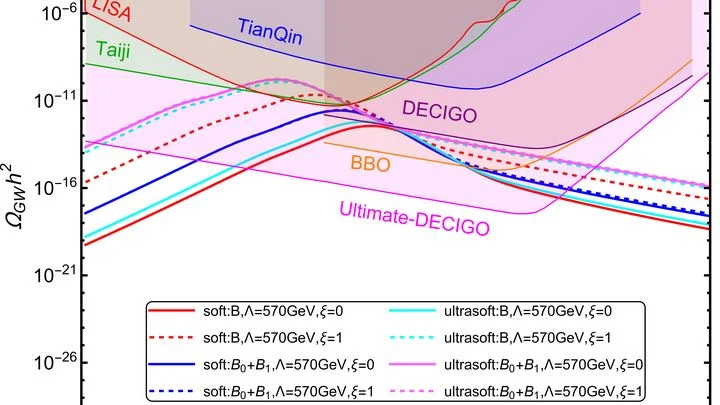
In the infant universe, right after the Big Bang, space was expanding rapidly, and the vacuum resembled a superheated liquid. When 'boiling' began, bubbles of true vacuum emerged. Expanding at the speed of light, they triggered gravitational waves — tremors of space itself that have reached us.
The ocean is like a layered cake: warm, light water on top, cold, heavy water below. Between the layers, at the interface, invisible waves roam. They don't lift crests like a storm; instead, they slowly rock the entire water column, as if someone were shaking a giant aquarium from within.
In the first moments after the Big Bang, space expanded at an incredible rate. A tiny quantum ripple, embedded in the uncertainty principle itself, pushed matter apart more strongly than any known force. This ripple is the generalized uncertainty principle, or GUP.