One Neuron, One Memory: Inequalities to Unlock Brain Secrets express
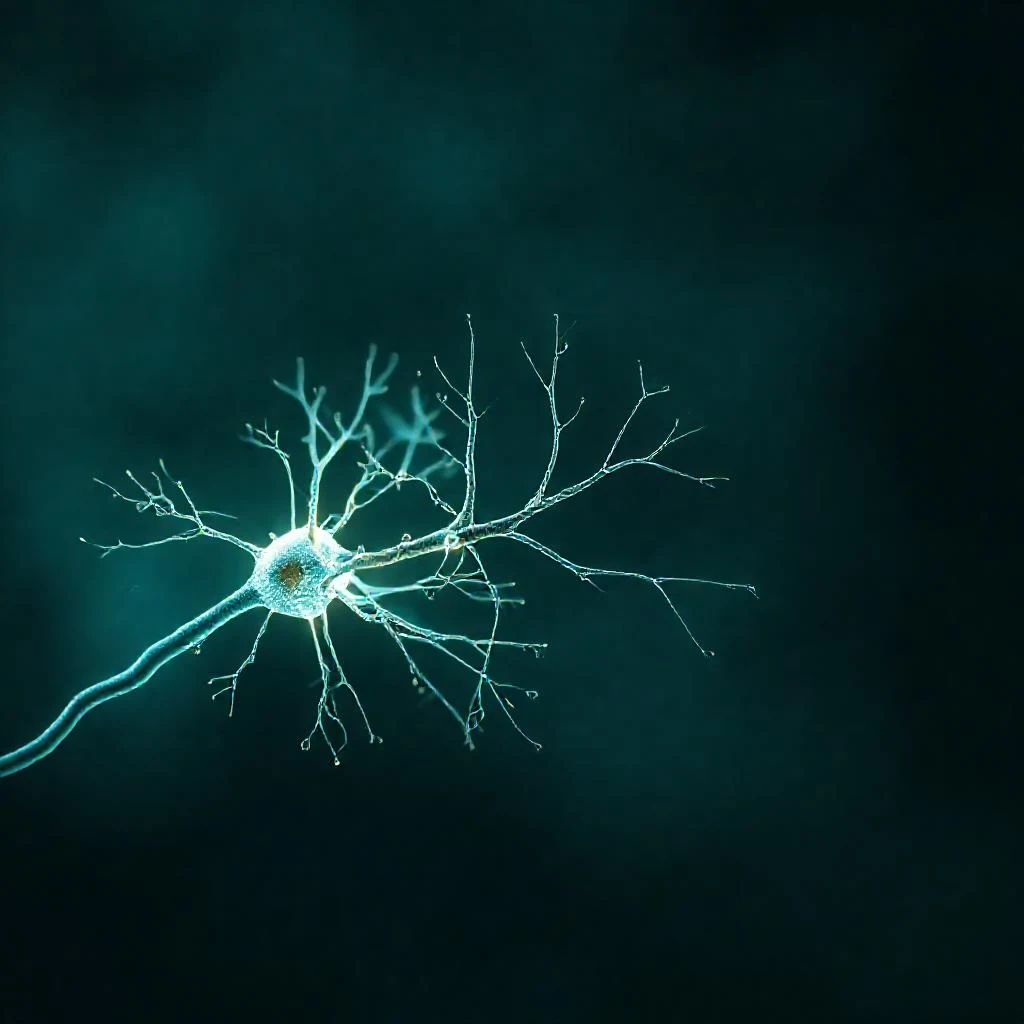
Neurons communicate via electrical impulses. For a long time, their behavior was described by the standard model: after each firing, the cell completely 'forgets' the past, like a car that screeches to a halt the moment you kill the engine. But what if a neuron is more like a car that coasts on its own momentum? Then its previous activity smoothly influences the next — the cell gains memory.
To test this, scientists applied the idea of Bell's inequalities, shifting them from quantum particles to the timeline. If the neuron 'coasts along,' the math test will catch it. Surprisingly, even a simple LC circuit with an inductor and capacitor can violate such inequalities — no quantum weirdness required. Moreover, the calculations unexpectedly echoed the Dirac equation from particle physics.
Discovering memory in single neurons will reshape our view of brain entropy: order increases, and temporal connections acquire curvature, as if the cell fine-tunes its internal clock to context. This approach will reveal just how complex a lone neuron can be.
Similar tests were once used to search for quantum consciousness, but a neuron doesn't need quantum weirdness to violate inequalities — a simple electric circuit with a coil and capacitor would suffice.
In William Gibson's 'Neuromancer,' computers store 'wet memory' like neurons — perhaps the future will learn to harness the internal memory of living cells for cybernetics.