Particle physics is the branch of physics that studies the fundamental constituents of matter and the forces through which they interact. It seeks to answer questions like: What is the universe made of at the smallest scales? How do these building blocks combine to form the world we see? The field has revealed a rich zoo of particles — quarks, leptons, bosons — and a set of rules, the Standard Model, that describes their behavior with remarkable precision.
History
The field emerged in the early 20th century with the discovery of the electron, proton, and neutron, and matured in the 1960s-70s with the development of the Standard Model. Key figures include Murray Gell-Mann, who proposed quarks, and the many experimentalists who confirmed them.
How it works
Particle physicists probe nature by colliding particles at high energies and observing the debris, or by studying naturally occurring particles from cosmic rays or radioactivedecay. The interactions are governed by quantum mechanics and special relativity, and the outcomes are predicted using quantum fieldtheory. Detectors record the tracks and energies of particles, and statistical analysis reveals the underlying processes.
In practice
Particle physics drives technologies like particle accelerators used in medical cancer therapy (hadron therapy) and in materials science, as well as detector technologies used in medical imaging (PET scans).
Fun fact
The Higgs boson, discovered in 2012, was the last missing piece of the Standard Model, but it was predicted in 1964 by several physicists, including Peter Higgs, after whom it is named.
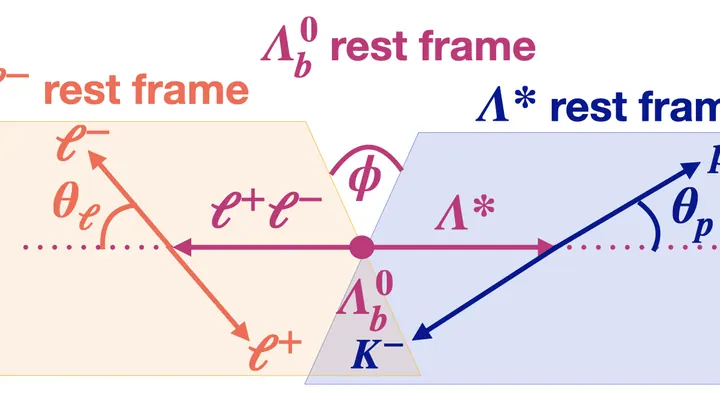
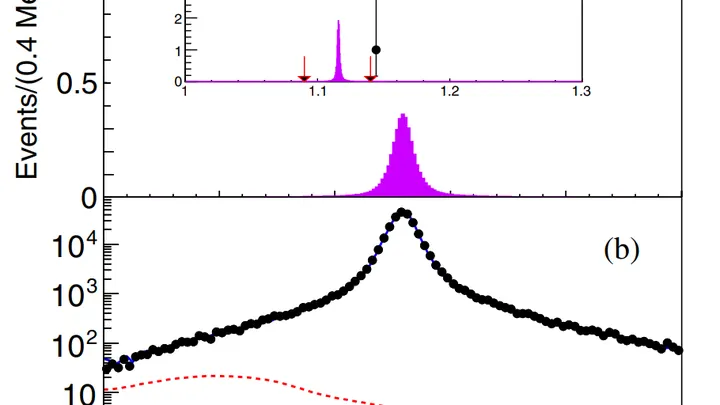
At the Large Hadron Collider, protons are smashed together, and among the debris, a heavyweight particle, the lambda baryon, sometimes appears. It lives for a tiny fraction of a second before decaying into other particles.
The universe rang piercingly in its first moments. During the inflation epoch, when space expanded faster than light, energies were monstrous — trillions of times higher than in the Large Hadron Collider.
In 1981, Alan Guth proposed a scenario of cosmological inflation — a lightning-fast expansion of space that stretched quantum fluctuations to the scale of entire galaxies. Since then, cosmologists, like archaeologists, have been excavating this event from the structures of the Universe.
Understanding the photoelectric effect — where light knocks electrons out of a material — is like learning to cook without a recipe. That’s where digital tools help: games provide intuition, and simulations provide precision.
The end of the Universe is not just the fading of light. If dark energy, the mysterious substance accelerating cosmic expansion, tears it apart in a Big Rip scenario, or if expansion reverses into a contraction that pulls everything back to a point like a big bang in reverse, a…
The Standard Model is a set of rules for all known particles. But it says nothing about dark matter, which makes up a quarter of the Universe. To find it, you don't need to build city-sized colliders. Radioactive molecules act like sniffer dogs: their incredible 'scent' picks up the faintest traces of unknown forces that slip past giant machines.
A neural network trained on collisions of protons and electrons transferred its skills to a completely different experiment — catching neutrinos. Like a chef who learned French cuisine and then, without preparation, baked an excellent Uzbek plov.
At the Large Hadron Collider, protons smash into each other like two trucks full of confetti. The debris, dozens of new particles, scatters in all directions. The detector records their tracks, and then the real work begins: piecing together a complete picture of the collision from those tracks.
Previously, this was done by a set of rules devised by physicists.
At a particle accelerator in Beijing, electrons collide with positrons, and for a fleeting moment, a particle called eta-c is born. It lives for a tiny fraction of a second and then decays into other particles. One of the rarest paths is to split into two photons, particles of light. Until now, no one could say exactly how often this happens.
In the BESIII detector, particles put on a show: they collide, are born, and decay, leaving flashes of light. But sometimes an actor can leave the stage unnoticed — through a hidden door that cameras don't see. Physicists were looking for exactly such 'quiet' decays, when a particle turns into something invisible to the instruments.
The trace of a short-lived particle is like a signature left in the detector. The particle is born and decays in an instant, but from its trace you can reconstruct its character — whether it's compact like a stone or fluffy like a snowball. That's exactly what this work is about: the authors propose a new way to read such signatures.
They noticed that each particle has an angle that links its mass and lifetime.
At Hungary's Institute for Nuclear Research, ATOMKI, physicists noticed something odd: in the decays of excited atomic nuclei, pairs of electrons and positrons sometimes fly apart at an unusual angle. It's as if an invisible mediator particle briefly appears and disappears between them.
An electron beam strikes a proton like a billiard ball hitting another ball. But between them is no empty space: the particles exchange virtual photons and Z bosons, like players passing a ball behind their backs. This exchange slightly alters the scattering trajectory, and hidden within it is a hint of new physics.
A thin rubber film lies on a table. Someone grabs it by the middle and slowly pulls upward. The film doesn't just rise: it arches into a dome, then wrinkles run along the dome's edge, like pleats on a skirt. Pull higher — the wrinkles gather into large folds that cross the entire film. And if you start lowering it, the folds don't disappear but collapse into new shapes.
Light strikes a metal plate, and electrons fly out. This is the photoelectric effect, and it works only if the light has enough energy to cross the threshold that holds electrons inside.