How Sand Draws a Cell's Fate express
A desert where every step reshapes the terrain. Dunes settle, new slopes emerge, and the next step is dictated by what you've just trampled. That's roughly how "sandscapes" work — a mathematical model inspired by living systems.
The authors started with Hopfield neural networks but added feedback: the more often the system lands in a particular state (say, "the cell became muscular"), the deeper the corresponding basin on the energy landscape becomes. This landscape isn't a static map but a living terrain, dug up by the very "travelers."
In such a self-modifying world, cascades of bifurcations emerge spontaneously: a single mass of agents splits into two groups, those split into two more, and so on. Mathematically, this is described by coupled variables, similar to magnetic moments in the Ising model. But the big surprise came when local reproduction (like cell division) was added: the landscape naturally tuned itself to bifurcation points, where the slightest nudge sends the system down one of two paths. This is exactly how stem cells decide whether to become a red blood cell or a white blood cell.
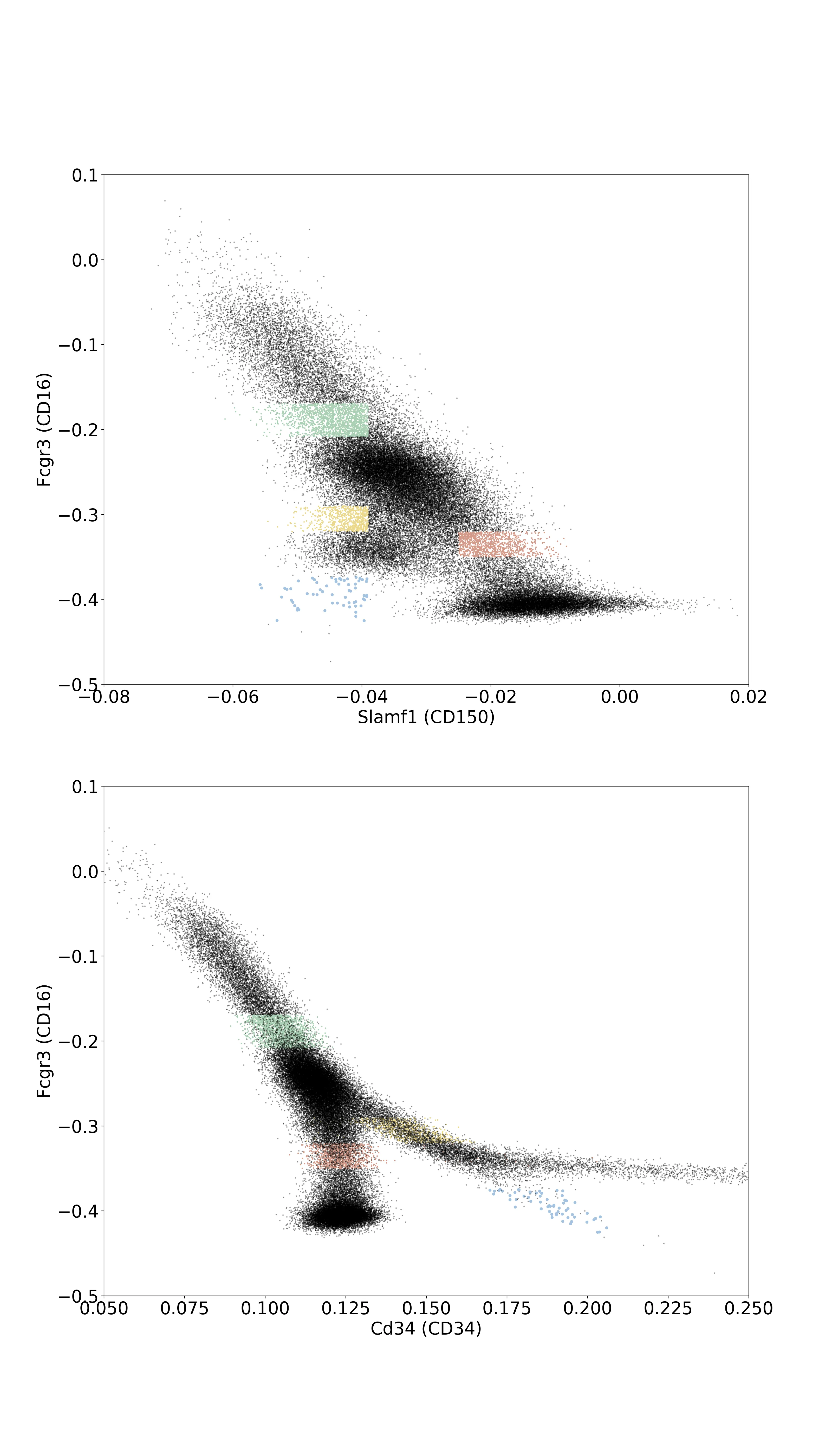
The test was elegant. The scientists fed the model only the final blood cell types, and it reconstructed the entire developmental tree, including the intermediate precursor stages known to biologists. The "sandscape" acted as generative memory: from final states, it reproduced the whole journey.
This idea extends far beyond blood. The same mechanism could explain how the brain forms concepts during learning or how a flock of birds changes direction in unison. Everywhere that environment and behavior influence each other, sand begins to draw patterns.
The blood cell developmental tree that the model reconstructed includes stages discovered by biologists through decades of experiments, yet the "sandscape" derived them from only the final cell types, as if the shape of all branches could be known from the leaves alone.
In Vernor Vinge's novel A Fire Upon the Deep, galactic zones alter the laws of physics depending on the density of civilizations — a similar idea of a self-modifying environment, but on a cosmic scale.