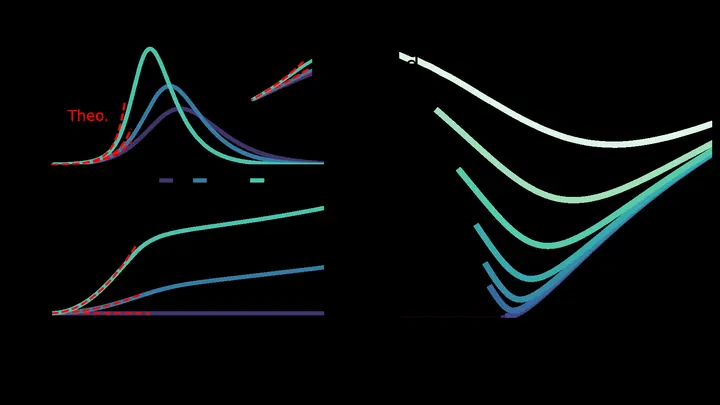
Ecological resilience is the capacity of an ecosystem to absorb disturbances—such as fires, floods, or species invasions—and still maintain its core functions, structures, and feedback loops. It is not about staying unchanged, but about adapting and reorganizing while preserving the system's identity. A resilient ecosystem can shift between alternative stable states without collapsing into a degraded condition, such as a forest becoming a grassland or a coral reef becoming an algal-dominated system.
History
The concept was formalized by ecologist C.S. Holling in 1973, who distinguished resilience from stability—the former being the ability to absorb change, the latter being the tendency to return to an equilibrium. His framework became foundational in ecosystem management and sustainability science.
How it works
Resilience emerges from a combination of diversity, redundancy, and connectivity. When many species perform similar roles (functional redundancy), the loss of one can be compensated by others. Diverse responses to stress mean that some species will thrive under new conditions, maintaining ecosystem processes like nutrient cycling and primary production. Adaptive collective behaviors, such as migration, dormancy, or shifts in species interactions, allow the system to reorganize around the disturbance rather than being destroyed by it.
In practice
Resilience thinking guides conservation strategies, such as designing wildlife corridors, restoring degraded lands, and managing fisheries to withstand climate variability. It also informs urban planning for flood resistance and food security under global change.
Fun fact
Recent modeling suggests that Earth's plant biosphere could remain resilient for over a billion years, even as the sun brightens, because of adaptive shifts in plant physiology and community composition.
Every winter, hospitals fill up, and by summer they seem to empty. Epidemics breathe like the tide. But why do waves of disease keep rolling in, even without new mutations? Mathematicians found an answer in a tug-of-war between two strains.
Within a single epidemic, two virus variants often coexist.
A forest does not live in a static world. Between winter and summer, day and night, conditions shift, and each fluctuation is like a rhythm that all its inhabitants must keep pace with. Yet until now, ecologists have mostly studied how communities of living beings persist in an unchanging environment, like testing a bridge's strength only in calm weather.
Rare species in a large community are like thin branches on a tree: a random gust can easily snap them. Even if conditions are stable, a small population simply lacks enough individuals to survive a bad season. In a new study, scientists added this factor to an ecosystem model and watched the community clean itself out.
Two daughter cells receiving equal shares from the mother: that's the familiar picture of division. But what if one gets almost everything and the other just crumbs? Stochastic modeling shows that sometimes unequal division is more advantageous.
Each cell stores a protective reserve that helps it weather hardships. During division, this reserve is distributed between daughters.
A web where lions eat zebras and hyenas finish the leftovers is not just a list of dinners. It's a survival map for an entire region. When the climate shifts, animals move, and the map tears. To understand where it will tear and where it will hold, you need to find its unchanging 'skeleton'—the connections that repeat across different places.
Two neutron stars whirl in a close dance, each feeling the tidal field of its partner. It's like the Moon raising oceans on Earth, but here it's spacetime itself and the star's matter that deform. Astrophysicists call this tidal deformation — a measure of how much an object 'bends' under the gravitational pull of its companion.
Imagine an experienced chef during rush hour: suddenly a stove fails or a key ingredient runs out. Instead of panicking, he instantly reworks the recipes — speeding up some dishes, slowing down others, reallocating resources on the fly. This principle of dynamic adaptation underpins a new generation of ultra-reliable networks.
Technological disasters like Chernobyl rarely strike without warning. They gestate for years: organizations ignore warnings, their complexity mirroring the rise of entropy — a measure of relentless chaos that builds up unnoticed until it avalanches.
A desert where every step reshapes the terrain. Dunes settle, new slopes emerge, and the next step is dictated by what you've just trampled. That's roughly how "sandscapes" work — a mathematical model inspired by living systems.
In 1960, the Tatel radio telescope spent weeks listening to emptiness around Tau Ceti and Epsilon Eridani. Project Ozma was searching for technosignatures — traces of another mind at work.
A runner loses on both a smooth track and sticky sand. Seems hopeless. But if the surface underfoot starts changing every few seconds (track, then sand) the runner suddenly stops falling behind. He doesn't get faster; the environment just doesn't get a chance to 'crush' his weakness.
That's exactly what the authors found when studying a simple predator–prey model.
A person reaches out to a stranger across town. That stranger will never return the favor: they'll never meet. So why help? Biologists call this indirect reciprocity: kindness comes back not from the person you helped, but from someone else, down the line.
In a new study, two variants of this idea were pitted against each other.
Life is a constant dance between order and chaos. Back in the mid-20th century, Erwin Schrödinger noted that living things feed not so much on matter as on "negative entropy"—the ability to maintain their own order by increasing disorder around them.
A living sheet of cells resembles a crowd on an escalator. In a calm state, everyone moves smoothly, but as soon as a crush occurs, movement comes to a halt. Similarly, cell layers under load can suddenly stiffen, turning from a pliable mass into an elastic scaffold.
A city is a living system: it consumes resources, produces waste, and its 'circulatory system'—the road network — delivers people and goods to their destinations. But while engineers design transport arteries as rigid geometry of straight lines, nature has spent millions of years perfecting ideal distribution networks.
A tightrope walker inches across a chasm. As long as they keep their balance and avoid sudden moves, they're safe. But one overcorrection, and a fall is inevitable. Life works much the same way at every level — from proteins inside a cell to entire ecosystems.
A lump of plasticine, when kneaded, behaves like an amorphous solid — not a crystal, but not a liquid either. Inside such a material, avalanches can occur: one tiny rearrangement triggers neighboring ones, and a wave sweeps through the entire sample.
Drylands are like skin cracking from dehydration. When rainfall decreases, plants don't vanish overnight: they rearrange, leaving bare patches of soil between them. These patterns are visible even from space.
Scientists compared satellite images of eight arid regions, from the Sahel in Africa to Australian deserts.
Imagine a mountain range where height represents an organism's fitness. Every point on the slope is a particular set of genes. Evolution climbs upward, but the terrain of this phylogenetic network landscape is cut by ridges and valleys.
The fate of a civilization isn't just a matter of luck or disasters. Scientists simulated a thousand years of history under ten different scenarios, accounting for resource consumption, governance, and random shocks. The key metric turned out to be the 'activity coefficient' – the fraction of time when a civilization is technologically alive. At best, this fraction nears 100%; at worst, it drops to 38%.
A landscape cut by roads or rivers into isolated patches resembles a shared apartment after partitions are installed: residents no longer bump into each other in the common hallway. Species that once competed for the same food or space now live apart. Competition weakens, and those that would have lost to pushier neighbors in a continuous landscape now survive.
An epidemic is like a fire in a dry forest: a spark flares up, the flames leap from tree to tree, and within a week the whole area is burning. A hundred years ago, scientists devised a simple mathematical model for such a fire: they divided people into those who had not yet fallen ill, those who were ill, and those who had already recovered.
Ring-shaped reefs, atolls, are usually explained like this: corals grow along the edge of a volcanic island while the island slowly sinks. What's left is a hollow ring that can stretch for kilometers. But satellite images show similar rings around very small reefs where there are no volcanoes and no subsidence.
In two neighboring ponds, the same microorganisms swim. Food appears now in one, now in the other — randomly, with no rule. After a month, there are a hundred times more of them in the first pond than in the second. No one chose where to live. Just luck.
This is how disequilibrium works. While the environment keeps changing, abundances don't have time to even out.
An ecosystem is like a swing that someone is subtly pushing. Previously, it was thought that the main concern was that the swing wouldn't swing too wildly. But the authors of this work showed that the greater danger is when the equilibrium point itself slides toward a place where the swing can no longer return.
Imagine a house of cards where each card supports the others. One wobbles, and the neighbors start to lean. Earth's climate system works similarly: ice sheets, ocean currents, tropical forests, all are connected. If one element crosses a threshold, it can drag the rest down with it.