A generative model is a class of machine learning algorithms that learn the underlying distribution of a training dataset and then produce new data samples that resemble it. Instead of merely classifying inputs into categories, these models capture the statistical patterns and structure of the data, allowing them to create novel examples—images, text, molecular structures, or even physical states—that are plausible but not identical to anything seen before. This makes them a cornerstone of modern artificial intelligence, enabling tasks like image synthesis, drug discovery, and climate simulation.
History
The concept emerged in the 1980s with early work on Boltzmann machines, but modern generative models took off after the introduction of VAEs in 2013 and GANs in 2014 by Kingma and Welling, and Goodfellow et al., respectively.
How it works
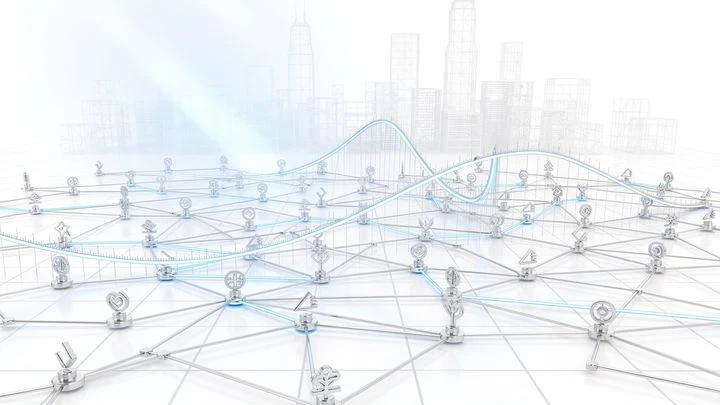
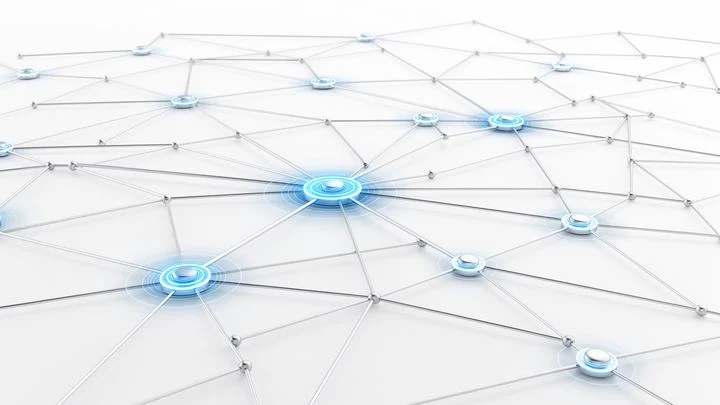
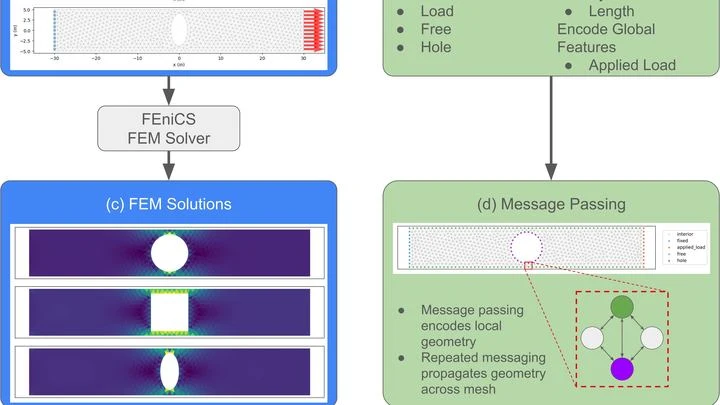
Generative models typically work by defining a probability distribution over the data and then sampling from it. Common approaches include Variational Autoencoders (VAEs), which compress data into a latent space and decode it back, and Generative Adversarial Networks (GANs), where a generator network competes with a discriminator to produce increasingly realistic samples. In physics and materials science, graph neural networks can act as generative models by learning the rules that govern atomic arrangements, then proposing new crystal structures or molecules with desired properties.
In practice
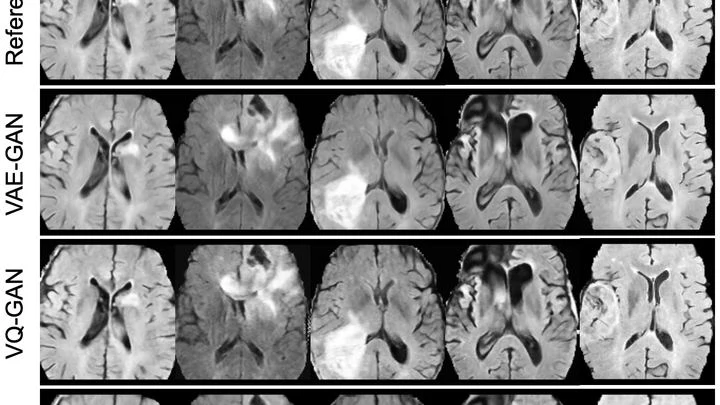
Generative models are used to design new materials with specific properties, generate synthetic medical images for training diagnostic systems, and improve climate models by filling in missing data or creating realistic weather patterns.
Fun fact
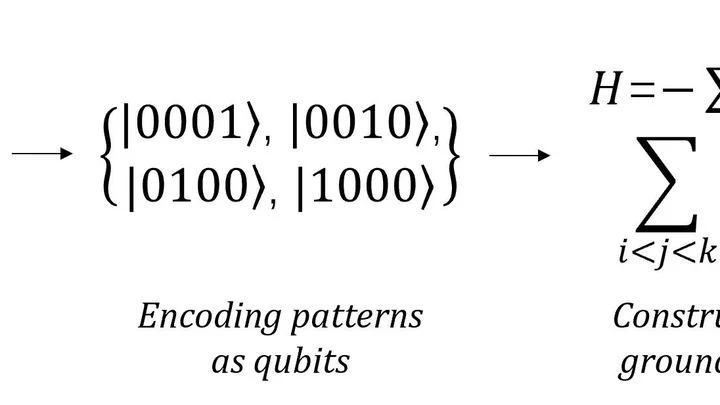
Generative models can create 'chemical space' as a vast combinatorial library, where each point is a potential molecule, and they help navigate this space to find candidates for new drugs.
In March 2020, France emptied out: people stopped going to work, school, and cafés, and the streets filled with silence. Epidemiologists stared at the graphs and understood that the virus was not spreading on its own, but through handshakes, conversations, and metro rides. But how could they predict how many contacts a person would keep if the government announced new restrictions?
Imagine a simultaneous interpreter in a room where two people are speaking: they must keep up with both meaning and intonation, but if the speech is too fast, only a paraphrase remains. That's roughly how scientists feel as the stream of gravitational waves from black hole and neutron star mergers grows, while precise signal calculations lag behind.
Two daughter cells receiving equal shares from the mother: that's the familiar picture of division. But what if one gets almost everything and the other just crumbs? Stochastic modeling shows that sometimes unequal division is more advantageous.
Each cell stores a protective reserve that helps it weather hardships. During division, this reserve is distributed between daughters.
Holding in mind the exact position of a pen as it's slowly moved is a routine task for the brain. For artificial neural networks, it's nearly impossible. Standard recurrent networks like GRU and LSTM tend to break continuous motion into rigid steps: the pen doesn't glide smoothly but jumps from point to point.
A jazz ensemble: at first, a cacophony of random notes. Then — a catchy riff that plays over and over. Such is the riddle of the origin of life — only in the language of chemistry.
Galaxy NGC 4254 lies 1.5 million light-years from the center of the Virgo cluster. It drags a long stream of cooling hydrogen — a sign that it's plowing headlong into the hot gas. Losing cold fuel quenches the birth of new stars.
The human mind is like a construction set that builds itself. New ideas don't die with their creators: they are passed on, mixed, and selected. This process is called cultural evolution: useful inventions stick, useless ones are forgotten. That's how a ratchet works — a mechanism that only turns forward.
But what exactly happens in the head when one thought displaces another?
Quantum calculations often resemble assembling a complex mechanism: a physicist knows a part will fit, but can't always explain why. One favorite trick is to insert a 'unity' into the middle of a formula — not an ordinary one, but one built from an infinite set of all possible states of the system. This turns a cumbersome expression into a chain of simple integrals.
A basin of wet sand. You press in one corner, and water starts moving. But how exactly? Instead of an even circle, it might spread in tongues, linger in some spots, and rush through others. Underground, the same thing happens: oil, water, or gas migrate through rocks not by the textbook, but following the chaos of fractures and heterogeneities.
In boiling soup, molecules collide chaotically and react. But if you measure how their concentrations change, patterns emerge. This is how carbon chemical networks work — mixtures of molecules that spontaneously 'cook' information, turning each reaction into an elementary computation. Previously they were used only for modeling nature.
The modern standard approach to AI training is like a child locked in a library: he remembers millions of books but doesn't know that fire burns and falling hurts.
The data from a single CT scan is comparable to several feature-length films. TCAM-Diff bypasses this bottleneck: the program compresses the 3D scene into three shadow projections — like a sculptor reconstructing a solid statue from silhouettes on three walls.
A child exploring an unfamiliar apartment crawls from object to object and remembers what is visible from each corner. This is how the brain builds a mental map — an internal model of space. The gradCSCG algorithm works on the same principle: it receives a video stream from a camera and independently draws a map of the room, relying only on the changing images.
In the depths of the Universe, when a massive star collapses into a black hole or a magnetar is born, a gamma-ray burst flares up — for an instant, it outshines all the stars in the observable Universe.
In a kitchen with gas burners, each heats differently. If the cook moves the pots, food may burn. Just so in a wireless network: the antenna-burners and user-pots require precise placement. Ordinary neural networks don’t distinguish positions, treating all burners as identical. So they struggle to estimate signal quality or adjust transmission.
A cook who learns to cook from hand-drawn pictures risks ruining every dish. The same trap awaits computer vision: models need thousands of labeled images, but collecting them manually is expensive and tedious. Synthetic frames solve the problem, but only if they look real.
Researchers took 16 everyday activities — from washing dishes to squatting — and broke the movements down into elementary components, much like a spectroscope splits light into a spectrum. Comparing three approaches, they found an unexpected key to recognition: a single averaged snapshot is enough. Only nine joints out of dozens carried the crucial information — the rest hardly mattered.
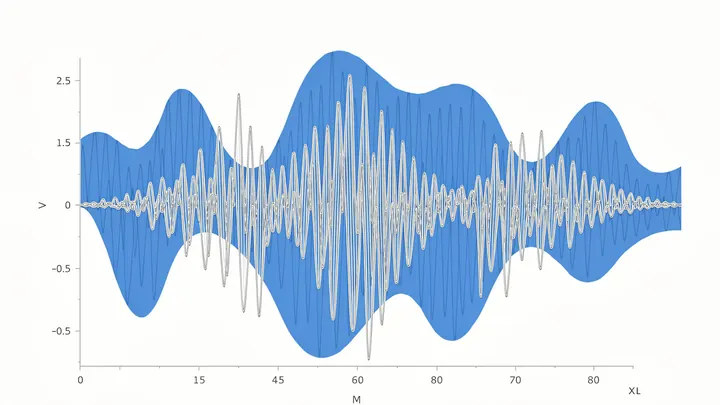
The standard way of digitizing speech: taking volume readings thousands of times per second. It's like tasting broth with a teaspoon: each sip is watery, with almost no detail. The data stream swells, though the substance is minuscule.
Scientists proposed first "simmering down" the audio signal.
A desert where every step reshapes the terrain. Dunes settle, new slopes emerge, and the next step is dictated by what you've just trampled. That's roughly how "sandscapes" work — a mathematical model inspired by living systems.
A snowflake grows, an oil slick spreads, a crowd moves — each case has its own equations. But the end result is often the same: shape, speed, and pattern follow a simple scheme that repeats across scales. This is universality — when a common law hides behind the details.
Gravitational signals from dying massive stars are whispers reaching us from the most violent laboratories in the Universe. Einstein predicted these gravitational waves over a century ago, but only today, with detectors like LIGO, are we beginning to hear them.
Some crystals behave like a switch: nudge the temperature or pressure, and they turn from a conductor into an insulator. This is called a metal–insulator transition (a change in the ability to conduct electricity).
The 120 residents of Montelago are not people but digital characters. Each, besides a name and biography, has three hidden coordinates: trust in municipal authorities, assessment of source credibility, perceived adequacy of information. These numbers are known to the creators but not to the system itself.
The LIGO and Virgo detectors catch gravitational waves from mergers of black holes and neutron stars. But among the cosmic signals, their sensitive arms are constantly crossed by shadows — short-lived noise artifacts, glitches, that stage a true shadow theater.
X-ray detectors work like honeycombs: particles flash here and there in hexagonal cells. Conventional algorithms stretch these combs onto a square grid, creating ghostly polarization artifacts. Scientists used a neural network that lives by the rules of the hive — it processes the hexagonal structure directly, preserving the natural pattern.
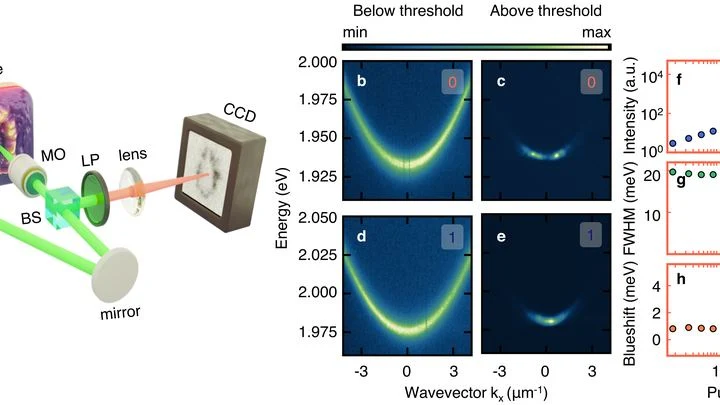
Generative neural networks that create images typically rely on digital randomness. But a team of researchers built a system where randomness is born not in code, but in a tiny optical cavity filled with an organic dye.
A dance of hundreds of particles: some pairs spin slowly and gracefully, others twitch in a frantic rhythm. To understand the essence of the dance, you need to watch the slow movements: they are the main choreography of the system. In molecular science, such slow movements are called 'slow modes,' and they determine how a protein folds into a ball or how a drug binds to its target.
Imagine an interpreter sitting in a meeting room, translating every word. But then they notice their translation could improve if they learned from their mistakes. They start noting which phrases caused confusion and adjust them. Within an hour, their translation is more accurate and the meeting runs smoother.
Designing machines is like cooking: you need to know exactly where the 'dough' will tear. Old computer simulations check every point on a part for hours, like measuring the entire pot to make sure the handle doesn't fall off.
Spacetime is often pictured as a smooth fabric. But at the very microscopic level, this fabric might not be continuous; instead, it could consist of individual 'atoms'—events linked by causality. This picture of the world is called causal set theory.
Conventional neural networks learn from thousands of examples, burning hours and gigawatts. Physicists have found a quantum workaround. As early as Max Planck showed the discreteness of energy, today this allows generation without training.
An artist paints a portrait stroke by stroke, and then someone offers them a flash camera — one click, and it's done. That's roughly the shift from multi-step models to one-step models in generating images of galaxies.
Typical neural networks for image synthesis work like a watercolorist: they apply a layer, blur it, add details.
A mosaic of large colored tiles. Each tile is the average precipitation over an entire month for an area the size of a small country. For a general understanding, the picture is fine, but if you need to know whether a downpour hit a specific city yesterday, it's useless.
When black holes collide, the very fabric of spacetime trembles. That rumble, gravitational waves, gets picked up by detectors, but decoding the signal used to take hours of computer simulation.
Every time you mull over a risky move, whether to invest in stocks or hold off, an inner dialogue runs through your head. Usually, scientists try to reconstruct that dialogue from the final choice alone, as if a detective were reconstructing a conversation between two people from a photo of the meeting spot.
Every carbon atom in a molecule carries a passport — the energy with which its deepest electrons sit in their orbitals. This energy is sensitive to neighbors: add an oxygen nearby or a double bond, and the number in the passport changes. Chemists have long measured such energies with X-rays, but calculating each new molecule takes hours of machine time.
Studying the birth of galaxies requires simulating billions of years of dark matter growth and star formation — even supercomputers handle this slowly.
A forecaster issues a week-long forecast in seconds but cannot explain a single decision. That is roughly how modern AI weather models work: they already match classical numerical methods, yet their internal logic is hidden behind millions of parameters.