What Planets Are Made Of: First Census of the Cosmic Pantry ✛
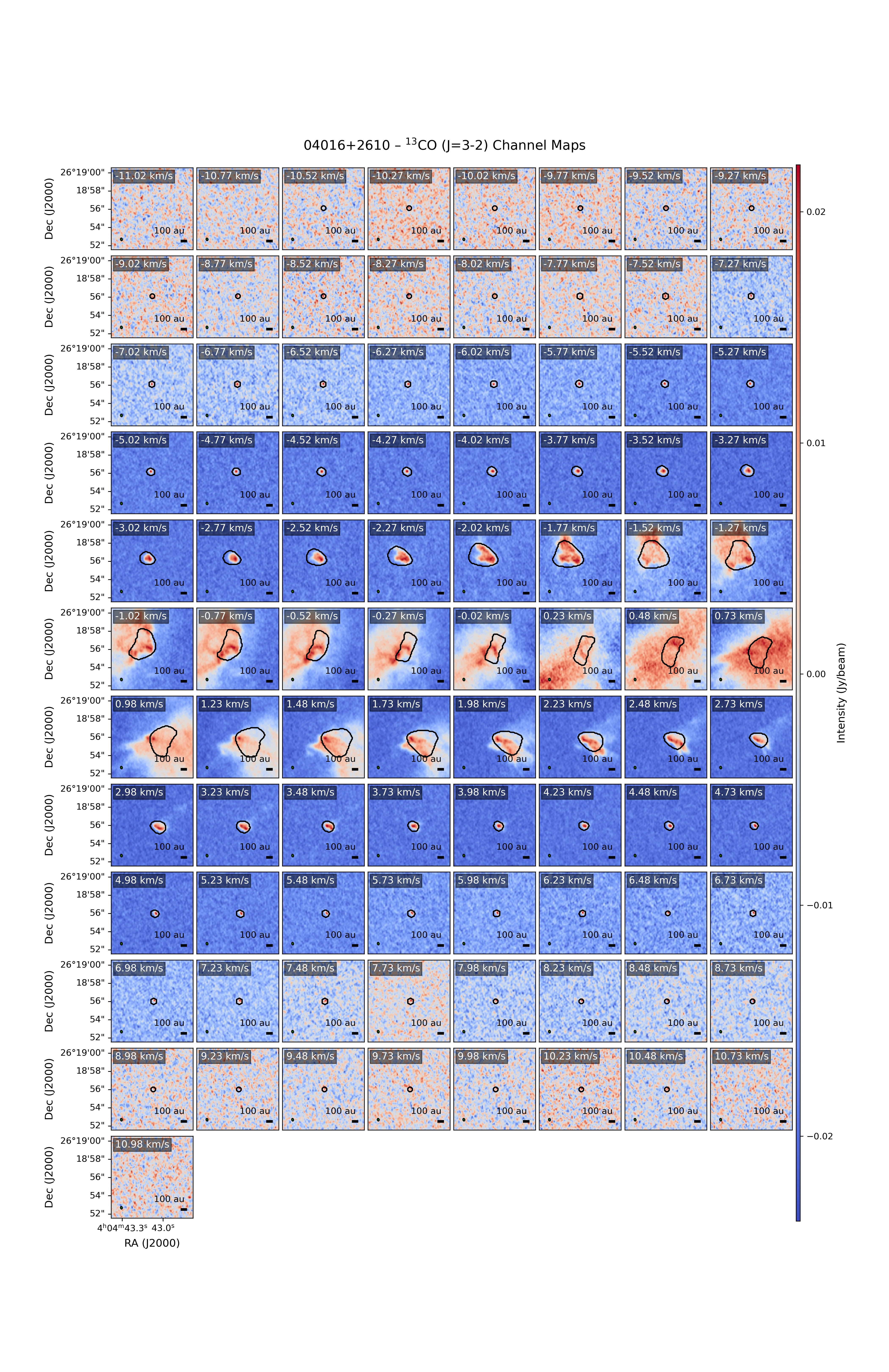
In the constellation Taurus, 450 light-years away, huge 'pancakes' of dust and gas spin around young stars. These are the cradles of future planets. For the first time, scientists have peered into all 26 of these cradles at once and weighed how much material is available for building worlds.
Previously, it was unclear how much dust and gas actually remains in these disks at the earliest stage. Now it turns out: on average, there is dust equivalent to 5.5 Earth masses, and gas equivalent to 0.00067 solar masses. But the spread is enormous: in one disk, the dust would be enough for three Neptunes, while in another, less than a small rocky planet. This means some systems are gearing up to birth giants, while others will only manage dwarfs.
The most massive disk in the sample contains dust equivalent to 97 Earth masses — enough to build three Neptunes. The smallest disk is only 8 astronomical units across — smaller than Saturn's orbit.
In Liu Cixin's novel 'The Three-Body Problem', the Trisolaran civilization exists in a system with chaotic orbits due to three stars. Our data on Taurus disks remind us that most stars are born in binary and multiple systems, and their disks can be distorted by the gravity of companions, affecting planet formation.