Planetary Kitchens: What the Pantries of Taurus Hide ✛
In the dark kitchen of the Taurus molecular cloud, 450 light-years away, dozens of planetary systems are being prepared. Each young star is a chef, and its protoplanetary disk is a counter piled with flour-like dust and steam-like gas. Until now, astronomers could only see the finished 'dishes'—already formed planets. Now, for the first time, we've managed to peek into the pantry itself.
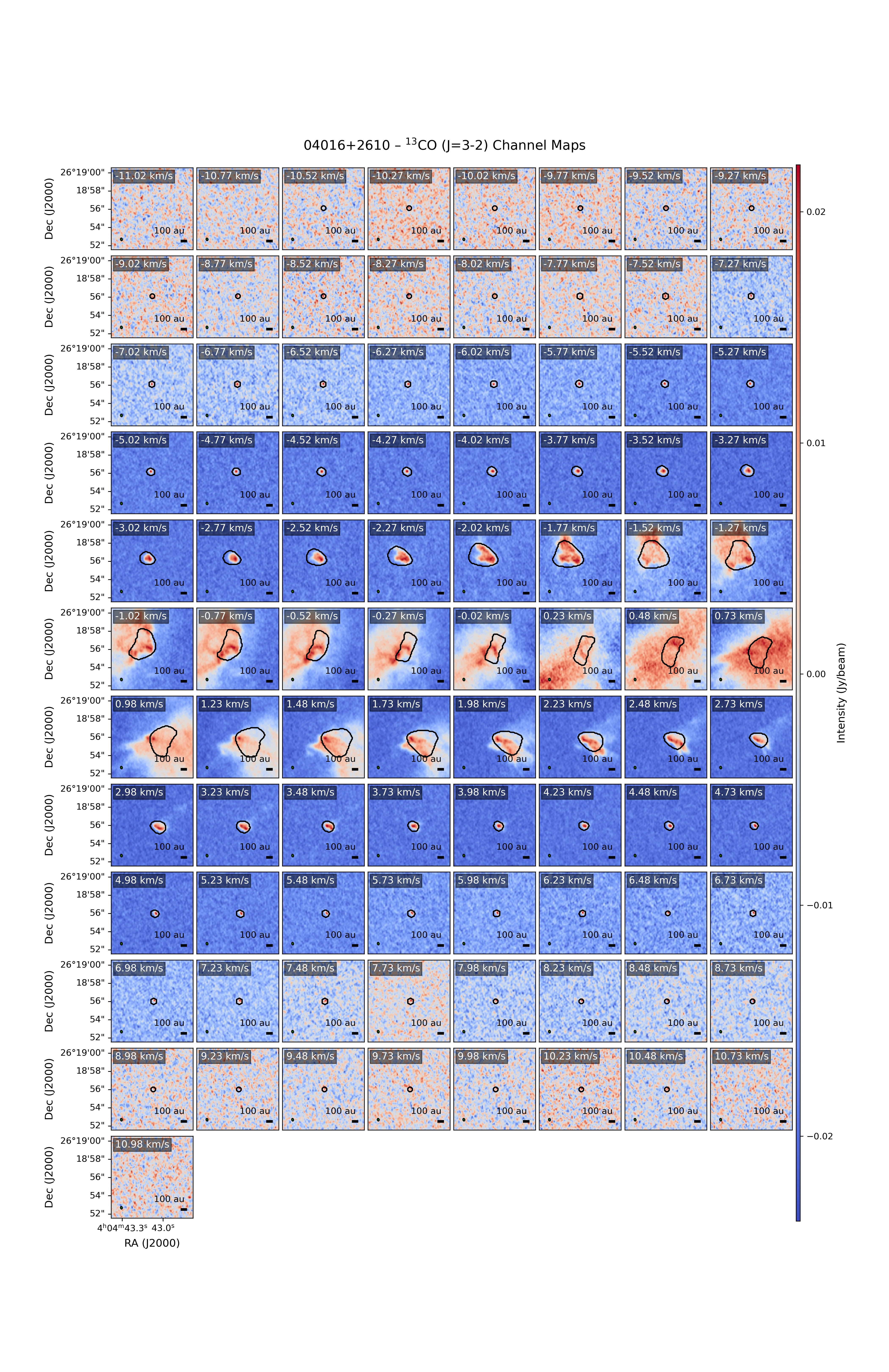
To separate the disk from its surrounding cocoon, a clever trick was used: Keplerian masks. These are three-dimensional templates that let through only the radiation moving in orbit around the star, as if we were filtering the steam over a pot from the fog in the room. Then, the data were compared against 29 160 models to calculate the gas mass.
The result was surprising: the median dust mass is 5.5 Earth masses (from ALMA) and 39 Earth masses (from VLA), while the gas mass is 0.00067 solar masses. The gas-to-dust ratio jumps from 8 to 147. This means some kitchens have already lost most of their steam, while others have kept all their ingredients untouched.
Previously, it was unclear how much material remains in disks at the earliest stages. Now we have the first complete census for an entire region. It turns out that disks in Taurus are unlike those in Ophiuchus (which are poorer) or those in Orion (which are more massive). Each kitchen follows its own rules.
These data will help calibrate planet formation models and plan future surveys. But the key takeaway is that the supply of ingredients for planets is not uniform, and this changes our view of how quickly and evenly worlds are born. The pantries of Taurus are open, and they are in a pleasant state of disarray.
The most massive disk in the sample contains dust equivalent to 97 Earth masses — enough to build three Neptunes. The smallest disk is only 8 astronomical units across — smaller than Saturn's orbit.
In Liu Cixin's novel 'The Three-Body Problem', the Trisolaran civilization exists in a system with chaotic orbits due to three stars. Our data on Taurus disks remind us that most stars are born in binary and multiple systems, and their disks can be distorted by the gravity of companions, affecting planet formation.