Two Unequal Shots Sent a Star Flying
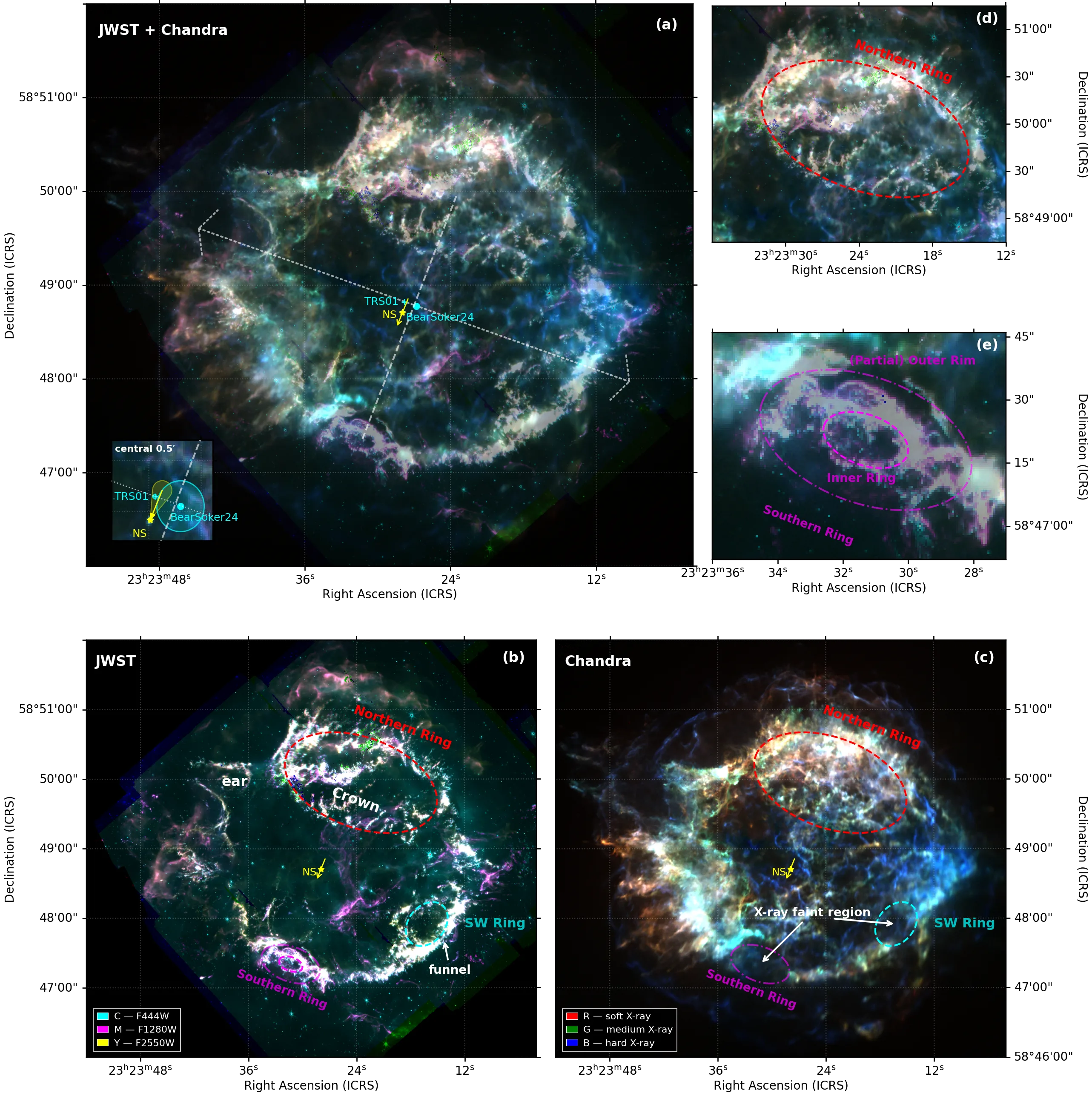
When a star explodes, it can fling out narrow jets of matter. The supernova remnant Cassiopeia A shows two rings: a large northern one and a small southern one. Think of them as two cannon shots, except one shot is 40 times more powerful than the other.
Researchers built a computer model of the explosion. First the star blew up evenly in all directions, and four seconds later two jets struck in opposite directions. The northern jet was far stronger than the southern one. The model reproduced the same rings seen in telescope images. The mismatch between the jets gave the neutron star a shove, and now it is traveling at 400 kilometers per second, which is Moscow to St. Petersburg in a single second.
This approach can be applied to other remnants of exploded stars. If rings and fast-moving stars turn up often, then unequal jets must be a common feature of explosions.
The neutron star in Cassiopeia A moves at about 400 km/s. In one second it covers the distance from Moscow to St. Petersburg.