The Crab Nebula is a vast, expanding cloud of gas and dust in the constellation Taurus, the remnant of a supernova explosion that was observed on Earth in 1054 AD. It is one of the most studied objects in astronomy, serving as a cosmic laboratory for understanding extreme physics. The nebula is powered by a pulsar — a rapidly spinning, highly magnetized neutron star — that injects energy into the surrounding material, creating a pulsar wind nebula. This energy makes the Crab Nebula shine brightly across the electromagnetic spectrum, from radio waves to very high-energy gamma rays.
History
The Crab Nebula was first cataloged by John Bevis in 1731, and later independently by Charles Messier in 1758, who included it as the first entry in his famous catalog. Its connection to the 1054 supernova was established in the 20th century, and the pulsar was discovered in 1968, confirming the neutron star nature of the remnant.
How it works
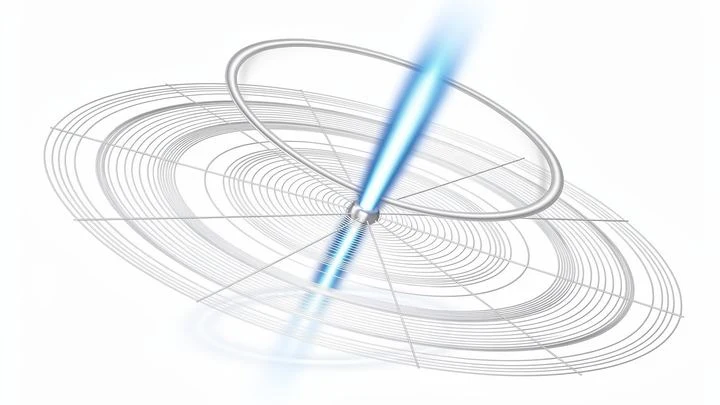
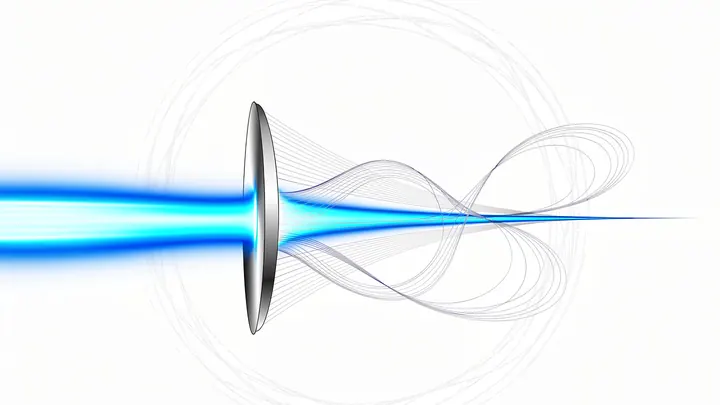
At the heart of the Crab Nebula lies a pulsar, a neutron star spinning about 30 times per second. Its intense magnetic field and rapid rotation generate powerful electric fields that accelerate charged particles to near-light speeds. These particles stream outward, forming a relativistic wind that collides with the slower-moving supernovaejecta, creating a shock front. In this shock, particles are further accelerated, and they emit synchrotron radiation — light produced when charged particles spiral in magnetic fields — which makes the nebula glow. The pulsar also emits beams of radiation that sweep across Earth like a lighthouse, producing the characteristic pulses observed.
In practice
The Crab Nebula is used as a calibration source for X-ray and gamma-ray telescopes, and its pulsar serves as a natural clock for testing general relativity and timing models.
Fun fact
The Crab Nebula's pulsar is known to 'glitch' — its rotation suddenly speeds up — and these glitches are so regular that they have been compared to a cosmic clock that occasionally ticks twice.
In 1054, a star flared up in the constellation Taurus. The light of its death was so bright that it was visible in daylight for nearly a month, and Chinese astronomers recorded it in their chronicles. Today, the Crab Nebula is spreading over that spot, and its claws are clouds of gas still being whipped up by the dead star at its center.
The night sky is full of rings and bubbles, but in the radio band they look different. In data from the Australian radio telescope ASKAP, a structure has surfaced that resembles two soap bubbles blown from the same straw.
The night sky in neutrino light resembles a canvas worked on by two hands. One holds a broad, soft brush: these are supernova remnants, the shells left behind after stellar explosions. The other grips a fine, hard pen — microquasars, binary systems where a black hole twists matter into narrow jets.
An avalanche in a sandpile starts with a single grain. No one knows exactly where it will slip or how big the slide will be. But if you keep pouring sand, the pile itself reaches a state where avalanches of all sizes, from tiny trickles to massive collapses, follow the same law.
295 000 meters per second. Not even particles in solar coronal ejecta move that fast. But at the center of the galaxy cluster H1821+643, hot gas does exactly that. The quasar at its heart takes a breath, and its breath stirs everything around for 60 thousand light-years.
In the deep field of JWST, among thousands of galaxies, astronomers zoomed in on the source JADES-GS 209777 – and saw a cosmic chick. Its "shell" is a thick cocoon of gas and cosmic dust that long hid the growing black hole at its center. But at a redshift of 3,711 (1,8 billion years after the Big Bang), the shell began to crack.
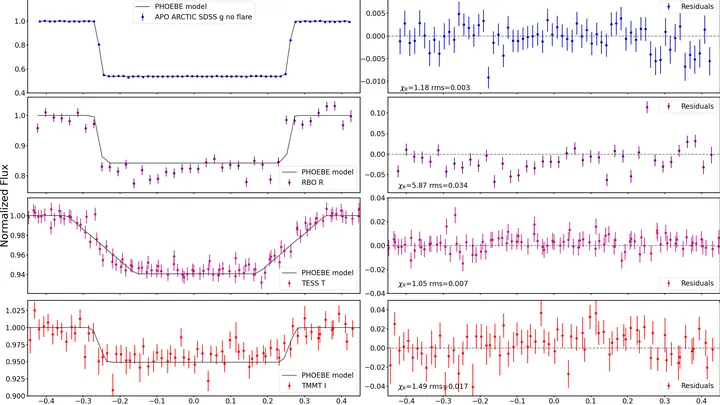
Tabby's Star, a beacon in the cosmic sea, has baffled astronomers since 2015. Its light flickered not in the rhythm of planets, but as if scattered by a storm — deep dips, sharp spikes. But amid this chaos, a smooth, nearly perfect dip was found. The eye of the storm.
In June 2024, the CHIME radio telescope recorded over 700 radio bursts per hour from source FRB 20240114A. Such a hyperactive repeater releases in one hour nearly all the magnetic energy of a typical magnetar (a neutron star with an ultra-strong field).
In 1054, earthly observers recorded a 'guest star' flaring in the constellation Taurus — so bright it rivaled the Sun. Today, its remnant, the Crab Nebula, serves as a cosmic laboratory, and it has now sprung a new surprise.
In the first seconds after the Big Bang, the Universe left us not only light but also something far more elusive — the relic neutrino background. This echo of creation permeates every cubic centimeter, yet we barely notice it.
A ball, almost weightless for its size, circles its star every four days. Planet TOI-2195 A b is a real riddle: by mass it's slightly heavier than Neptune, yet bloated to Jovian volumes. If there were an ocean big enough, this exoplanet would float on its surface like a giant inflatable ball.
Hundreds of light-years away, there's a planet that looks like a giant mirror. LTT9779b reflects most of the light that hits it — far more than you'd expect from a Neptune-sized body. Astronomers have long debated what makes it so shiny: a thick carbon-rich haze or a layer of clouds.
The James Webb Space Telescope has helped settle the debate.
A massive star doesn’t simply fade away — it blows up as a supernova, leaving behind an expanding remnant and a wildly spinning neutron star — a pulsar. In this cosmic storm, astonishing patterns emerge, and the 'Nimbus'–'Thunder' system is a dazzling illustration.
A hum resonates across the universe. It is not sound, but a trembling of space itself — the gravitational wave background. It is produced by pairs of supermassive black holes circling each other at the centers of distant galaxies. Each pair is like a bass instrument in a vast orchestra.
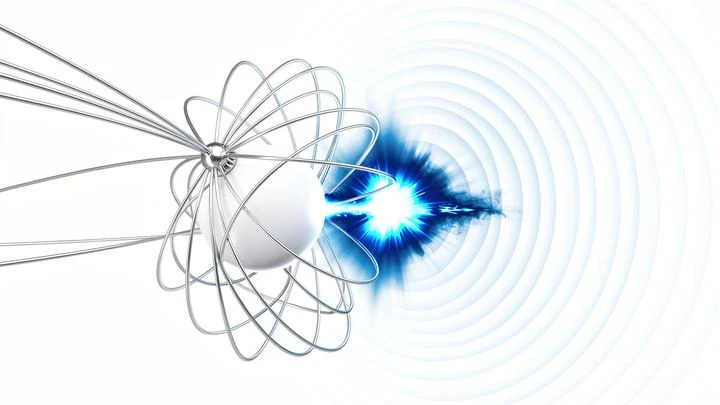
Blacksmith's bellows fan the fire by forcefully pushing out air. In space, the shock wave from a supernova, a concept introduced by Fritz Zwicky, acts like such bellows: it catches up with a giant bubble of charged particles and magnetic fields formed around a spinning neutron star…
In the constellation Scorpius, 3,000 light-years from Earth, a dead star steals matter from a living one. A white dwarf in the system IGR J17014-4306 — a superdense carbon-oxygen ball with the mass of the Sun but the size of Earth — siphons hydrogen from a normal companion star.
In April 2021, in a galaxy 35 megaparsecs away, supernova SN 2021foa erupted. It immediately puzzled astronomers: its spectrum feverishly switched between hydrogen and helium lines — as if the star, in agony, was frantically shedding its outer layers.
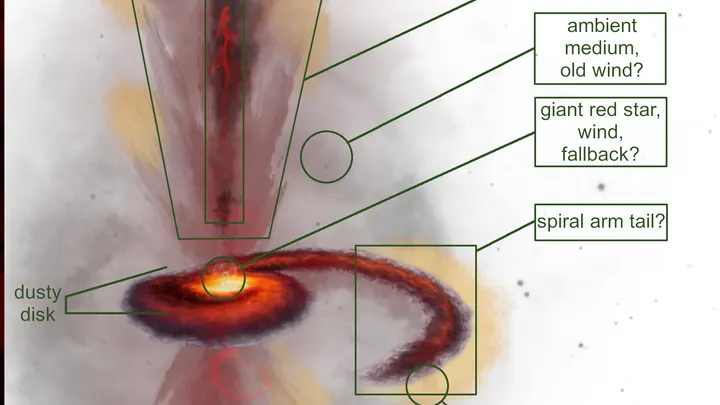
Two stars circle each other like dancers in a slow waltz. This dance is not eternal: the partners gradually draw closer until they collide and merge into a single entity. At that very moment, a red nova is born — a flash that lights up the sky for a few weeks, then slowly fades, enveloped in a dense cloud of dust.
Two lamps in a shop window: one glows with a cool, bluish light, the other a bit warmer and yellower. That's roughly how the two types of supernovae, Ib and Ic, look when astronomers view them through a telescope.
Every second, invisible projectiles from the depths of space pierce through us. These are cosmic rays — atomic nuclei accelerated to speeds nearly indistinguishable from the speed of light. Their energy is hundreds of millions of times greater than what our most powerful accelerators can achieve. Where does this monstrous force come from?
A glowing cloud in a telescope looks like a wisp of fog about to dissipate. Planetary nebulae are gas shells cast off by dying stars. Young nebulae are bright and compact, but as they age, they expand, cool, and become increasingly transparent until they vanish into the interstellar medium.
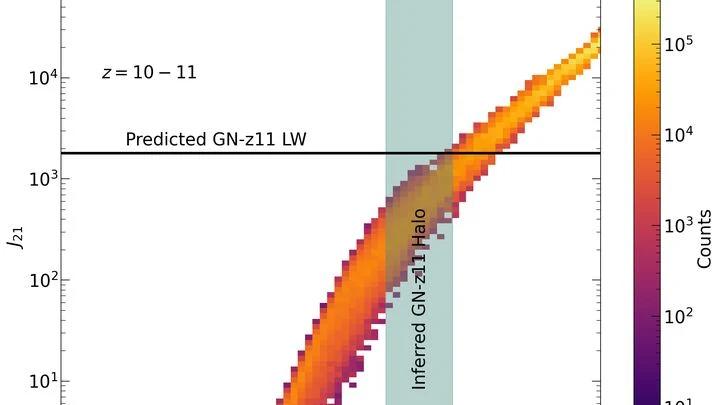
A bonfire built of pure alcohol burns hot and gives off almost no smoke. That's roughly how the first stars shone: they contained no heavy elements, only hydrogen and helium left over from the Big Bang. The James Webb Space Telescope may have caught one such "bonfire" in the galaxy GN-z11.
The ASKAP radio telescope in Australia has spotted a very faint glowing ring in the southern sky, like a soap bubble the size of several full moons. Inside the ring, exactly at the center, shines a tiny point. Usually, such a picture means one thing: a star exploded here, leaving behind an expanding shell and a collapsed core at its heart.
But this pair has a quirk.
Gamma-ray burst GRB 221009A flared so brightly that it was dubbed the 'brightest of all time.' The LHAASO observatory detected gamma rays from it with energies up to 13 TeV — thousands of times more energetic than particles in an X-ray machine.
A massive star's explosion is bright but brief. The flash itself lasts weeks, but the dust it heats around it glows in infrared for years. It's like a camera flash illuminating a room, then hot dust particles lingering in the air — only on a cosmic scale.
Every 15 hours, in a constellation 57 light-years away, a miniature solar eclipse takes place. A tiny white dwarf — a star the size of Earth but heavier than the Sun — ducks behind the disk of a red dwarf. For astronomers, this is not just a pretty coincidence but a way to peek into the pair's past.
The lighthouse in the Crab Nebula blinks thirty times per second. It's a pulsar — a dead star that, as it spins, shoots out narrow beams of light, and Earth sweeps through them like a ship crossing a lighthouse beam. This lighthouse has two beams: the main pulse and the interpulse.
A pulsar is a dead star spinning at breakneck speed, sending out radio pulses like a lighthouse. But for PSR J1928+1815, the signal sometimes cuts out for 3.6 hours. Something is blocking the beacon. A companion star orbits the pulsar, and its shadow falls on us.
The night sky is full of beacons that blink on schedule. Pulsars are fast-spinning neutron stars whose radio pulses arrive with clockwork precision. But there are other beacons too: they stay silent for minutes or hours, then suddenly emit a single pulse, and go quiet again.
Light from a distant star, passing through the atmosphere of planet K2-18b, left unusual "fingerprints" in its spectrum. Astronomers spent 420 hours collecting this light with the James Webb Space Telescope and split it into colors, like a rainbow.
After a supernova explosion, a neutron star neutron star remains: a city-sized ball of unimaginably dense matter, spinning hundreds of times per second. Any tiny bump on its surface would make it wobble like an off-balance spinning top, humming faintly through the fabric of space.
For half a century, astronomers puzzled over the nature of the powerful X-ray emission from Gamma Cassiopeiae — a bright beacon in its constellation whose X-ray glow didn't fit models of single stars. An invisible companion was suspected, but direct evidence was lacking.
In a gas cloud left after a star exploded (called a supernova remnant), astronomers noticed a giant glowing letter S. It was drawn by two jets of superheated material ejected during the cataclysm. These jets didn't just shoot straight out — they slowly spun like a top, which bent their path into curves.
Deep in the constellation Aquila lies a nebula that looks like an expanding bubble. It is inflated by a tiny star the size of a city — a pulsar that makes several rotations per second and loses rotational energy. Usually, such bubbles shine exactly as brightly as their pulsar is powerful.
A cosmic neon sign lit up in an incredibly distant galaxy: almost all its light comes from hot gas, and the stars are lost in this glow. The James Webb telescope recorded that the gas, a mix of hydrogen and helium, is so heated that it glows on its own.
In the Norma cluster, the nearest rich galaxy cluster to us, astronomers have spotted a shock wave. It arose when one cluster plowed into another, like the bow wave of a ship cutting through water. This wave compressed and heated the gas between the galaxies.
Two galaxies sit right behind the wave front.
Rhythmic flashes of a lighthouse in thick fog: that's what searching for pulsars looks like. The lighthouse spins, and its beam periodically sweeps across the telescope. But the fog smears the light, making the period seem slightly different. If the same lighthouse was observed twice, you can compare: the periods should nearly match, and the smearing should be similar.
In the southern sky, the star Acrux shines brightly — the lowest point of the Southern Cross constellation. It is not a single star but a whole family. New observations revealed that it contains not five, but seven stars bound by gravity, like children holding hands in a circle dance.
A neutron star the size of a city spins thirty times per second. Its magnetic field is trillions of times stronger than Earth's. Such conditions could spawn a cloud of axions around the star — light particles that no detector has caught yet, but which neatly explain the hidden mass of the Universe.
The distant galaxy TXS 2005+403, located in the constellation Cygnus, behaves like a lighthouse whose beam shines through fog. Light from its active nucleus, a region where a supermassive black hole heats infalling matter, crosses clouds of charged gas in our Galaxy on its way to us.