Noam Soker

6 articles · 3 co-authors · latest: 2026-09-14
0 citations · h-index 0 · 10 papersData: Semantic Scholar

We have retold 6 papers by this author. 3 of them with a full read. most often about: supernova remnant, supernova, neutron star. 3 co-authors across our retellings.

Links in the knowledge graph
High Energy2026-03-221 minarXiv:2603.21307express
The Explosive Letter S: How a Dying Star Draws Loops in Space
In a gas cloud left after a star exploded (called a supernova remnant), astronomers noticed a giant glowing letter S. It was drawn by two jets of superheated material ejected during the cataclysm. These jets didn't just shoot straight out — they slowly spun like a top, which bent their path into curves.
High Energy2026-06-262 minarXiv:2606.28286express
A Supernova's Heart Beats in Jets
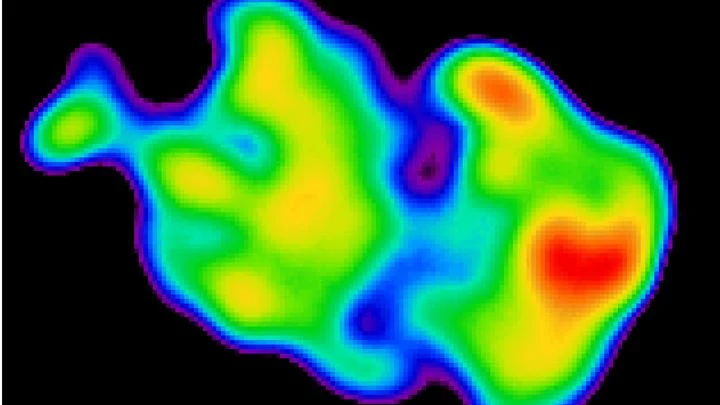
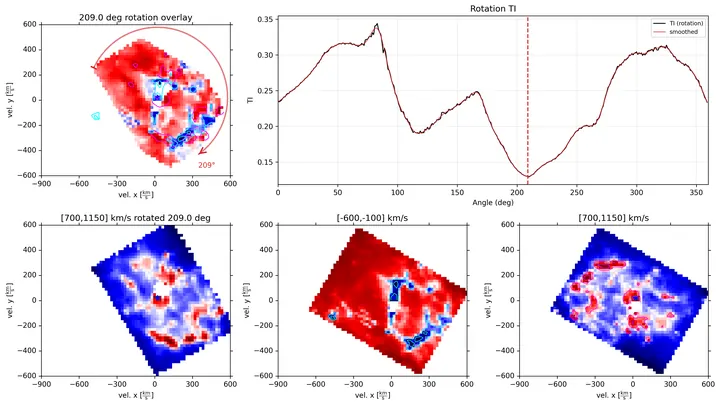
The James Webb Space Telescope JWST has peered into the heart of supernova remnant SNR 0540-69.3 — what remains after a massive star died in a neighboring galaxy. Inside, amid the flying debris, astronomers saw a clear pattern: glowing clumps and voids arranged in a symmetric design.
Phantom Twin of the Crab Nebula: Jet Doppelgänger Found Hidden in the Explosion's Shadow
In 1054, earthly observers recorded a 'guest star' flaring in the constellation Taurus — so bright it rivaled the Sun. Today, its remnant, the Crab Nebula, serves as a cosmic laboratory, and it has now sprung a new surprise.
High Energy2026-07-221 minarXiv:2607.20314express
Why a Star Explosion Is Like a Tug of War
The collapse of a star's core is like compressing a spring: matter falls inward, and a neutron star is born at the center. But the fall is never perfectly smooth. In the boiling outer layers, random eddies transfer angular momentum to the infalling gas, and a disk swirls around the central object. This disk is no calm river. It pulses, strengthening and fading.
Supernova 1987A: Twenty Thousand Years Before the Explosion
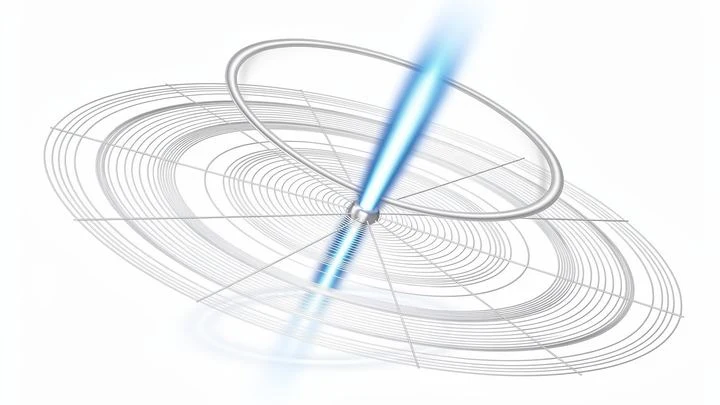
Twenty thousand years ago, the star that would become supernova 1987A put on a ring. Not one — three. The two outer ones, like lampshades, tilted relative to the equatorial ring, and the star's light, struggling through them, barely reached an observer who happened to be in the plane of the equatorial ring.
Unequal jets gave the neutron star of Cassiopeia A its kick
At the center of the supernova remnant Cassiopeia A, a neutron star races along at 400 kilometers per second. In a single second it covers the distance from Moscow to St. Petersburg. Where does that acceleration come from? A new study shows that the star was pushed by two shots from a cosmic cannon, and one of them was forty times more powerful than the other.