Neutron stars are the collapsed cores of massive stars, packing more mass than the Sun into a sphere about the size of a city. They are extreme objects with intense gravitational and magnetic fields, and they spin incredibly fast—some completing hundreds of rotations per second. The spin of a neutron star is not just a simple rotation; it is intimately linked to its magnetic field and the surrounding environment. This spin dynamics can be affected by the accretion of matter from a companion star, by the emission of gravitational waves, or by the interaction of the star's magnetic field with the surrounding plasma, leading to phenomena like pulsar glitches and the launching of relativistic jets.
History
Neutron stars were first theorized in 1934 by Walter Baade and Fritz Zwicky, and the first pulsar was discovered in 1967 by Jocelyn Bell Burnell and Antony Hewish. The detailed study of their spin dynamics has been a central theme in astrophysics since then.
How it works
The spin of a neutron star is governed by conservation of angular momentum, but it is also influenced by its strong magnetic field. The magnetic field, which can be a trillion times stronger than Earth's, forces charged particles in the surrounding space to co-rotate with the star, creating a magnetosphere. As the star spins, it emits beams of radiation from its magnetic poles, which we observe as pulses (hence 'pulsars'). The spin can change over time due to the loss of energy through magnetic dipole radiation and particle winds, or it can suddenly speed up (a 'glitch') due to the transfer of angular momentum from the superfluid interior to the crust. In binary systems, the spin can be accelerated by accreting matter from a companion, which also shapes the jets of particles ejected along the rotation axis.
In practice
The precise timing of neutron star pulses is used in pulsar timing arrays to detect gravitational waves, and their extreme conditions serve as natural laboratories for testing theories of dense matter and magnetohydrodynamics.
Fun fact
A single neutron star can spin at a rate of over 700 times per second, meaning its surface moves at a significant fraction of the speed of light.
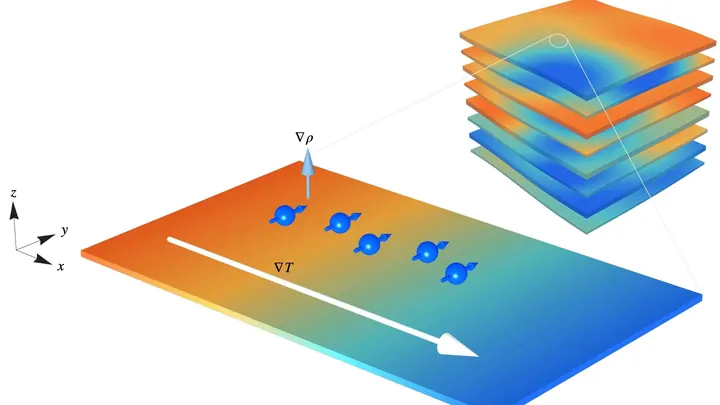
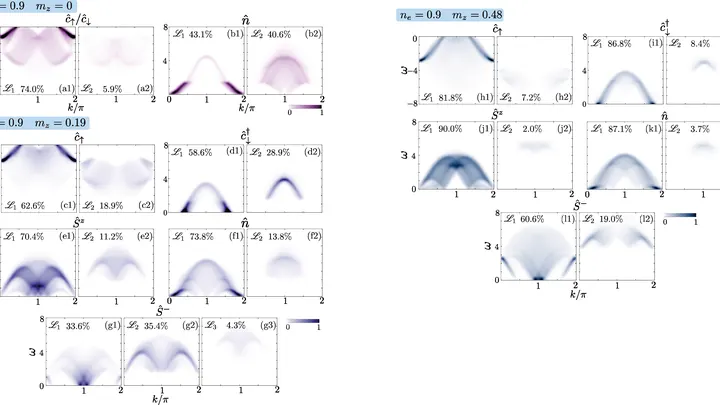
Two dancers on one stage: one pulls the partner in one direction, the other in the opposite. In the crystal Cu2(OH)3Br, known as botallackite, copper atoms form chains where the spins (magnetic moments) of neighboring ions align either parallel, as in a ferromagnet, or antiparallel, as in an antiferromagnet.
It's like a sprint record: to break it, you need a perfect run-up. But for sub-millisecond pulsars, the run-up is too short. The fastest known pulsar, PSR J1748-2446ad, spins 716 times per second — faster than a kitchen blender. If it were the size of Earth, a point on its equator would move at about 0.24 times the speed of light. But why doesn't any pulsar spin even faster?
Imagine two spinning tops set on a table. If they spin in the same direction, their combined rotation is large; if they spin toward each other, the total rotation can be zero even though each top spins rapidly on its own. In a pair of neutron stars approaching merger, their individual rotations, spins, play the role of such tops.
A balloon that lets out air in bursts zips around the room — the jet blasts first one way, then another. A dying star behaves the same way as it sheds its bloated shell. Only instead of air, it's superheated gas, and instead of a balloon, it's a future white dwarf (the dense stellar remnant about the size of Earth).
At the heart of a dying star, as its core collapses into a neutron sphere, an invisible storm is born. Trillions of neutrinos, particles that barely interact with matter, race through the scorching plasma. There are so many of them that they begin to influence each other, changing their 'flavors' (electron, muon, tau) like chameleons.
A globular cluster, a dense swarm of hundreds of thousands of stars, plows through a galaxy like a bullet through water. In ordinary dark matter (the invisible mass that holds galaxies together), it should quickly lose speed due to dynamical friction.
The solar corona lives its own turbulent life. Magnetic fields here are governed by the motions of the dense surface — the Sun's photosphere — but occasionally they rewrite the magnetic pattern themselves.
At the very heart of the Milky Way, stars whirl around an invisible supermassive black hole. One of them, S301, completes an orbit in just 8.7 years. Its path is a highly squashed ellipse: sometimes it grazes the black hole, sometimes it shoots far away. At closest approach, the distance to the black hole is tiny by cosmic standards.
A star's radius drops by a thousand kilometers. Not because its mass increased, but because its own magnetic field squeezed the crust like an invisible corset.
A carousel doesn't just spin you around in a circle — with each revolution, it also slightly screws itself into the ground. This corkscrew-like motion is the essence of the NUT charge, a special property of spacetime that physicists have been studying since the mid-20th century.
89 milliseconds. That's how long a vortex avalanche lasts that abruptly speeds up the rotation of the Vela pulsar — one of the most famous 'glitching' pulsars. Pulsars are rapidly spinning neutron stars born in the collapse of supernovae.
Think of a merry-go-round: it's easier to spin a light one, harder to spin a heavy one. Neutron stars, the ultra-dense remnants of exploded stars, behave in a similar way. Astronomers looked at fifty binary systems where one neutron star orbits another and noticed: the heavier the star, the longer its spin period. The link isn't strict, but it's statistically noticeable.
Two neutron stars, ultra-dense remnants of massive stars, merge into one, and the space around them shudders: a gravitational wave is born, a ripple in the very fabric of spacetime. Almost simultaneously, a narrow stream of matter, the jet, erupts from the scene.
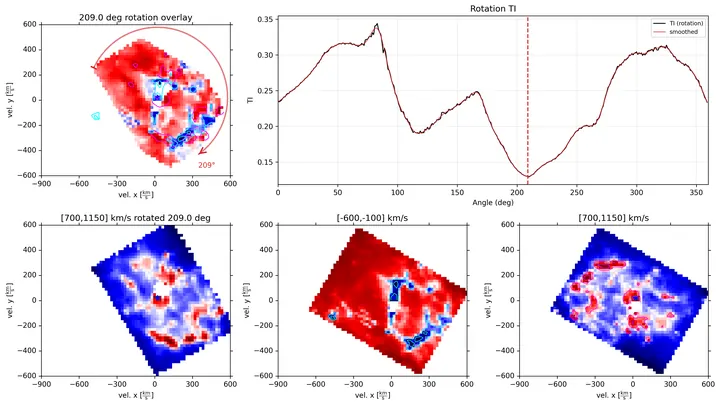
The James Webb Space Telescope JWST has peered into the heart of supernova remnant SNR 0540-69.3 — what remains after a massive star died in a neighboring galaxy. Inside, amid the flying debris, astronomers saw a clear pattern: glowing clumps and voids arranged in a symmetric design.
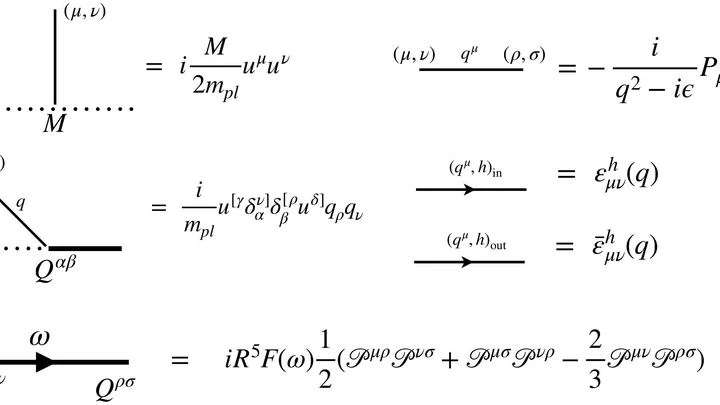
When two neutron stars circle each other, they don't remain rigid spheres. The partner's gravity stretches each star, creating tidal bulges — much like the Moon raises ocean tides on Earth. But unlike water, here it's superdense matter that deforms: a teaspoon of this stuff weighs billions of tons.
When two superdense stars circle in a tight dance, the space around them shudders. This shudder, gravitational waves, is caught by giant detectors on Earth. But deciphering the signal is tricky: you need to figure out what exactly you're dealing with — a pair of black holes or neutron stars.
A neutron star is the leftover core of an exploded giant, compressed to the size of a city. A teaspoon of its matter weighs a billion tons. Inside such a star, particles are packed so tightly that quantum effects start to show. One of them is the intrinsic rotation of particles, or spin.
Among the hundreds of moons in the Solar System, Nereid dances the most desperate dance: diving toward Neptune as close as 1.4 million kilometers, then soaring away to 9.7 million — all within less than an Earth year. An eccentricity of 0.75 — the brand of a captured wanderer.
Toss a handful of coins on a table: each one lands heads or tails on its own. Now imagine the coins start flipping over, nudging each other. That's roughly how neutrinos behave in a very dense environment.
Inside a neutron star, matter is compressed so intensely that atomic nuclei fuse into long strands and flat sheets. Astrophysicists call these structures nuclear pasta. At their surface, the density of matter plummets to nearly zero, like diving out of thick jelly into thin air.
It's this sharp transition that creates the unusual effect.
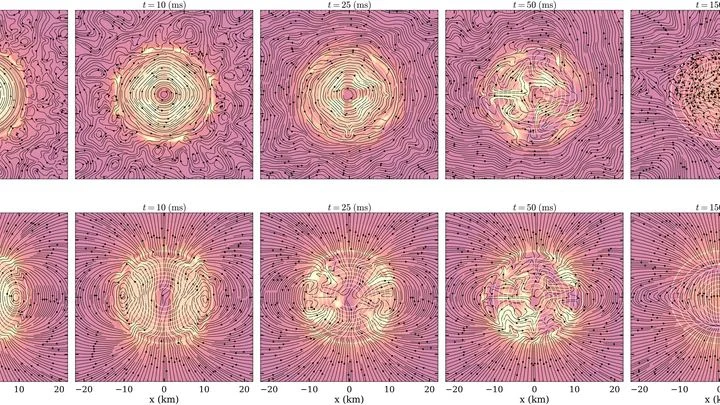
A neutron star is a sphere the size of a city but with the mass of an entire Sun. Its magnetic field can tear atoms apart from thousands of kilometers away. Yet until now, it was a mystery how this field is arranged inside: whether it is twisted into tight ropes or more like neat lines radiating from the poles.
Two swift streams of charged particles collide, and magnetic field lines begin to tear and reconnect. This process powers solar flares and auroras. It was usually assumed that all particles behave alike, like bullets from the same gun. But each particle has a tiny top: its intrinsic rotation, or spin.
Two neutron stars are two city-sized spheres with the mass of the Sun. As they spiral together, tidal forces stretch each one, as if a giant hand were squeezing and twisting a rugby ball. The star begins to oscillate — density waves run through it, like ripples on water from a thrown stone.
Strike a bell, and it hums at a single pitch. But if you place a second clapper inside, and they ring without touching each other, the sound becomes more complex. That's roughly how the neutron star from the new study is built. It's not just a hot sphere: inside, two immiscible fluids can flow — for instance, superfluid neutrons and ordinary plasma.
A spinning top whirls so fast it's about to fly apart. Add to it a super-strong magnet — one that, if placed on the Moon, would wipe data from every credit card on Earth. That's a magnetar: an ultra-dense remnant of an exploded star, a lump of matter where a teaspoon weighs as much as a mountain.
A neutron star is a spinning top with the mass of the Sun, crushed to the size of a city. It's born in the fire of a supernova and usually only slows its spin. But sometimes, for no apparent reason, it suddenly speeds up — such a jerk is called a glitch.
The crystal of perovskite iridate SrIrO₃ resembles a row of soldiers, where each iridium carries a magnetic moment. When some of the iridium 'soldiers' are replaced by tin, which has no magnetic moment, the row thins out.
Previously, astronomers calculated galaxy mass as if they were perfect spheres. But a galaxy is a flat pancake. The new 'Lost and Found' model takes the actual shape into account: it sums up the gravitational pull from all parts of the disk, not just the central bulge. The result is stunning: many galaxies need a third less invisible dark matter than previously thought.
The night sky is full of beacons that blink on schedule. Pulsars are fast-spinning neutron stars whose radio pulses arrive with clockwork precision. But there are other beacons too: they stay silent for minutes or hours, then suddenly emit a single pulse, and go quiet again.
Neutron stars are the compressed cores of dead stars — city-sized objects with staggering density. Some of these stars become pulsars, cosmic lighthouses emitting strictly periodic radiation pulses.
An electron in an ordinary wire is like a courier carrying both a package and the recipient's signature at once: its charge and spin are always together. But if the wire is made just one atom thick, the courier gets cramped. In such a one-dimensional tube, electrons cannot overtake each other, and their collective behavior changes beyond recognition.
When two lead nuclei collide at tremendous speed, a cloud of scorching matter is born for an instant — denser and hotter than the center of the Sun. Through this cloud fly jets of particles: narrow, laser-like beams knocked out by the impact. The CMS detector captures their tracks and shows how the jets change as they fight through the hot 'fog'.
A spinning top that whirls so fast it completes 220 rotations in a single second: that's exactly what China's FAST radio telescope has caught. This is the pulsar PSR J1810-0623, a neutron star the size of a city but with more mass than the Sun.
A neutron star is a city the size of a metropolis squeezed into a small asteroid. Around it, plasma, a gas of charged particles, seethes, and waves ripple through it like ripples on a pond. There are three kinds of waves: Alfvén (A), ordinary (O), and extraordinary (X).
A red giant in the constellation Cygnus has swelled so much that its outer layers are spilling onto a small but heavy neighbor — a white dwarf. The gas swirls around the dwarf like water down a bathtub drain, falling onto it. But in CH Cygni, this flow is not calm: every 682.5 seconds, the X-ray emission flares and fades.
Saturn's system 300 million years ago resembled a crowded dance floor. The most massive moon, Titan, began to migrate, and this movement threw its neighbors off balance. One moon crashed into Titan; the debris swirled into a vortex, gathering into Hyperion.
A laser beam hits a shiny crystal, and comes back different: slightly shifted in color, with a different polarization. In a magnetic field, this transformation of light becomes especially noticeable.
The pulsar in the Crab Nebula blinks like a lighthouse: every 33 milliseconds it sends out a radio pulse, and it does so with the precision of atomic clocks. But sometimes its rotation stumbles: the star suddenly speeds up slightly, as if something inside it is shifting.
Using the Keck telescope and spectroscopy (light analysis that reveals rotation speed), astronomers measured 32 objects: from giant planets to brown dwarfs — bodies heavier than planets but lighter than stars that never ignited.