Hydrogen Atom Measured to Trillionths express
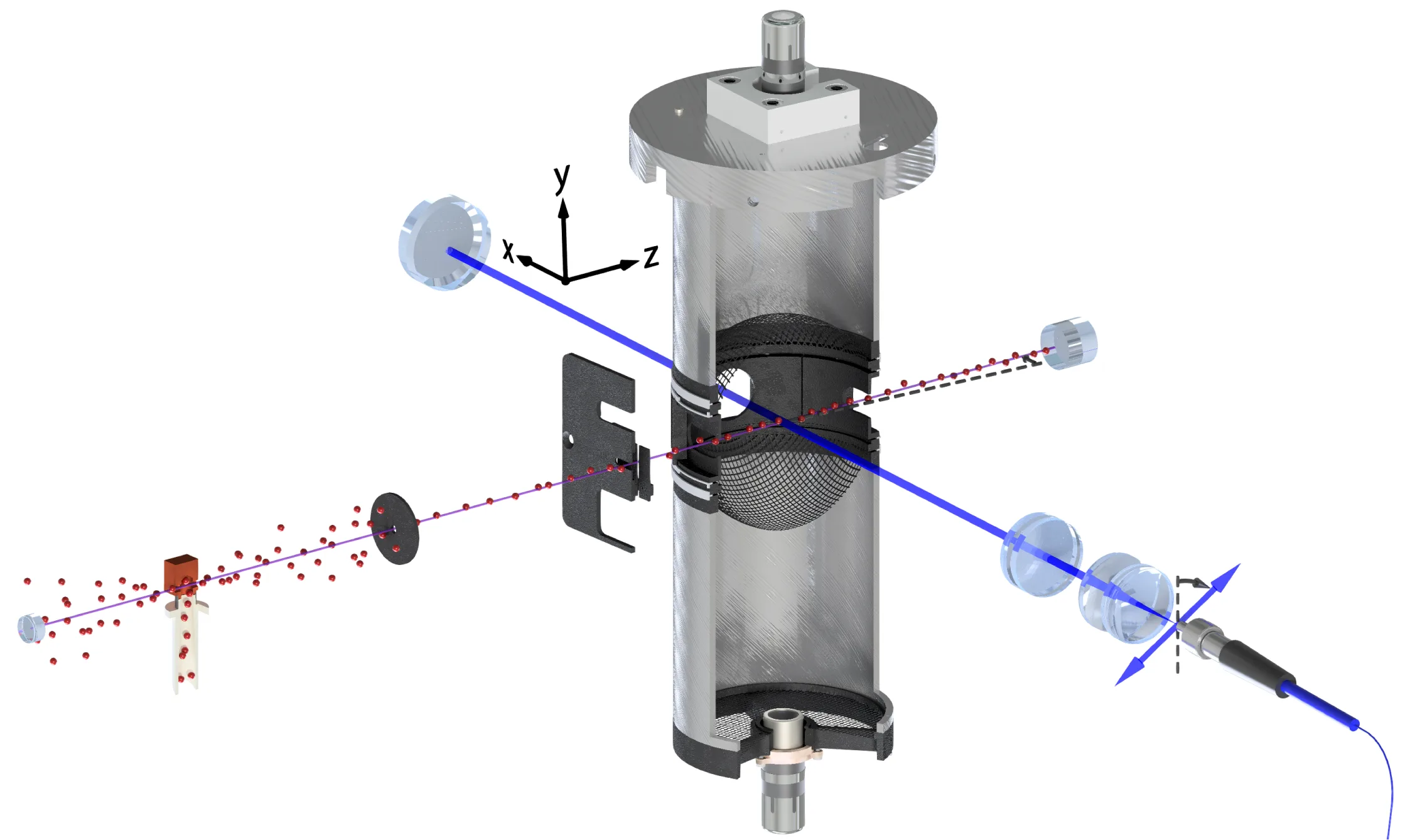
The hydrogen atom is like a tiny clock, ticking with a precision engineers can only dream of. When an electron jumps between orbits, it absorbs or emits light at a strictly defined frequency: that's the 'tick.' In the new work, physicists caught one such transition, between the 2S and 6P states, and measured its frequency with an error of less than one billionth of a percent. The number they got: 730,690,248,610.79 kilohertz, with an uncertainty of just 0.48 kilohertz. For comparison: if you measured the distance from Moscow to Vladivostok with the same relative precision, the error would be less than the thickness of a human hair.
This measurement allowed them to calculate the radius of the proton — the particle around which the electron orbits. Previously, different methods gave slightly different results, like two thermometers showing different temperatures in the same room. The new value—0.8406 femtometers (a femtometer is one millionth of a nanometer)—matched the most precise data from muonic hydrogen, where the electron is replaced by its heavier 'cousin,' the muon. The puzzle of the discrepancy that had plagued physicists for a decade appears to be solved.
But the main result is not the proton size itself, but a test of quantum electrodynamics (QED), the theory describing how light interacts with matter. QED is one of the most accurate theories in the history of science, but it still needs constant testing. The new experiment confirmed QED's predictions to 0.5 parts per million for the complex corrections related to the electron's bound state. It's like checking a clockwork mechanism by taking it apart to the last screw and making sure everything turns without a hitch.
If you enlarged a hydrogen atom to the size of a football field, the proton would be the size of a grain of sand at the center, and the electron would be smaller than a speck of dust flying around the stands.
Ultra-precise measurements of atomic transitions underpin future technologies, from quantum computers to navigation in deep space without contact with Earth.