El pulso de las estrellas dobles exprés
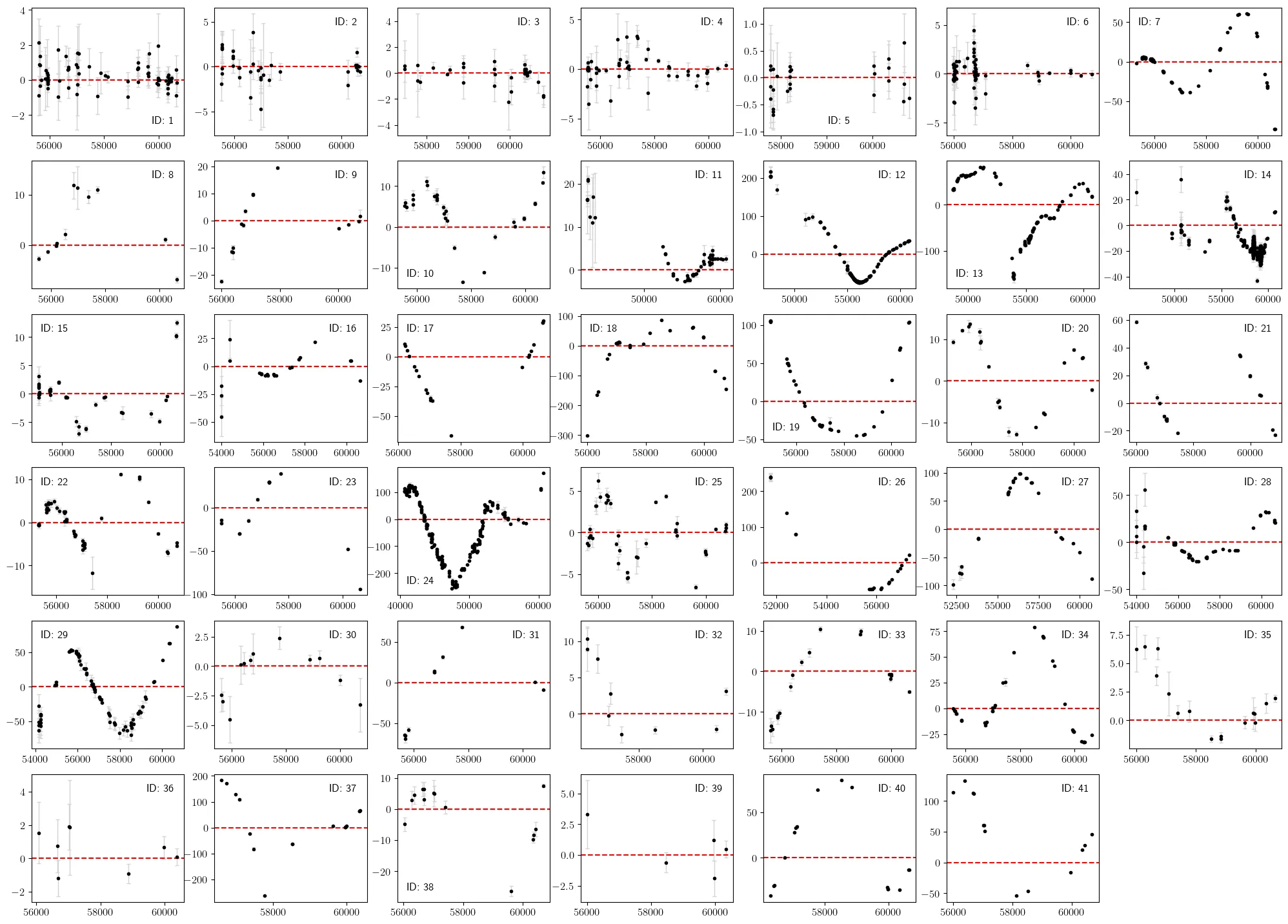
Los eclipses en estrellas dobles son como un reloj: la enana blanca (un denso remanente estelar) pasa regularmente frente a su compañera y la luz se apaga por un breve instante. Pero en la mayoría de estos pares, el reloj se adelanta o se atrasa unos segundos a lo largo de los años. Los astrónomos han medido estas irregularidades en 43 sistemas y han encontrado un patrón.
Si la estrella compañera está completamente mezclada en su interior, como una olla hirviendo, las irregularidades son débiles. Si, en cambio, tiene un núcleo sólido y una capa externa, las irregularidades son fuertes. Esto apunta a un mecanismo magnético: los campos magnéticos de la estrella, como un resorte, comprimen y estiran la órbita. Puede que también haya planetas, pero no son los protagonistas.
Queda un misterio: las fuerzas magnéticas no pueden explicar las irregularidades más rápidas y grandes. La estrella no tiene suficiente energía para cambiar la órbita tan bruscamente. Quizás actúe algo más, pero una cosa está clara: el reloj del cielo no es tan preciso como se pensaba.
Resumen original
tal como lo escribieron los autores, en inglés arXiv:2602.17800
The overwhelming majority of eclipsing white dwarf (WD) binary systems show quasi-periodic variations in eclipse timings on many year timescales. Currently, the mechanism behind these eclipse time variations (ETVs) is not known, with the main competing theories being the planetary hypothesis and the Applegate/Lanza mechanisms. Here, we present a comprehensive study of 43 WD binary systems, the vast majority of which have more than a decade of eclipse timing measurements, analysing their global properties to determine which driving force is the likely origin of the observed ETVs. Long-term, high-speed photometry data obtained with ULTRACAM, ULTRASPEC and HiPERCAM have allowed us to track the evolution of the ETVs in these systems, and analyse any previously unseen trends. From this analysis, we find a clear difference in the level of observed ETVs past the fully convective boundary, where systems with partially radiative companion stars consistently showing high levels of variation. While some systems may be affected by the presence of an unknown planet, the results from this study strongly indicates that an Applegate- or Lanza-like mechanism is the most likely driving force for the timing variations seen in the majority of systems in this sample. However, as found in previous studies, the Applegate/Lanza mechanisms are still not able to reproduce the large and rapid timing variations seen in the vast majority of systems, with the companion star to the WD unable to provide sufficient energy on these short timescales.
Una enana blanca tiene el tamaño de la Tierra, pero su masa es como la del Sol. Una cucharadita de su materia pesaría tanto como un camión.