Un telescopio solar capta el temblor del cielo exprés
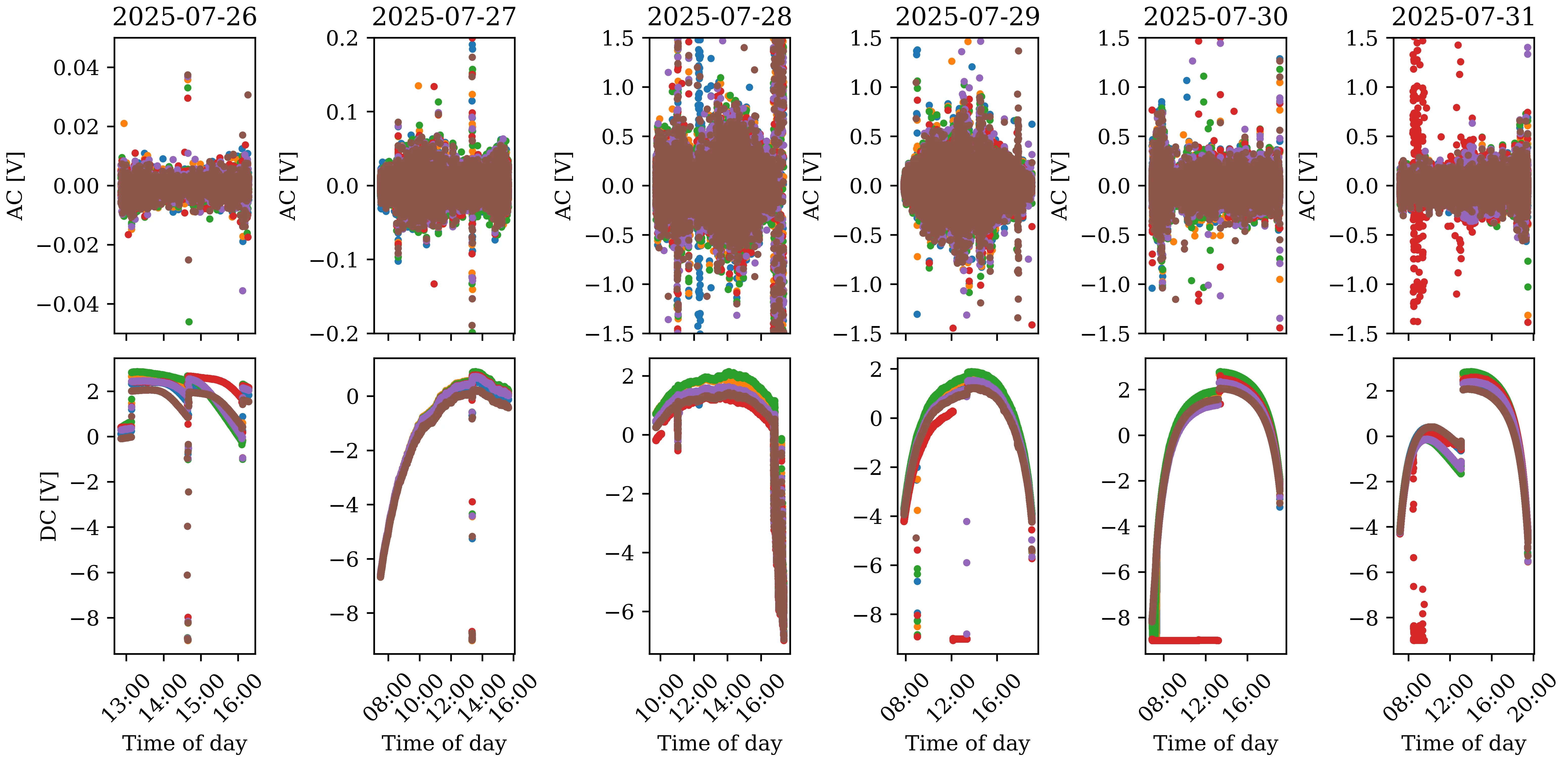
Durante el día, en el desierto chileno de Atacama, el aire vibra por el calor, como sobre una sartén ardiente. La luz del Sol, al atravesar ese temblor, se pone a bailar y a parpadear. Los astrónomos llaman a ese movimiento del aire «visión»: les impide a los telescopios ver las estrellas con nitidez.
Para combatir esta molestia, los ingenieros han construido un instrumento especial: un monitor solar de visión. Está instalado junto al futuro telescopio PoET en el observatorio de Paranal y, durante el día, observa cuánto tiembla la luz del Sol. El aparato puede apuntar a cualquier zona del disco solar y medir el temblor en áreas de 1 a 55 segundos de arco (es como mirar una moneda desde varios kilómetros de distancia).
Los datos del monitor de visión indicarán en qué horas el aire está más tranquilo y qué tamaño de abertura del telescopio conviene elegir para obtener la imagen más nítida. Así, el temblor del cielo pasa de ser un estorbo a convertirse en un aliado: conociéndolo, los astrónomos podrán buscar con más precisión planetas rocosos alrededor de estrellas lejanas.
Resumen original
tal como lo escribieron los autores, en inglés arXiv:2604.10140
Atmospheric seeing arises from stochastic fluctuations in the refractive index of the Earth's atmosphere, producing random variations in the apparent direction of incoming light from astronomical sources. Scintillation refers to the associated intensity fluctuations induced by these refractive index inhomogeneities. A quantitative relationship between seeing and scintillation was established in 1993, enabling daytime seeing measurements by exploiting the Sun as an extended, bright source and using non-telescopic instrumentation. PoET, the Paranal solar ESPRESSO Telescope, will feed the Echelle SPectrograph for Rocky Exoplanets and Stable Spectroscopic Observations, ESPRESSO, at the European Southern Observatory (ESO) Very Large Telescope (VLT). By using the Sun as a proxy for solar-type stars, PoET will facilitate detailed investigations of the physical processes that drive stellar noise in ultra-high-precision radial-velocity measurements for exoplanet studies. The instrument is capable of targeting any region on the solar disk and acquiring spatially resolved spectra over areas ranging from 1 to 55 arcseconds. Accurate characterization of daytime atmospheric seeing is therefore essential for selecting the optimal observing aperture and ensuring the scientific performance of PoET. To support this requirement, we have developed and implemented a dedicated solar seeing monitor for daytime deployment at Paranal, Chile, where PoET will operate. In this work, we describe the instrument design and present the results from commissioning and initial on-sky validation.
El parpadeo de las estrellas por la noche y el temblor de la luz solar durante el día son el mismo fenómeno: el aire de la atmósfera no deja de moverse y refracta la luz de maneras distintas.
En la novela «Solaris» de Stanisław Lem, el océano del planeta brilla y cambia de forma, algo parecido a cómo la atmósfera terrestre hace temblar la luz de las estrellas lejanas.