Un miroir qui ne brouille pas la lumière express
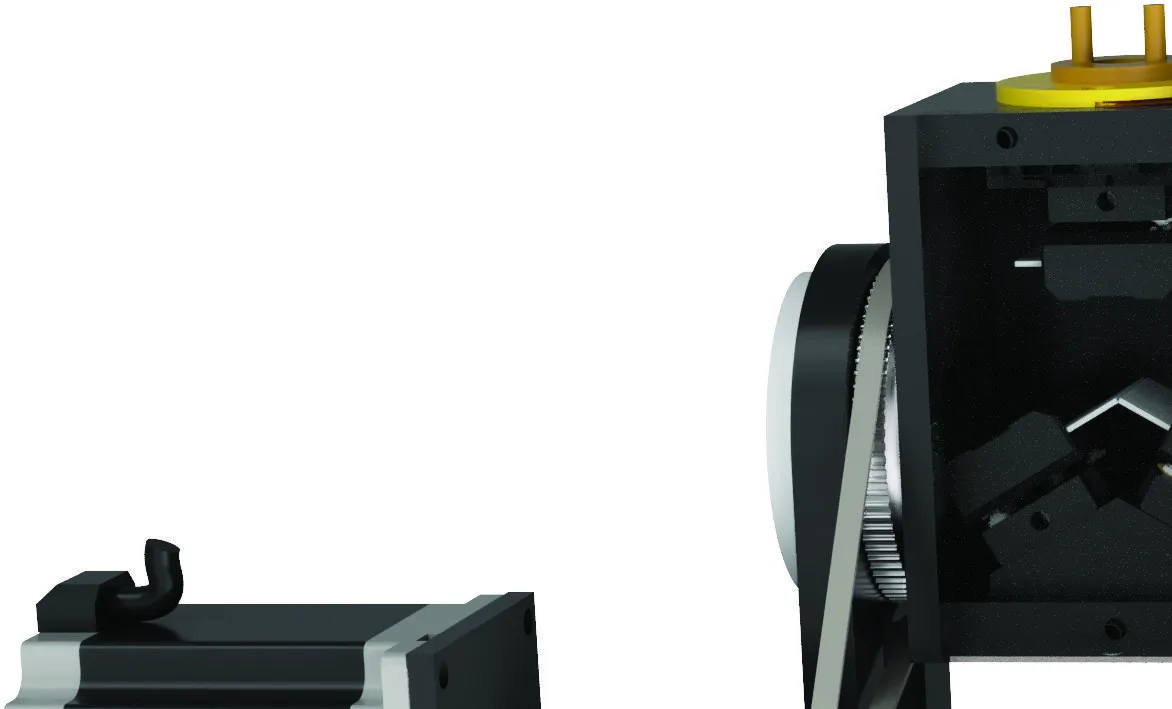
La lumière, comme une corde que l'on secoue, oscille dans un plan bien défini. Les astronomes et les ingénieurs font souvent pivoter une image à l'aide d'un système de trois miroirs — le fameux miroir en K — mais ce faisant, le plan d'oscillation de la lumière se retrouve lui aussi tourné, involontairement. Pour les mesures de précision, c'est un vrai problème.
Les auteurs de ces travaux ont trouvé une solution simple : ils ont placé une lame transparente devant le miroir et une autre derrière, qui font tourner le plan d'oscillation, et ils ont fait tourner ces lames deux fois plus lentement que le miroir lui-même. Ainsi, toutes les rotations parasites s'annulent mutuellement, et la lumière ressort avec la même orientation d'oscillation qu'à l'entrée.
Cette astuce fonctionne pour n'importe quel angle du miroir, n'importe quel matériau et n'importe quel état de la lumière. Cela signifie que les astronomes pourront voir le ciel plus nettement, et que les ingénieurs quantiques pourront contrôler plus précisément les particules de lumière.
Résumé original
tel que rédigé par les auteurs, en anglais arXiv:2604.25475
A K-mirror rotates the wavefront of an incident optical field. However, the rotation always introduces polarization changes in the transmitted field. This is a serious concern for applications ranging from astronomical image derotation to orbital angular momentum spectrum characterization in photonic quantum technology. Recent efforts have shown that the polarization change can be minimized significantly, but these require either a very small base angle that limits the field of view, or mirrors with a customized refractive index. Making the transmitted polarization state completely independent of the rotation angle has remained an open problem. In this work, we show that placing half-wave plates before and after a K-mirror and rotating them synchronously at half the K-mirror rotation angle makes the polarization change in the transmitted field exactly independent of the rotation angle. This works for any wavefront rotator, any base angle, any mirror refractive index, and any input state of polarization. We experimentally demonstrate the approach using a K-mirror with a base angle of $$30^{\circ}$$, which gives the largest field of view among practical designs, and find a mean polarization error of ~1%, limited only by the retardance imperfection of commercially available half-wave plates. This has significant practical implications for applications that require precise wavefront rotation without polarization change.
On peut observer la polarisation de la lumière à travers des lunettes de soleil ordinaires : elles ne laissent passer que les oscillations dans un seul plan, ce qui rend le ciel plus sombre.