Two Probes Will Dive into the Tail of an Interstellar Comet express
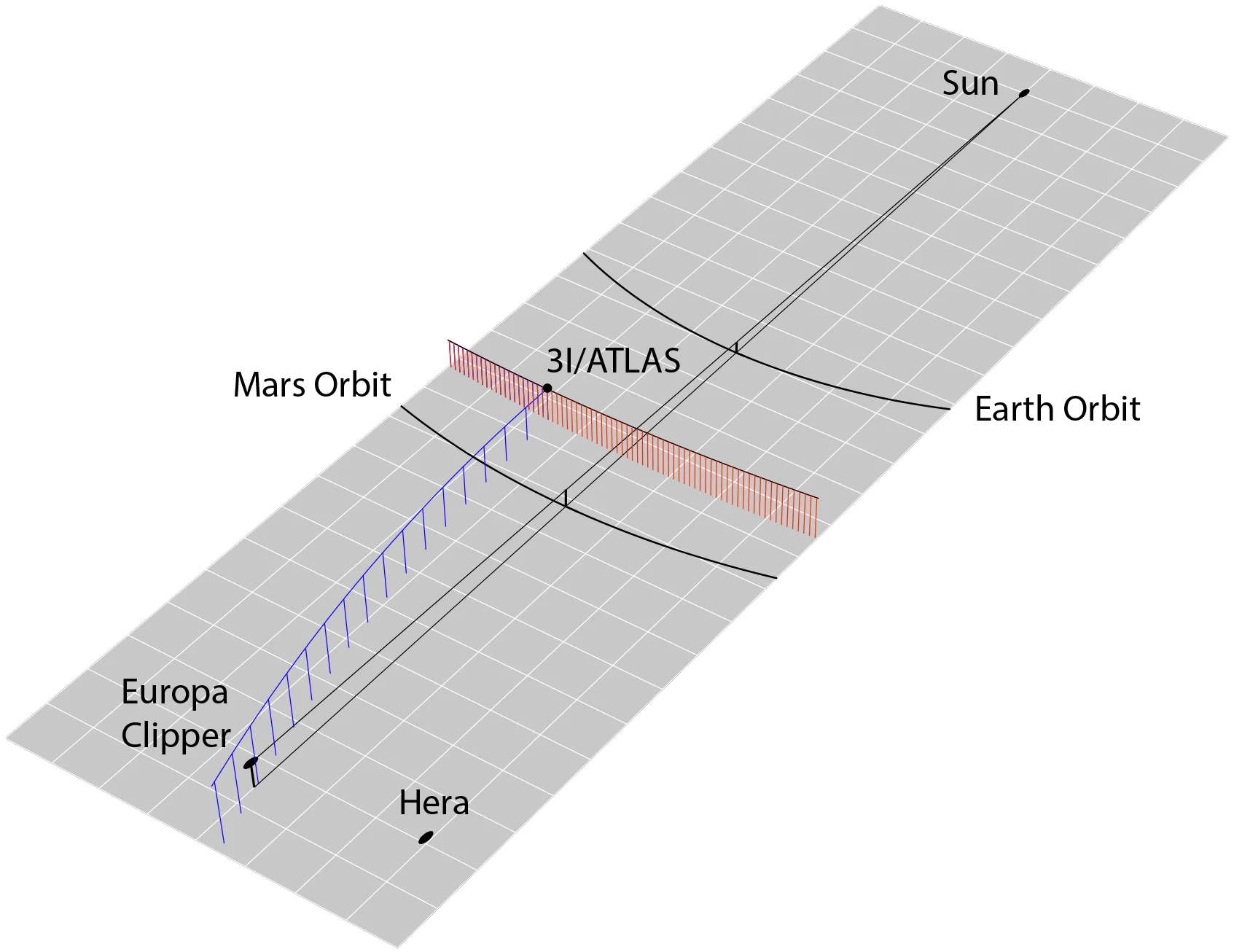
Stretched for millions of kilometers, the tail of Comet 3I/ATLAS consists of rarefied gas and microscopic dust grains. In late October 2025, two Earth probes, Europa Clipper and Hera, will plunge into it. Neither was designed to encounter a comet: Clipper is headed for a moon of Jupiter, Hera for an asteroid. But their trajectories accidentally intersected the tail.
Onboard instruments will capture particles of dust and hydrogen, and measure how the stream of charged particles from the Sun changes.
Composition analysis will tell us whether other worlds resemble ours. It’s like dipping a sample from an unfamiliar ocean. These data will turn hazy guesses about other planetary systems into measurable chemistry.
Comet 3I/ATLAS was discovered in 2025—it’s only the fourth interstellar object ever spotted by humans, after the asteroid ‘Oumuamua.