Why neutrinos in a supernova reach consensus faster ✎ express
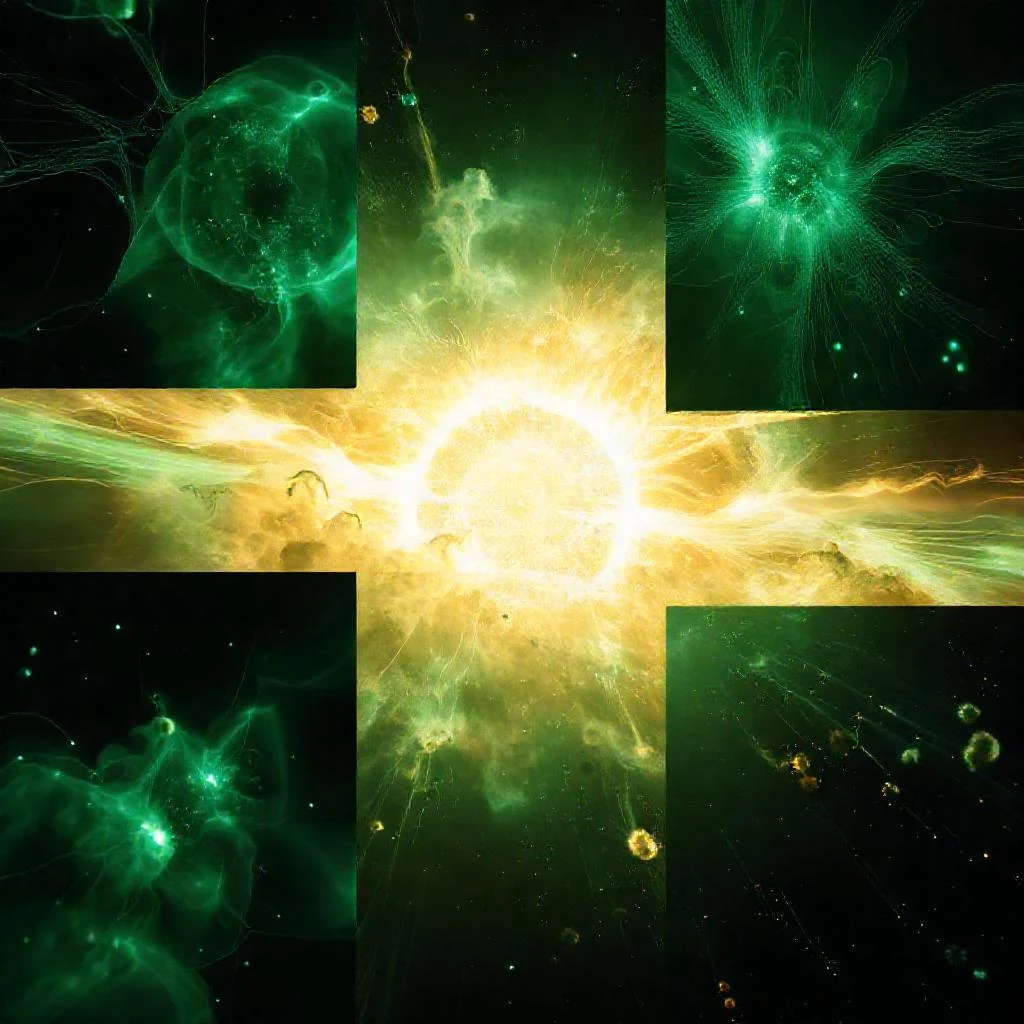
Predicted by Wolfgang Pauli and named by Enrico Fermi, neutrinos are nearly elusive particles. Inside dying supernova giants and merging neutron stars, an immense number are born. Each particle has a flavor that can change. Previously, these transformations were thought to happen independently. But in the crush of a stellar catastrophe, neutrinos start influencing their neighbors.
Like a crowd where mood spreads from person to person, neutrinos accelerate their flavor changes through constant interaction. A new model has, for the first time, united these collective interactions into a coherent picture. It turns out: when particles are packed together, they reach a uniform flavor much faster than earlier predictions. If the flows are initially separated, the process slows down, and the final composition ends up different. The most startling bit: in the blink of a core collapse, these invisible particles carry away more energy than the Sun will radiate over its entire 10-billion-year lifetime. Their behavior dictates how the star will explode and which heavy elements, like gold, it will scatter into space.
From supernova 1987A, Earth’s detectors caught just 25 neutrinos, but that was enough to confirm the theory of stellar collapse.