How to Find Water in a Martian Rock Without Breaking It express
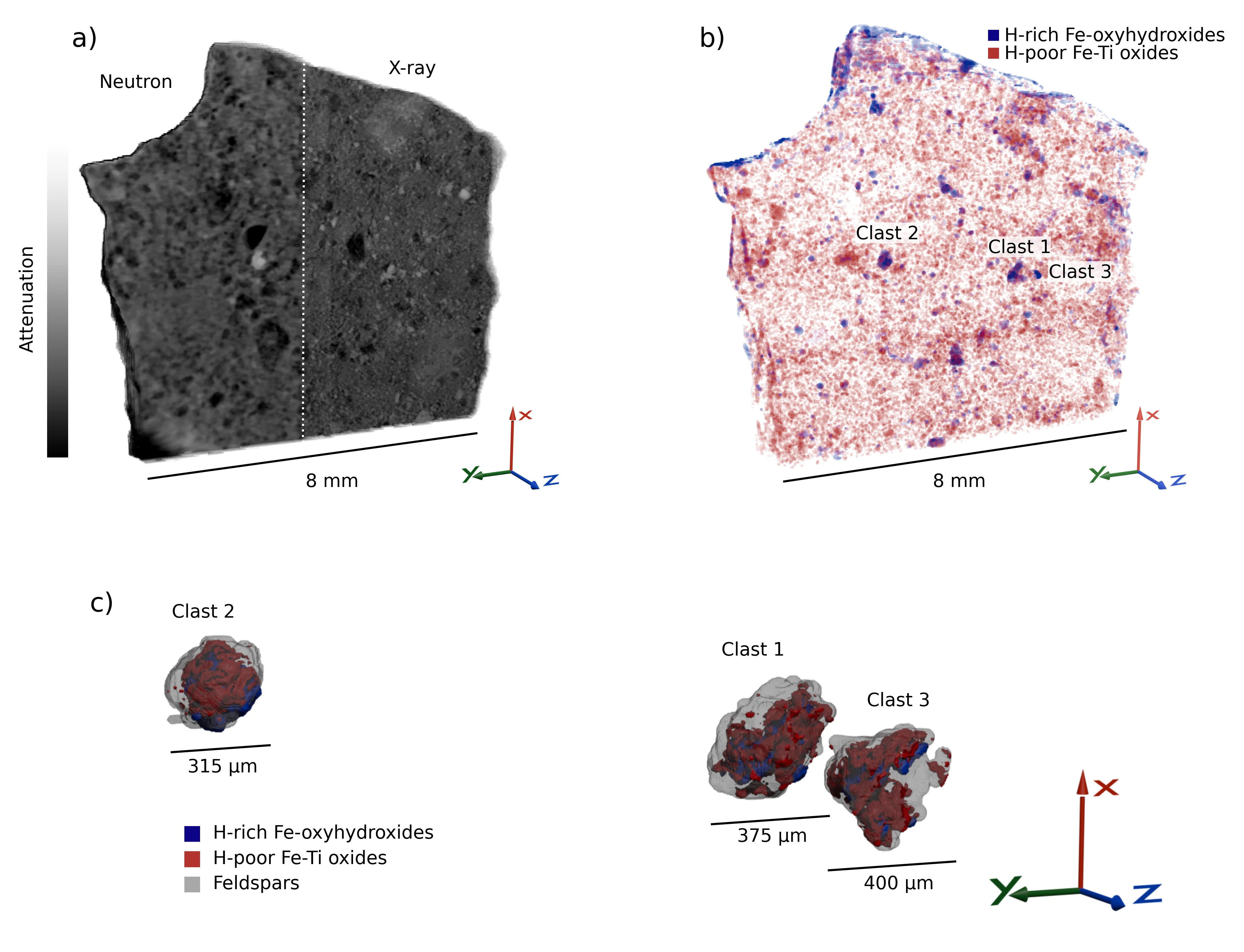
To find out if a Mars rock holds water without smashing it, scientists used neutron and X-ray scanning — similar to medical imaging. Neutrons pick up hydrogen, the foundation of water, allowing them to map moisture inside the sample. In the NWA 7034 meteorite, a chunk of Martian crust, scientists spotted minerals that look like rust but are soaked with water. These hydrogen-bearing iron oxides act like a stone sponge: they soaked up ancient water as it seeped into solidified lava. Even today, billions of years later, they hold moisture at temperatures above 100°C — water is locked not just as ice, but inside the rocks themselves. The Perseverance rover finds similar clues in Jezero Crater, hinting that early Mars was riddled with watery pockets. One day, this method could help study Martian samples on Earth without damaging a single grain, searching for microscopic traces of ancient life.
To 'squeeze' water out of such a stone sponge, you'd need temperatures above 400°C — heat you won't find on the Martian surface.
Like the hero of 'The Martian' extracting water from Martian soil, scientists are uncovering hidden moisture trapped in minerals.