A subsurface ocean is a layer of liquid water hidden beneath an icy crust on certain moons and planets. Unlike surface oceans, these are not directly visible; their presence is inferred from gravitational measurements, magnetic field interactions, and surface features like cracks and geysers. The key significance is that liquid water is a fundamental requirement for life as we know it, so these hidden oceans become prime targets in the search for habitable environments beyond Earth.
History
The concept gained traction in the 1970s and 1980s when Voyager spacecraft images of Jupiter's moonEuropa revealed a young, smooth surface with few craters, suggesting recent resurfacing by liquid water. Later, Galileo and Cassini missions provided stronger evidence for subsurface oceans on Europa and Saturn's moon Enceladus.
How it works
The ocean remains liquid due to internal heating, primarily from tidal forces. As a moon orbits its planet, the planet's gravity stretches and flexes the moon's interior, generating friction and heat. This heat prevents the water from freezing solid, maintaining a liquid layer beneath the icy shell. In some cases, the water interacts with rocky minerals, creating chemical energy sources that could support microbial life.
In practice
Subsurface oceans guide the design of future space missions, such as NASA's Europa Clipper, which will study the moon's ice shell and ocean to assess its habitability.
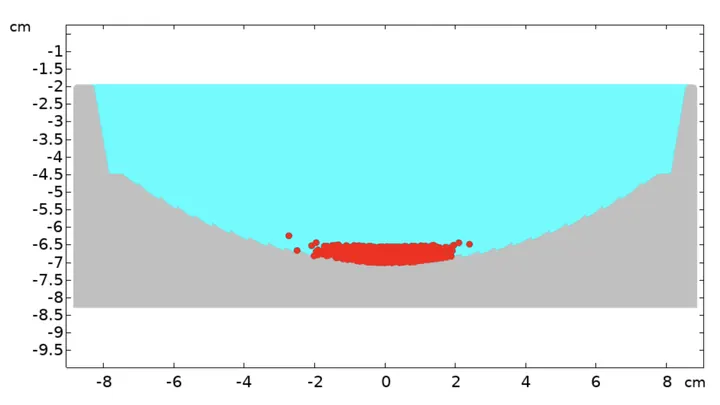
In the Moon's polar craters, where sunlight never reaches, regolith may accumulate electric charge for decades, buried deep below the surface. It's like a bank account where deposits and balance don't match: a particle delivers energy, but the charge doesn't always stay put.
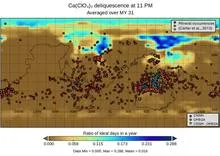
Every Martian night, salt crystals on the planet's surface soak up moisture from the thin air, much like a sponge draws water from a damp cloth. By morning, a microscopic brine accumulates inside them, and during the day, as temperatures rise, that brine finds itself trapped in tiny cavities.
Two mica plates, smooth as mirrors, slowly approach each other in a calcium solution. At a distance of fifty nanometers, an invisible barrier suddenly appears between them: as if someone had stretched a web of molecules between the walls. This web prevents the plates from touching, even though by all calculations they should glide freely toward each other.
A river drawn on a map is always a single line. But stand on the bank, and you will see that within the channel there are faster currents, eddies, and branches that merge and split. The cosmic web is like that river, but made of dark matter, and until recently astronomers drew it as a single line.
At nine in the morning, the DarkSide-50 detector, 1400 meters beneath Gran Sasso, records a weak ionization pulse. By eleven at night, the frequency of such events drops noticeably. This is not an electronics glitch or a seasonal background variation.
The Moon is an airless sphere of dense rocky grit called regolith. When fast particles from space slam into it, muons are born in the soil — unstable relatives of electrons, but two hundred times heavier. Most fly downward and fade away in the depths. But those that pop upward into the vacuum can travel tens of kilometers before decaying.
Ever since Voyager 2 raced past Uranus in 1986, the planet's icy moons have kept a mystery: where does the carbon dioxide on their surfaces come from? The spectrometers of that era only hinted at the presence of CO₂, but couldn't say anything about its origin.
A sub-Neptune is a planet that falls between Earth and Neptune in size. These worlds are abundant in our galaxy, but their internal structure has been hotly debated. New research shows that in their youth, these planets behave like a sponge soaked with water.
The Martian surface is a place where anything alive quickly dies. Cosmic rays and ubiquitous oxidizers sterilize the top layer of soil. But dig a little deeper, and the picture changes. There, beyond the reach of ultraviolet light, a zone suitable for life may lurk.
This zone runs on a strange fuel — radiation.
Ordinary ice at very low temperatures and high pressures does not melt but transforms into another solid — equally shapeless (amorphous) but much denser. For a long time, no one could understand exactly what happens at the moment when low-density ice begins to become dense.
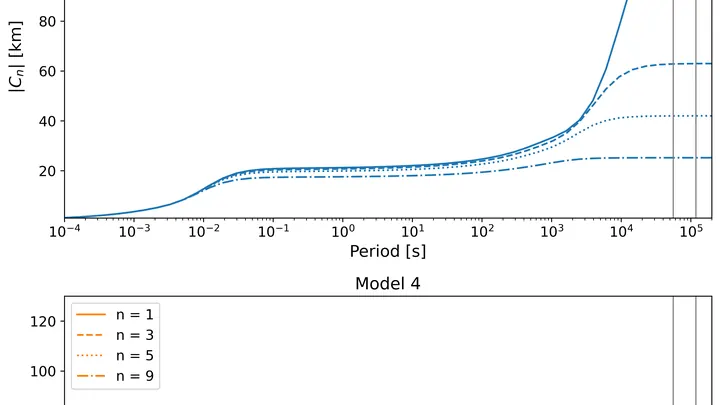
Enceladus is a tiny moon of Saturn, covered in a thick crust of ice. Beneath it sloshes a salty ocean, and deep down, a hot, porous core may be at work, like a sponge soaked with water and heat. But how do you see through tens of kilometers of ice? No need to drill: you can use an electromagnetic "echo."
A person with a metal detector walks along a beach.
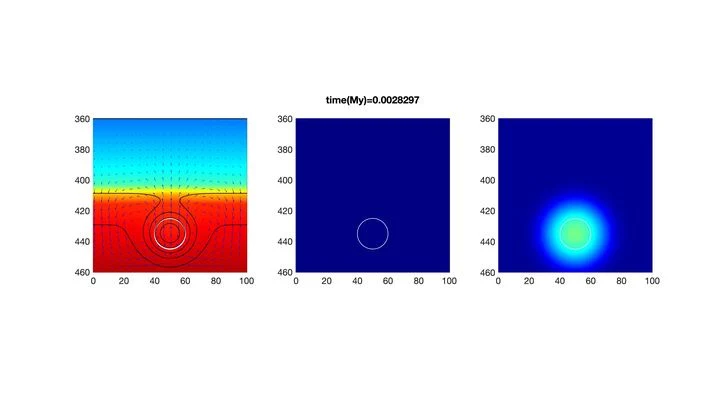
If you don’t stir a layered cocktail, the heavy syrup sinks to the bottom. A young planet is much the same — a seething ocean of molten rock. As it cools, minerals crystallize: some, like iron, get heavy and sink, while others float. You’d think a dense layer would pile up at the core.
Beyond Neptune, in the icy belt, astronomers watched as object (612533) 2002 XV93 momentarily occulted a distant star. Using метод прохождений (when a planet dims the star's light for a second, like a fly in front of a lamp), Уильям Боруки and Дэвид Шарбонно determined: the light not only dimmed but also shifted…
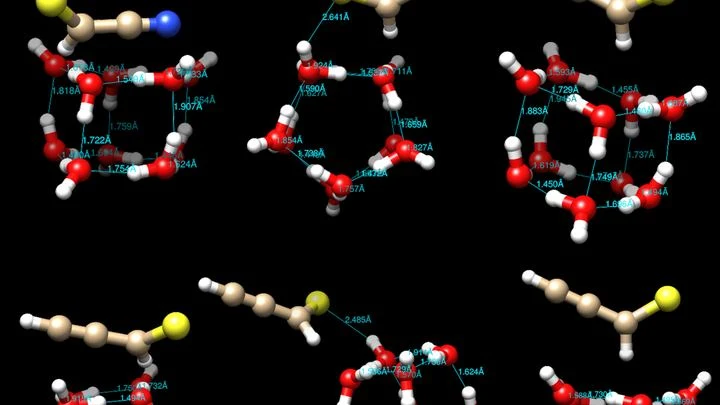
In a cold cloud of gas and dust that astronomers call TMC-1, two sulfur-bearing compounds were recently found: one smells like bitter almonds, the other like rotten eggs. But such a cloud contains less sulfur than it should. Where does it go? It seems to hide in tiny icy pockets on the surface of dust grains.
Space ice is not like a skating rink. It is fluffy, like snow, and full of crevices and hollows.
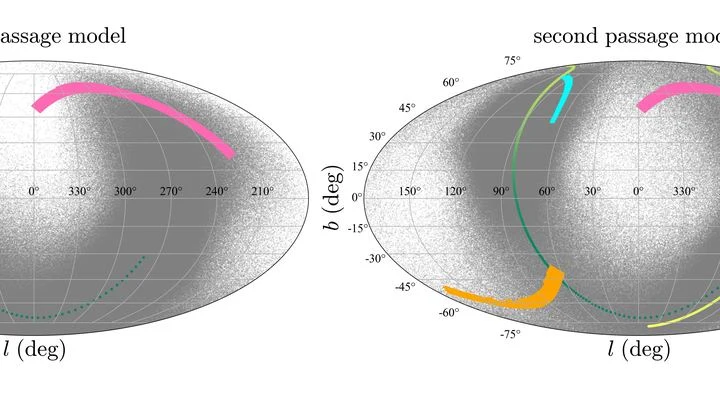
On the outskirts of our Galaxy, far beyond the familiar stellar disk, the Subaru Telescope has spotted something unexpected: a scattered cloud of stars spanning an area of one hundred square degrees across the sky.
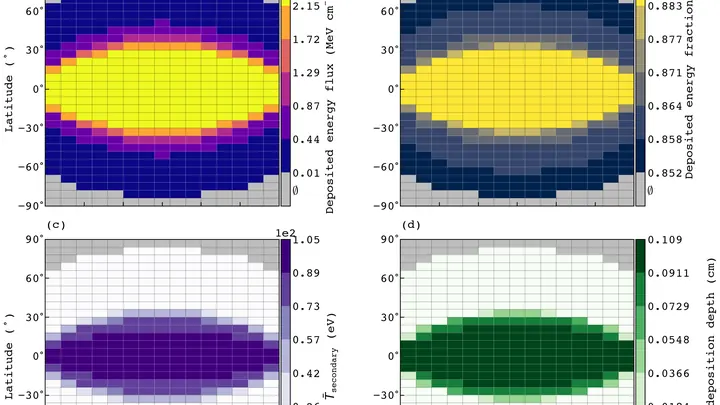
Europa's surface is an icy armor continuously bombarded by charged particles from Jupiter's magnetosphere. Electrons slam into the ice's crystal lattice, lose energy, and kick off chemical reactions. Until now, there was no tool to show how deep such bombardment pierces the ice.
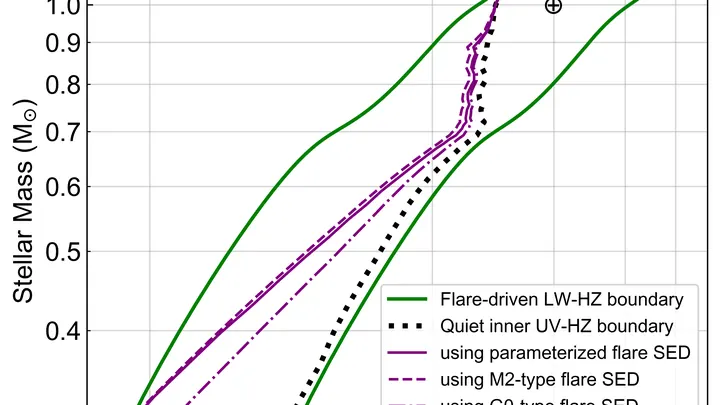
Water isn't the only thing life needs. To assemble the first RNA-like chains from simple molecules, you need ultraviolet light, like the sunlight that helps plants, but harsher and with shorter wavelengths. Big stars like the Sun emit plenty of this light. Small, dim stars, however, have almost none: they shine mostly in red and infrared, like a glowing ember.
Beneath a thin layer of red dust on Mars lies water ice. Its presence was confirmed by the Phoenix lander and orbital instruments, but the mystery remained: why is the ice always just a few centimeters below the surface?
The answer lies in the wobbles of Mars' axial tilt.
4 billion years ago, the young Earth was mercilessly bombarded by meteorites, leaving behind impact craters. Rains filled them with water, forming shallow ponds where lipid bubbles accumulated. These bubbles, like soap bubbles but with a double-layered lipid membrane (just like modern cells), formed spontaneously when water mixed with fat-like substances.
Deep beneath us, hundreds of kilometers down, lies a layer that can absorb water like a sponge. The minerals there, wadsleyite and ringwoodite, can hold up to 1–2% water by weight within their crystal lattices.
The Kepler telescope William Borucki's caught the faint twinkling of distant stars and discovered thousands of planets around other suns. Among them gapes a gap: almost no worlds sized between rocky balls and puffy water giants.
At the bottom of lunar craters, where sunlight never reaches, an eternal cold reigns — about minus 240 degrees Celsius. In these icy pockets, known as permanently shadowed regions, plans are underway to install a mirror resonator made of monolithic silicon.
Earth is like dough mixed to a precise recipe: two parts water to one part land. Too much water, and the planet becomes a vast ocean where intelligence has nothing to grasp onto. Too much land, and water retreats deep, leaving a desert. Scientists put this culinary analogy to the test with statistics.
Inside giant planets like Jupiter and Saturn, heat doesn't always rise freely. Heavy elements, which are more abundant in some layers than others, prevent hot fluid from floating up. This creates semiconvection — a type of mixing where heat and composition spread at different rates.
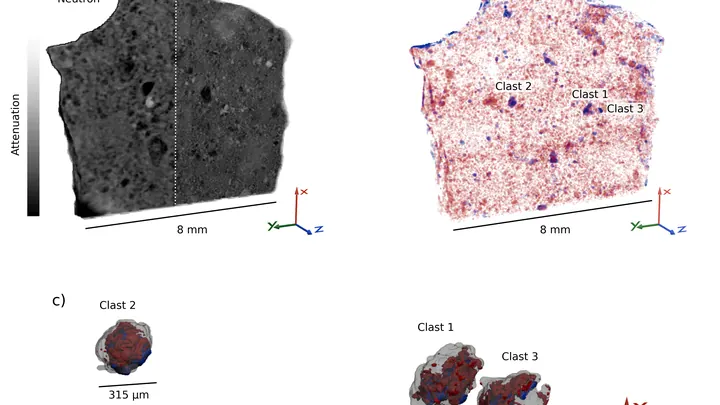
To find out if a Mars rock holds water without smashing it, scientists used neutron and X-ray scanning — similar to medical imaging. Neutrons pick up hydrogen, the foundation of water, allowing them to map moisture inside the sample.
To spot life on other planets, you don't necessarily need to search for oxygen in the air. Living beings paint the surfaces of their worlds: Earth's plants in green, bacteria in purple. The future HWO space telescope will capture these "paints of life" on exoplanets.
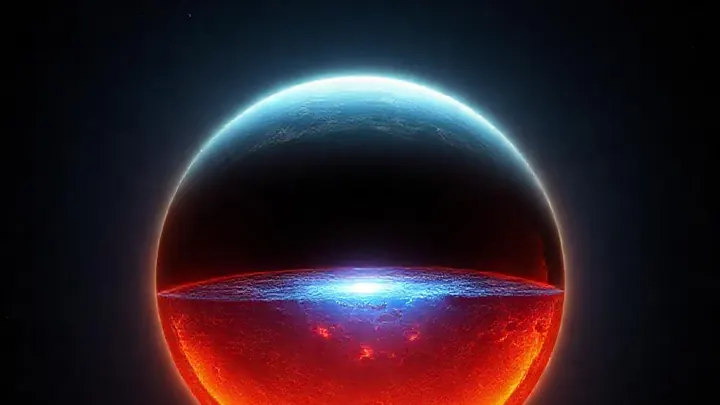
A star warms its planet like an oven warms a kettle. For most sub-Neptunes (worlds larger than Earth but smaller than Neptune), the heat is enough to keep an ocean of molten rock eternally churning beneath a hydrogen sky.
Sub-Neptunes — worlds slightly smaller than Neptune — are common among exoplanets. They are detected using the transit method (by the dimming of a star), pioneered by William Borucki.
The Moon can have its own tiny moon — like a nesting doll, but in space. The outer doll is a planet, the middle one is a moon, the inner one is a small moon-satellite, or submoon. Ньютон showed that all bodies attract each other, and gravity holds them together.
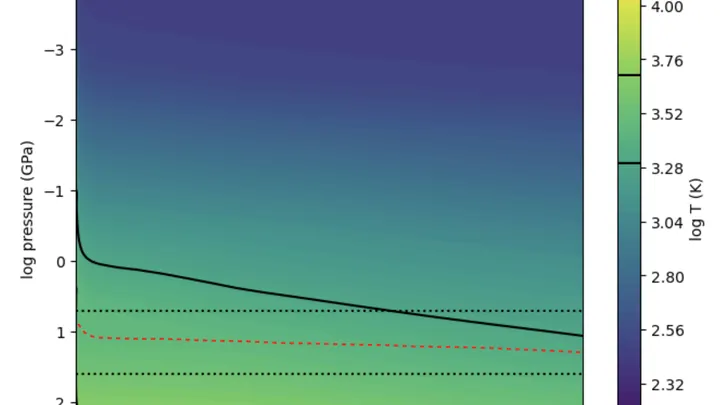
A young sub-Neptune is a pressure cooker where hydrogen and rock simmer in the same pot. Six Earth masses, three percent hydrogen by mass, and interior temperatures above 4000 K. At that heat, silicate melt and hydrogen don't just coexist: they mix completely, forming a single supercritical fluid. There is no boundary between core and envelope.
Water is the gold standard for life. We search for its traces on Mars, in icy moons, and in the atmospheres of distant planets. But what if life doesn't need water? On a warm rocky exoplanet with a thin atmosphere, water would evaporate within hours.