Water detection refers to the suite of techniques used to identify the presence of water (H₂O) or its isotopic variants (such as HDO, where one hydrogen is replaced by deuterium) in planetary materials, including rocks, soils, and ices, without destroying the sample. This is crucial for planetary science because water is essential for life as we know it, and its distribution across the solar system informs our understanding of where habitable environments might exist. Non-destructive methods are particularly valuable for analyzing rare samples, such as meteorites or returned samples from Mars, where preserving the material for future study is paramount.
History
The search for water on other planets dates back to telescopic observations of Mars in the 19th century, but the modern era of non-destructive detection began with the Viking landers in 1976, which used gas chromatography-mass spectrometry. The technique of neutron spectroscopy was first applied to Mars by the Mars Odyssey orbiter in 2002.
How it works
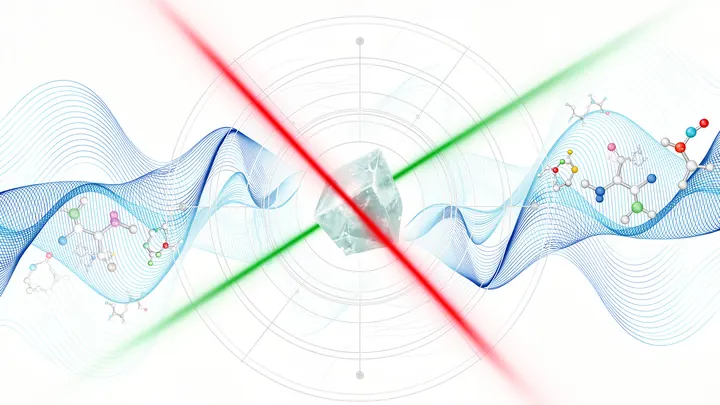
The most common non-destructive techniques are spectroscopic: infrared (IR) and Raman spectroscopy detect the characteristic vibrational modes of water molecules and hydroxyl (OH) groups. Near-infrared reflectance spectroscopy, for example, measures the absorption of sunlight at specific wavelengths (around 1.4 and 1.9 micrometers) that are unique to water. Neutron spectroscopy, used from orbiters, detects hydrogen atoms in the subsurface by measuring the moderation of cosmic-ray-produced neutrons. For isotopic analysis, mass spectrometry can be used, but it typically requires vaporizing a small portion of the sample; non-destructive isotopic analysis is possible with laser-based techniques like cavity ring-down spectroscopy, which measures the absorption of light at precise wavelengths to distinguish H₂O from HDO.
In practice
These methods are used in planetary exploration missions (e.g., Mars rovers, lunar orbiters) to map water ice deposits, in the analysis of meteorites to understand the early solar system's water inventory, and in the detection of water in building materials or archaeological artifacts on Earth.
Fun fact
The corpus article 'Межзвёздная комета 3I/ATLAS: содержание дейтерия в 14 раз выше земного' reports that the deuterium-to-hydrogen ratio in this interstellar comet is 14 times higher than in Earth's oceans, suggesting that interstellar objects may carry a different water history than our own solar system.
A stain is found at a crime scene. The expert takes a swab, and a few hours later the instrument outputs a list of proteins that made up the fluid. Previously, a rapid test could be wrong if multiple fluids were present: blood mixed with saliva, and the strip gave a false result.
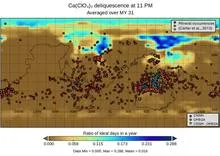
Every Martian night, salt crystals on the planet's surface soak up moisture from the thin air, much like a sponge draws water from a damp cloth. By morning, a microscopic brine accumulates inside them, and during the day, as temperatures rise, that brine finds itself trapped in tiny cavities.
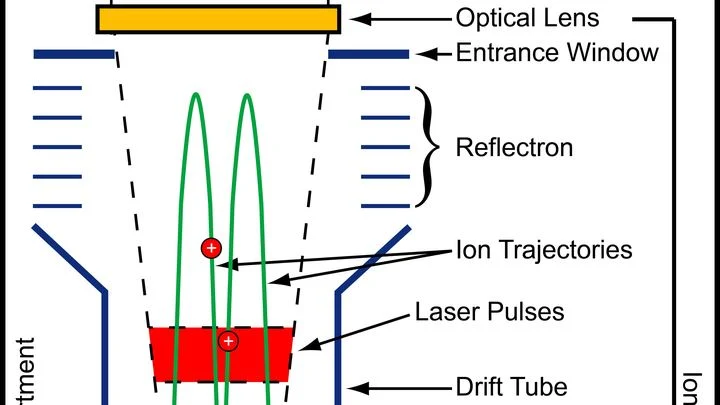
Water comes in different varieties. Not just fresh or salty, but also "heavy"—when one of its hydrogen atoms is replaced by deuterium, its heavier cousin. Such water is called HDO, and it's a true cosmic passport: the amount of deuterium in water reveals where and when that water was born.
A night river is dotted with tiny sparks. This isn't plankton: it's functional pollen-sensors, millimeter-sized devices that swim on their own and measure the water's chemistry.
Each particle is a tiny lab. Inside, two reagents meet: one triggers a glow upon contact with a pollutant, and the second, a colored filter, blocks out interference.
Spectroscopy has always been a way to hear the unheard. Back in the 19th century, Johann Balmer deciphered the elegant lines of hydrogen — a simple numerical harmony that foreshadowed quantum theory.
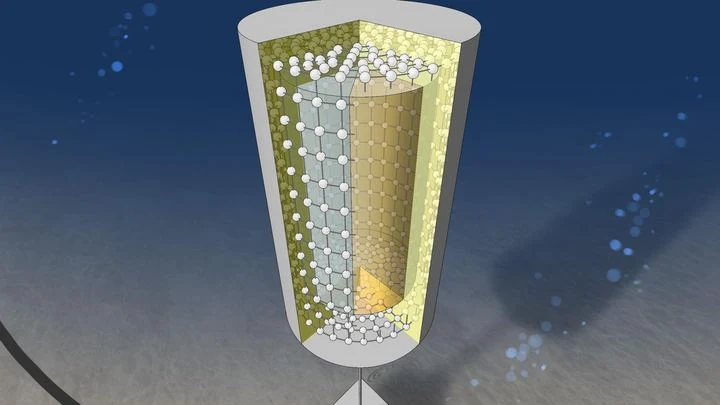
In the depths of the ocean, where light never reaches, a plan is taking shape to capture particles that barely interact with anything. Geoneutrinos, tiny messengers from the scorching mantle, are emitted during the decay of uranium and thorium. Their flux carries information about how much heat lies hidden beneath our feet.
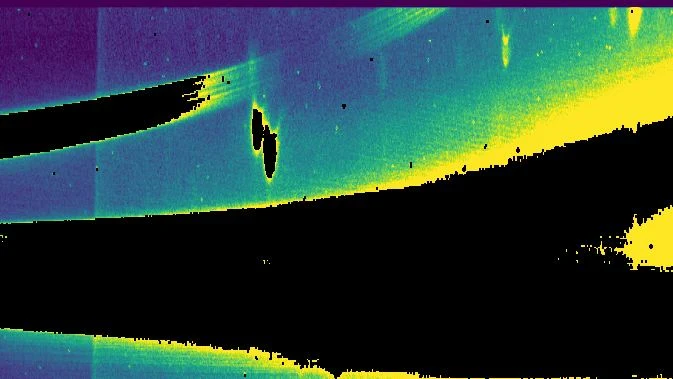
The James Webb Space Telescope peered into a disk of gas and dust around a young star where planets are born, and for the first time spotted ice made of heavy water. This water is not ordinary: in its molecules, regular hydrogen is replaced by deuterium, its heavier sibling.
Magnetic particles are attached to the surface of the diamond by DNA strands, like puppets on strings. They constantly dance under the thermal motion of the liquid molecules. The liquid's viscosity sets the pace: in honey, the particles barely tremble; in alcohol, they dance quickly.
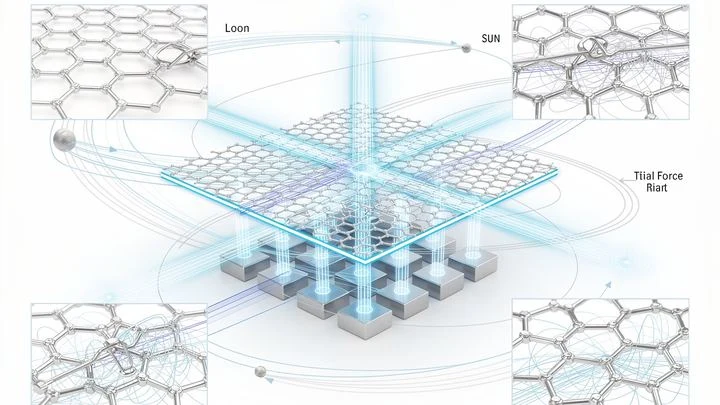
In the quiet of a laboratory, a graphite flake hovers above a magnetic grid. This is not just a demo of diamagnetism's magic — it's listening to the Universe. Like a spider casting its web to catch vibrations from an invisible world, this flake has become a gravitational web.
The search for extraterrestrial life is like a detective investigation: from tiny clues, you must distinguish traces of life from random imprints of non-living nature. On Saturn's moon Enceladus, the investigators are lucky — geysers burst from cracks in the icy crust, ejecting water from the subsurface ocean straight into space.
A giant planet hangs in space in complete solitude, separated from its star by a distance 160 times greater than the path from the Sun to Pluto. The light from its parent star arrives so faintly that the surface temperature barely exceeds 200 degrees Celsius — about as warm as a well-heated sauna.
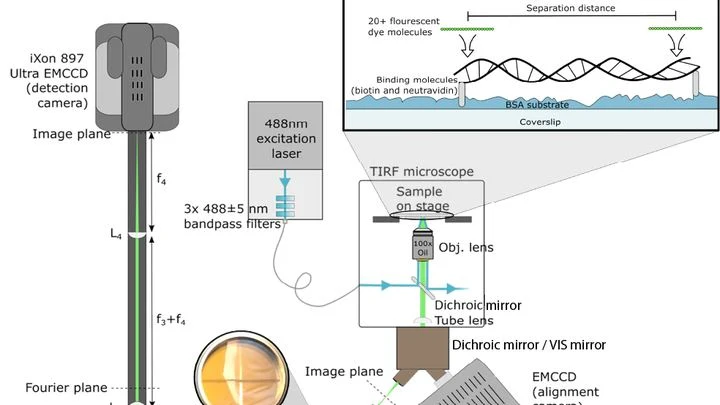
A conventional light microscope hits a fundamental limit: it cannot distinguish two points closer than 200 nanometers — roughly the thickness of a soap bubble divided by a hundred. To see deeper, scientists have made molecules in the sample blink or fade, but these tricks are slow and harmful to living cells.
Deep beneath our feet, within the planet's bulk, radioactive elements are slowly decaying. This process spawns tiny particles — geoneutrinos. They pass through the crust, mantle, and core, barely interacting with anything.
When an exoplanet briefly eclipses its star, starlight passes through its air and absorbs its chemical taste. This technique, the transit method, is the core of how the James Webb telescope works.
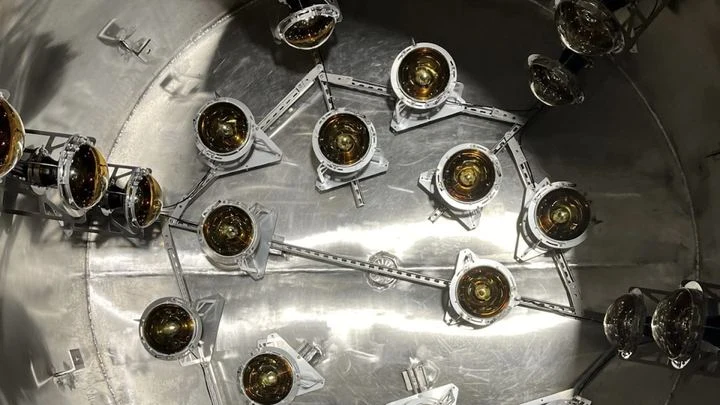
In a dark tank holding thirty tons of water, the liquid glows when a ghostly particle streaks through. Neutrinos barely interact with matter, but occasionally they bump into atoms, and a flash is born. To catch it, a special substance, a liquid scintillator, is added to the water to amplify the light.
Scientists built a model of Earth with all living organisms removed — from bacteria to trees. Over billions of years, this 'empty house' didn't turn into an icy desert. Volcanoes, like a furnace, release carbon dioxide, and rock weathering, like a thermostat, absorbs it.
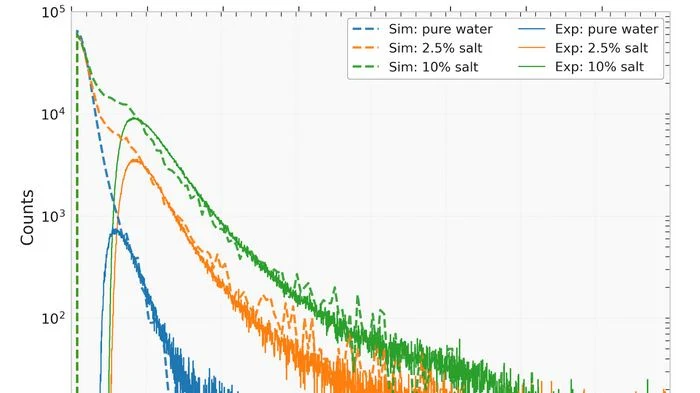
In a field stands a tank of water that usually catches particles from space. Now it keeps an eye on how much moisture is in the soil underfoot. The water in the tank acts as a trap for neutrons — tiny particles that fly out of the soil when cosmic rays hit it. The drier the ground, the more neutrons escape, and the more often the tank registers them.
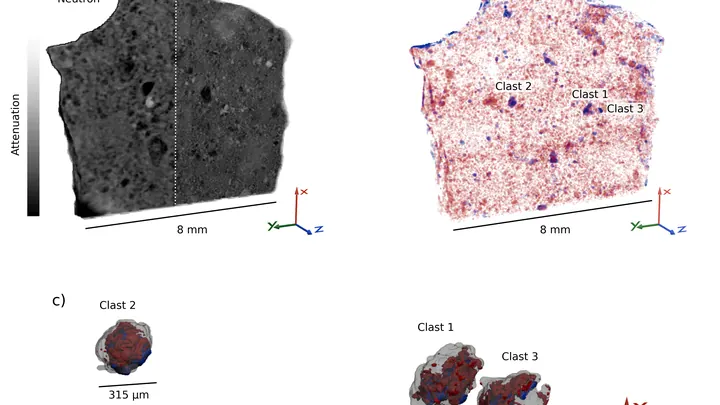
To find out if a Mars rock holds water without smashing it, scientists used neutron and X-ray scanning — similar to medical imaging. Neutrons pick up hydrogen, the foundation of water, allowing them to map moisture inside the sample.
To spot life on other planets, you don't necessarily need to search for oxygen in the air. Living beings paint the surfaces of their worlds: Earth's plants in green, bacteria in purple. The future HWO space telescope will capture these "paints of life" on exoplanets.