Simple

The Mystery of Asteroid Kamo'oalewa: Why It's Not from the Moon express
Original: "Origin of asteroid (469219) Kamo`oalewa: the main asteroid belt or the Giordano Bruno crater on the Moon?"
arXiv:2601.08923v1 · 2026-01-13 · CC BY 4.0 · 1 min · Exoplanets
Asteroid Kamo'oalewa most likely comes from the main asteroid belt, not the Moon.
Abstract

Asteroid Kamoʻoalewa is the target of a Chinese sample-return mission. Scientists debated: is it a chunk of the Moon or an interloper from the main belt? Calculations showed: the probability of a lunar origin is minuscule; most likely, it's from the asteroid belt. So who is it — a child of the Moon or a wanderer?

Links in the knowledge graph 1

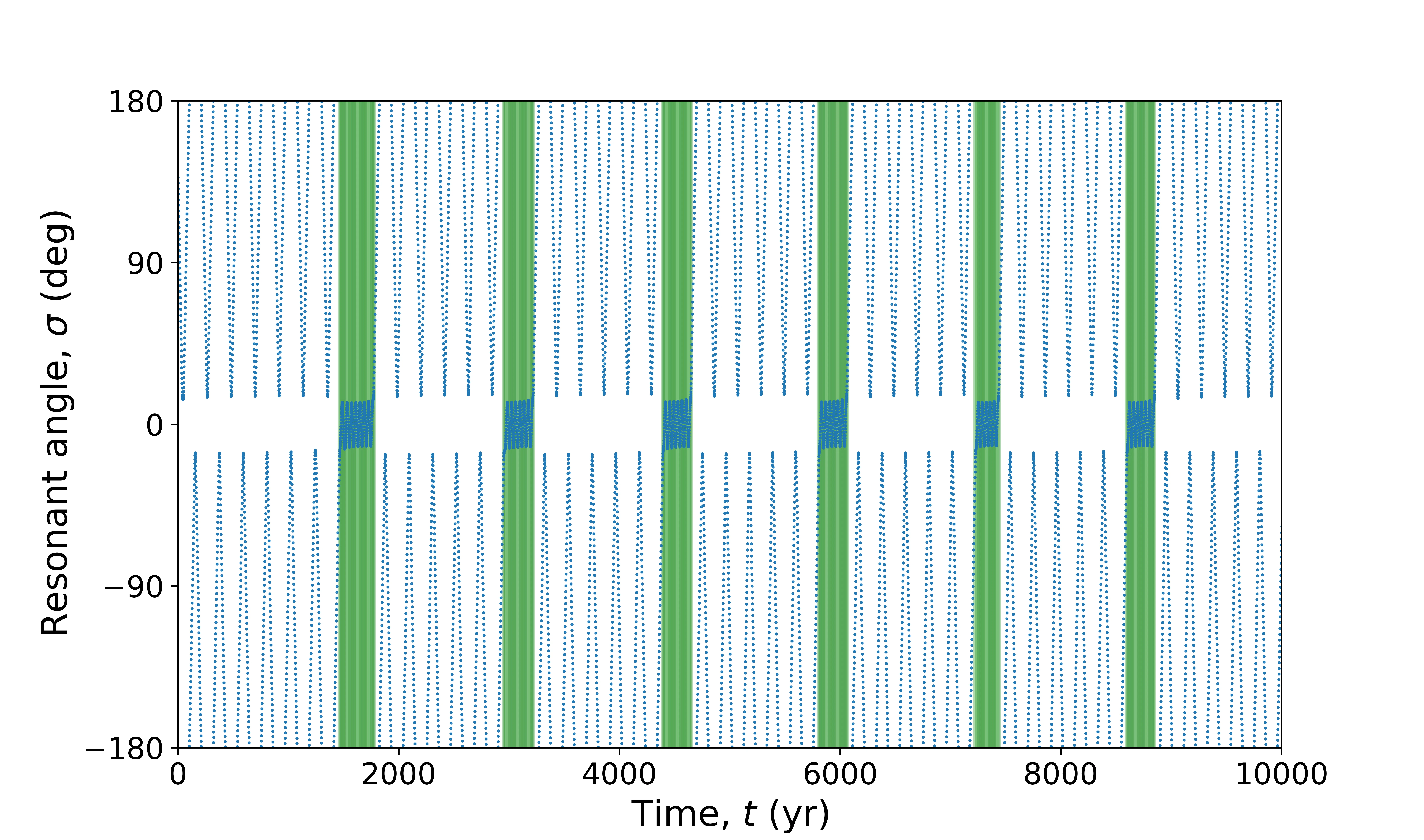
Kamo'oalewa is Earth's partner in a peculiar gravitational dance: it orbits the Sun almost in unison with us, edging closer and then pulling away. Its color — the palette of reflected light — matches the lunar surface. Hence the initial thought: it's a chunk of the Moon from the Giordano Bruno crater.

But calculations comparing brightness and orbits wiped out the romantic hypothesis. Such dancers from the main asteroid belt between Mars and Jupiter arrive at an average of 1.23 per epoch, while from that very crater — only 0.042. A gap of almost 30 times! The probability of Kamo'oalewa's lunar origin is laughable. More likely, it's simply a belt native that accidentally copied the lunar attire. In a year or two, the Tianwen-2 probe will collect soil samples — and the dance will end with a solution. Meanwhile, the Vera Rubin Observatory telescope watches its pirouettes.

The Giordano Bruno crater is an infant: it's only about 10 million years old. If Kamo'oalewa had come from there, we'd be witnessing an almost fresh cosmic injury. But the odds of that are 1 in 30.
Quasi-satellites don't fall to Earth. Gravity keeps them on a stable orbital dance floor, where they can twirl for millions of years.

🎯 Kamo'oalewa spans 40 to 100 meters — about as large as a few football fields — but through a telescope, it appears only as a faint point of magnitude 22. To spot it, you need equipment that captures light tens of times dimmer than what the eye can see.

Scientists
Christian DopplerD. B. McLaughlinDidier QuelozMichel MayorR. A. RossiterJames Clerk Maxwell
Tags
cosmic dust spectroscopy photometry
Laws
Doppler effectMaxwell's equationsPlanck's lawPlanck–Einstein relationWien's displacement lawStefan–Boltzmann law
Original: arXiv:2601.08923v1 · CC BY 4.0 · bridge42worlds