A hospital cyclotron instead of a nuclear reactor express
Every year, in the United States alone, doctors perform more than 16 million scans using the radioactive isotope technetium-99m. It lights up the heart, bones, and lungs in images, helping to find tumors or check blood flow. But the isotope itself has a half-life of only six hours, so you can't stockpile it: you need a steady supply. Today, technetium is produced from molybdenum-99, and almost all of that comes from nuclear reactors. This chain is like a water supply with a single pumping station: if it goes down, taps run dry in dozens of hospitals at once.
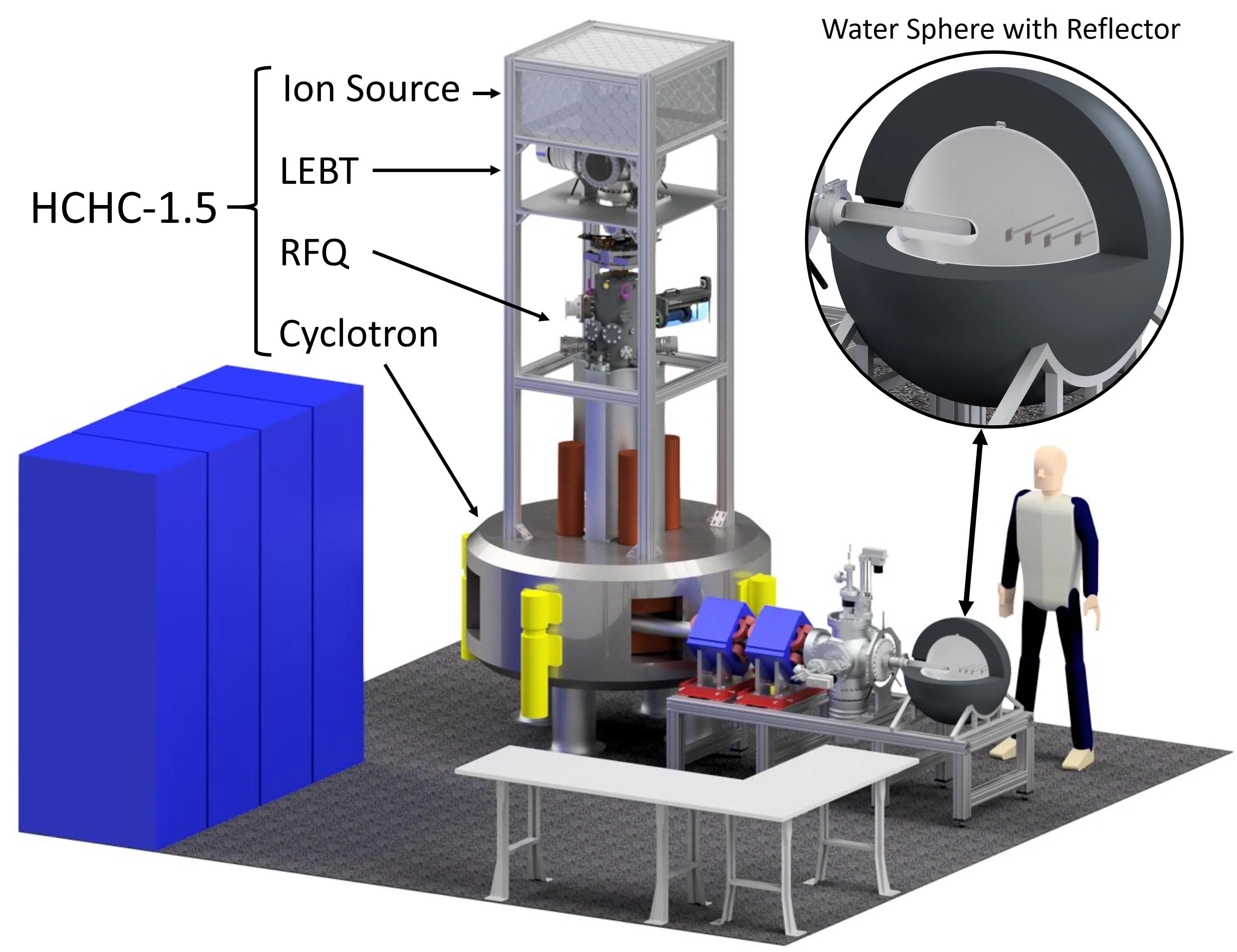
The new study proposes replacing the reactor with a compact cyclotron — an accelerator that speeds up deuterium nuclei (heavy hydrogen) and slams them into a thin beryllium plate. The impact produces a neutron flux: up to 10 trillion per second, according to calculations. These neutrons hit a container of molybdenum-98 and turn it into molybdenum-99—the very isotope from which technetium is extracted in the hospital. The device operates at relatively low energy, so it doesn't accumulate dangerous radiation, and it requires neither highly enriched uranium nor purchases from foreign reactors.
The point is to place such a source right in the hospital or nearby. Then the supply chain shortens to a single building: in the morning you produce molybdenum, in the afternoon you extract technetium, in the evening you inject the patient. Beam calculations and simulations show the idea is physically feasible. If a prototype confirms the numbers, hospitals will no longer depend on the whims of reactor schedules, and patients won't have to wait for a scan because a reactor somewhere far away shut down.
Molybdenum-99 is not needed by doctors itself: it's a 'parent' isotope that continuously generates technetium-99m inside a generator, like a coffee machine dripping out a fresh cup drop by drop.