Dust of the Pleiades: How Stars Paint Patterns in Space express
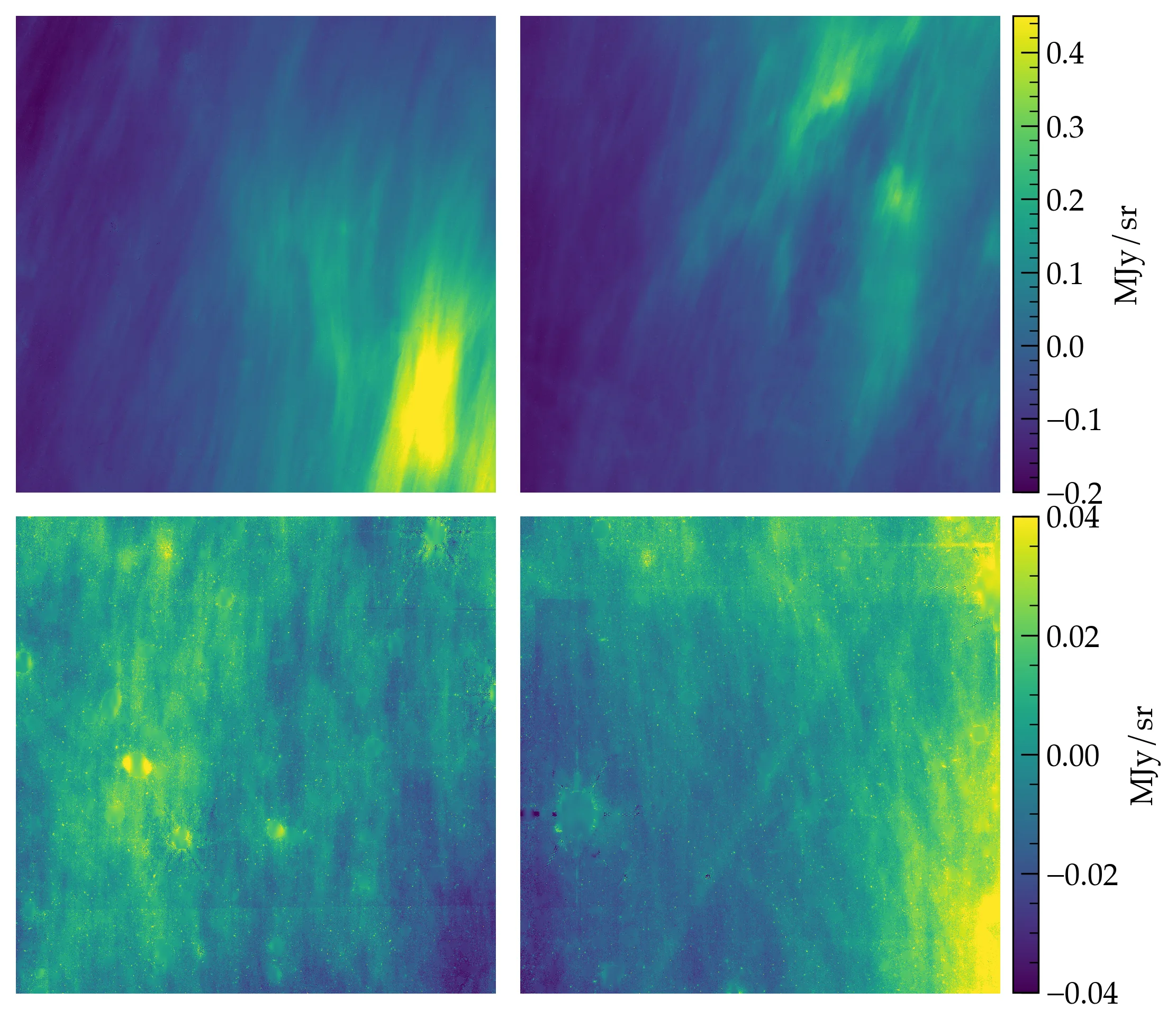
Images of the Pleiades nebula taken by the James Webb Space Telescope reveal a striking sight: clouds of interstellar dust glow unevenly, as if someone had stretched them in one direction. Scientists analyzed these images and found that the dust's glow is elongated along the magnetic field lines that thread the nebula. It is as if invisible threads were guiding the motion of gas and dust.
To discern the structure of the dust, astronomers removed stars and galaxies from the images, leaving only the faint glow of dust grains. They then studied how this glow varies across different scales — from tiny details the size of our solar system to large regions. It turned out that the dust pattern has no characteristic size: it looks the same up close and from afar. This is like a coastline that appears jagged both on a map and from an airplane.
Near the star Merope, the dust is more stretched than farther away. Perhaps the radiation and wind from this bright star stir up turbulence in the gas, causing the dust to align along magnetic fields. Such observations help us understand how turbulence in cold interstellar gas influences the birth of new stars. After all, it is in these clouds, where gas slowly moves and densifies, that future suns ignite.
The Pleiades is one of the most prominent star clusters in the sky. On a clear night, you can see six or seven stars with the naked eye, though there are actually hundreds. The ancient Greeks considered the Pleiades to be seven sisters, daughters of the Titan Atlas.