Five Metals in One Spot: A Cathode for Sodium Batteries express
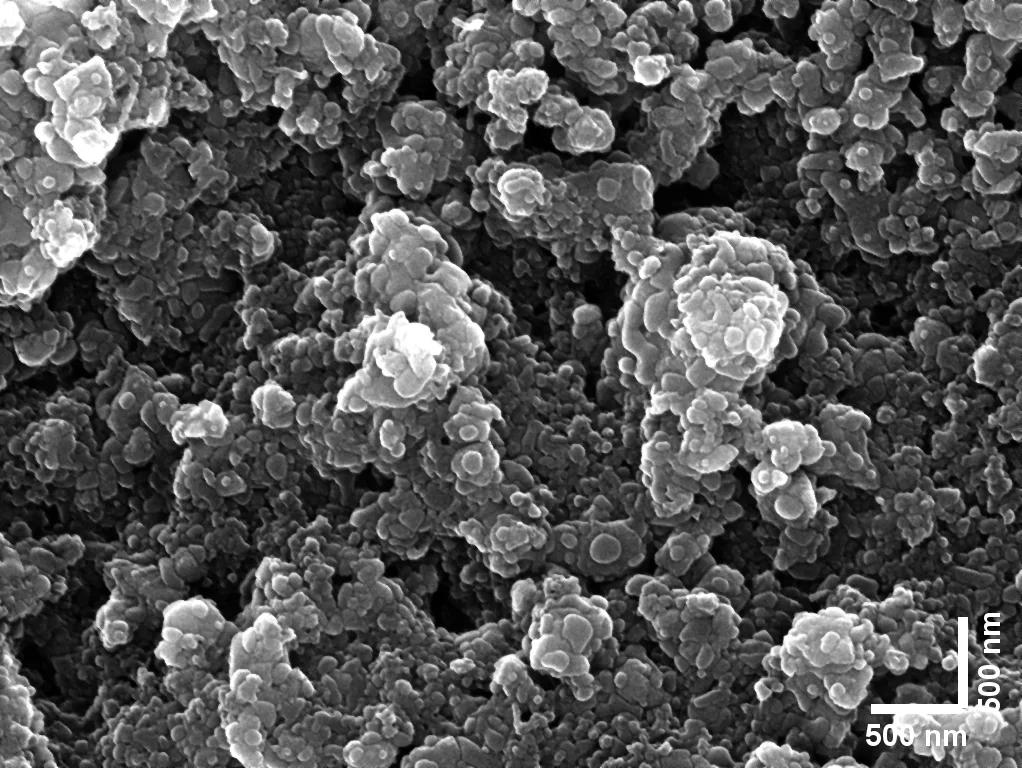
Sodium is lithium's neighbor on the periodic table, but it's hundreds of times more abundant in the Earth's crust and much cheaper. So sodium batteries could replace lithium ones in electric vehicles and energy storage. The problem is that sodium is larger than lithium, making it harder for it to navigate through the cathode's crystal lattice. The material quickly tires, and capacity drops.
Chemists in this study tried 'seasoning' the cathode with five different metals at once: chromium, molybdenum, aluminum, zirconium, and nickel. Each was added in tiny amounts — together they occupied only one-tenth of the vanadium sites in the crystal. But that was enough to make the lattice stronger and sodium ions more mobile.
The result: the cathode delivers 119 milliamp-hours per gram at slow charging, and at fast charging (10C) it retains 68% of its capacity after 1000 cycles. A full cell with hard carbon yields 326 watt-hours per kilogram of cathode — comparable to good lithium batteries. The authors measured how quickly sodium ions diffuse inside the cathode: the diffusion coefficient lies in the range of 10⁻¹¹–10⁻¹³ cm²/s. It's like a pedestrian's speed in a crowd — ions push between atoms, and the metal addition widens the passages.
This approach paves the way for cheap and durable sodium batteries. Instead of expensive lithium, ordinary table salt; instead of rare cobalt and nickel, common metals. If the technology reaches factories, electric vehicles and solar farms will get batteries that don't depend on the whims of global lithium prices.
Sodium is the sixth most abundant element in the Earth's crust. It can be extracted from seawater, while lithium can only be obtained from salt lakes and mines, of which there are few on the planet.
In John Scalzi's novel 'The Interdependency', ships fly on batteries charged by solar sails. Cheap sodium batteries would make such energy real.