The cathode is the electrode in a battery where reduction occurs during discharge — that is, where cations (positively charged ions) gain electrons. In a discharging battery, the cathode is the positive terminal; when you recharge a rechargeable battery, the roles reverse and the same electrode becomes the anode. The cathode's material determines much of a battery's voltage, energy density, and lifespan, making it a central focus of battery research.
History
The term 'cathode' was coined by Michael Faraday in the 1830s during his work on electrolysis, where he defined it as the electrode through which current leaves the electrolyte.
How it works
During discharge, oxidation happens at the anode, releasing electrons that travel through an external circuit to the cathode. At the cathode, cations from the electrolyte accept these electrons and are reduced, often incorporating into the cathode's crystal structure. The cathode material must be able to reversibly store and release these ions — for example, lithium ions in lithium-ion batteries — without degrading. Its stability against side reactions and structural fatigue directly affects how many charge-discharge cycles a battery can survive.
In practice
Cathode materials are the key differentiator in commercial batteries — from lithium cobalt oxide in smartphones to nickel-manganese-cobalt in electric vehicles — and are the main target of research for improving energy density and cycle life.
Fun fact
In a battery, the cathode is often the heaviest and most expensive component, which is why many battery innovations focus on making cathodes from cheaper and more abundant elements like iron or sulfur.
In the Moon's polar craters, where sunlight never reaches, regolith may accumulate electric charge for decades, buried deep below the surface. It's like a bank account where deposits and balance don't match: a particle delivers energy, but the charge doesn't always stay put.
The river splits in two. One branch is wide and fast, with water flowing smoothly, but as temperature rises, the flow slows: eddies and waves appear. The second branch is narrow, with rapids, where water leaps from rock to rock. This flow, on the contrary, becomes more lively with warming.
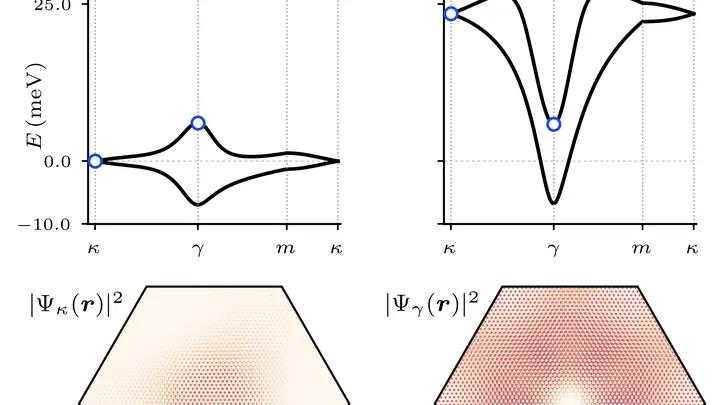
In a crystal, electrons are not distributed randomly. Their waves obey the lattice symmetry, like ripples on water taking the shape of a hoop thrown into it. The new work shows that at high-symmetry points, this ripple must have nodes — places where electron density is strictly zero.
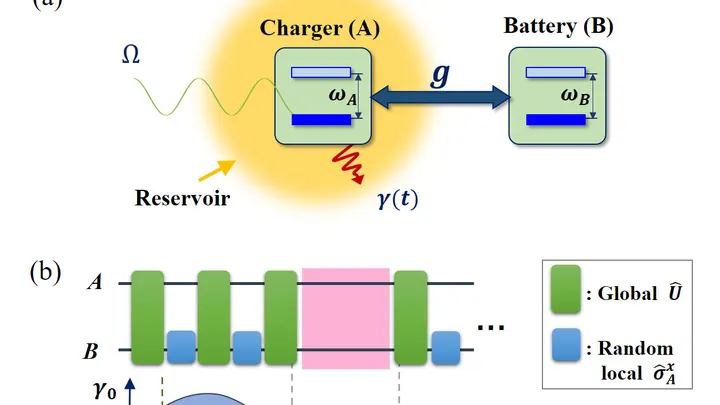
Any battery, from a AA to a quantum one, is simple in principle: there's a store of energy, and there's a way to get it out. In the quantum world, this 'way' looks like a careful switching between particle states, akin to moving a ball from a high shelf to a low one.
Crystals glued to the outside and inside of a metal wall act as an invisible channel. One, receiving current, starts to tremble, and these vibrations, like ripples on water, spread out in all directions through the metal. The inner crystal catches this tremor and generates electricity again.
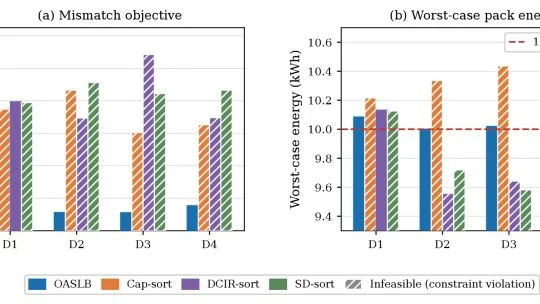
Used EV batteries behave like moody musicians: one plays too loud, another too soft, a third goes out of tune for no reason. Slapping them together randomly creates a cacophony: some cells get overloaded, others sit idle, and the system fails quickly.
Engineers turned this problem into a conductor's challenge.
A lithium battery is like a tiny city: lithium ions are the residents who move between electrode neighborhoods, generating current. But to understand how much energy the city can deliver, you need to know not only the street layout (the material's structure) but also how residents interact with neighbors, transportation, and even the weather.
In diamond quantum devices, there's a tiny defect — the nitrogen-vacancy center (a nitrogen atom plus a vacancy where a carbon atom should be). It acts as a switch that spontaneously flips back and forth: it can carry an extra electron or not, and this determines whether it emits light or not.
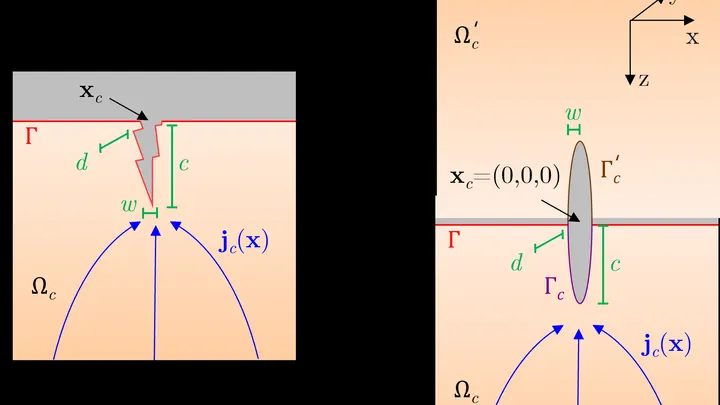
Battery aging is like metal fatigue: a crack grows inside long before the part breaks. Usually, you only learn about the problem when capacity drops below 80%—but by then, the damage is irreversible.
Quantum batteries harness quantum effects to circumvent the limitations of ordinary devices imposed by entropy — a measure of disorder and energy losses. Imagine a bucket under a powerful jet: filling is lightning-fast. But the bucket has holes: the environment constantly drains the energy.
A quantum battery is not a box of chemicals but a chain of tiny magnets (spins) capable of storing energy. Its main trick: charge many particles at once, using their quantum entanglement. But there's a catch — not all entanglement works.
A big sticky ball thrown onto a dusty shelf bounces off and kicks up a cloud of dust, but if you roll it slowly, it picks up every bit. Rydberg excitons behave just like that — they're giant 'atoms' inside a crystal, named after Johannes Rydberg.
An ordinary phone battery breathes — not with air, but with contact. Inside a solid body, where there are no liquids, lithium presses against the electrolyte (the ion-conducting substance) during charging and pulls away during discharging, like a lung on inhale and exhale. This 'breathing' is not poetry but physics: each cycle creates and destroys the contact points through which current flows.
A lithium-ion battery is like a multi-story building where lithium ions live on every floor. When you charge the battery, the ions move from floor to floor, and the whole building warms up a bit. Usually, this heat dissipates evenly, like from underfloor heating. But sometimes one spot gets too hot, and then the whole building can go up in flames.
A lithium battery is like a sandwich: two slices of bread are the electrodes, and the filling between them is the electrolyte, through which lithium ions shuffle back and forth. In conventional batteries, the filling is liquid, like a sauce, and it can leak or catch fire.
Splitting water into hydrogen and oxygen with electricity is an age-old dream of clean fuel. But tiny gas bubbles stand in the way: they cling to the electrodes like foam on the side of a soda glass, interfering with the current's work. Each bubble is a tiny plug, blocking part of the surface where the reaction should occur.
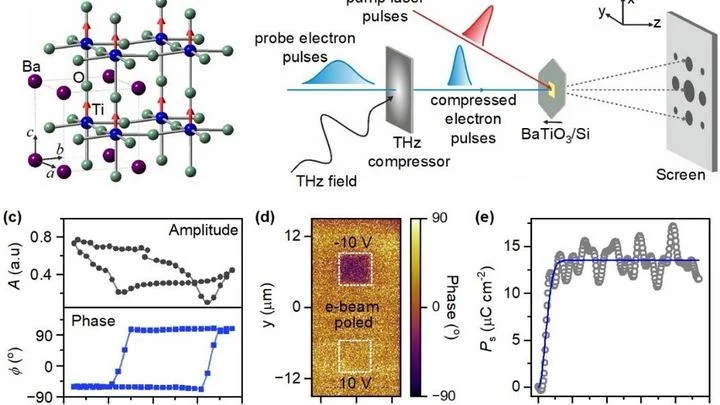
Inside a barium titanate crystal, there's a built-in electric field, like a permanent magnet, but for charges. When a flash of light hits it, electrons are knocked loose and start darting around, colliding with atoms. But the crystal isn't the same in all directions: it has an axis along which the field is strongest.
A metal filament as thin as a hair grows through the ceramic like a root through asphalt. In solid-state batteries, such filaments are called dendrites, and they appear when the charging current exceeds a critical threshold. The ceramic electrolyte is solid but brittle, like glass.
A solar cell is like a heart: if you force it to beat out of rhythm, it tires quickly. Usually, cells are tested by applying reverse voltage, but in real life, a shadow from a leaf or a bird forces neighboring cells to pass foreign current through themselves.
A metal is a sea of electrons that move almost freely, colliding only occasionally. But in some materials, this sea suddenly becomes viscous and unpredictable: electrons stop behaving like independent particles. Physicists call this state 'non-Fermi liquid,' and it remains a puzzle.
A tiny glass sphere floats in a laser beam like a speck of dust in sunlight. Inside it is radioactive lead, which decays from time to time. Each decay ejects charged particles, and the sphere loses or gains a tiny electric charge.
The quantum battery works like a sponge that absorbs light but won't release it without a forced squeeze. The inspiration came from bacteria's natural solar traps: capturing solar photons, they transfer energy almost losslessly, as proven by spectroscopy.
A lithium battery is like a house with a storage room: during charging, lithium goes inside; during discharging, it comes out. But if the storage room gets cluttered, some lithium stays inside forever. How much lithium returns depends on the metal the walls are made of.
The authors of the study took four metals: aluminum, magnesium, silver, and copper.
A semiconductor film just one atom thick is like a communal apartment: it houses negatively charged electrons and positively charged 'holes.' When light hits such a film, an electron and a hole can pair up into an exciton — a bound state of an electron and a hole, akin to a hydrogen atom.
In an ordinary light bulb, light is born when an electron and a hole meet. In the new material, they are deliberately pushed apart, as if a turnstile were placed between them at a subway station. This turnstile is a built-in electric field that arises because sulfur and selenium atoms in the crystal are arranged asymmetrically: sulfur on top, selenium on the bottom.
Batteries usually have two terminals — an anode and a cathode. Engineers are trying to remove the anode from solid-state batteries (with solid electrolytes) to make them lighter and more capacious. During charging, metal should deposit itself as a layer on the contact, and then vanish completely during discharge. But after a few cycles, capacity drops.
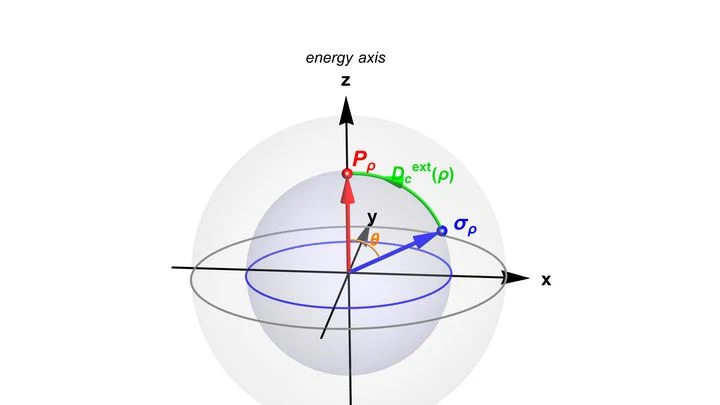
A quantum battery is a device that stores energy in the quantum states of particles. In the new work, the battery was modeled as a pair of qubits — the tiniest carriers of information that can be in a "zero" state, a "one" state, or a mixture of both.
Manganese is like bricks in a wall, and zinc is a guest that comes and squeezes in between them. If the guest sits awkwardly, it pushes a brick out of the masonry. That's roughly what happens in a zinc-ion battery: during discharge, zinc ions insert into the crystal lattice of manganese oxide, and manganese starts to wash out into the solution.
An old T-shirt was dissolved in alkali to produce a gel, and it became the heart of an energy storage device. The second component was made from chitosan, a substance derived from shrimp shells. No metals: just recycled cotton and seafood.
The gel was soaked in ammonium salt, and its conductivity nearly doubled: from 17.1 to 37.8 millisiemens per centimeter.
Sodium is lithium's neighbor on the periodic table, but it's hundreds of times more abundant in the Earth's crust and much cheaper. So sodium batteries could replace lithium ones in electric vehicles and energy storage.
Terahertz radiation sits between microwaves and infrared light. It passes through clothing, paper, and plastic, but not through metal or water. That's why it's used in security scanners and medical imaging. To see the polarization of such radiation, you need a detector.
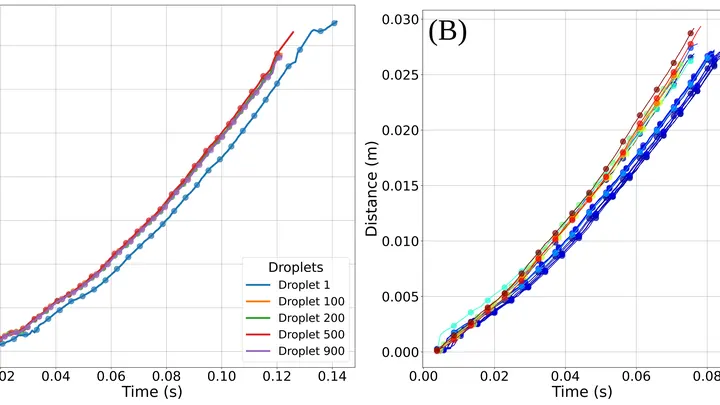
A water droplet races across a taro leaf like a bead on a freshly waxed floor. But it doesn't just glide: it picks up electricity. Thirty years ago, scientists explained why lotus leaves stay dry: their surface is covered with microscopic bumps that trap air. Now it turns out that water on leaves has another, hidden power.
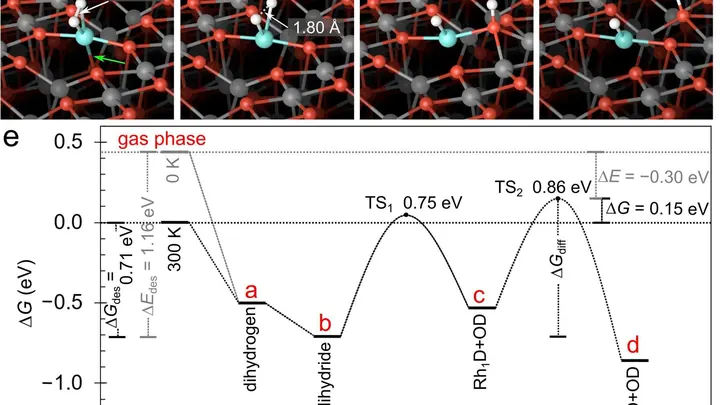
Chemistry has two worlds: in one, the catalyst is a solid particle and the reaction happens on its surface; in the other, it's a dissolved molecule where everything occurs around a single metal center. These worlds rarely meet. But in a new study, they collide.
The researchers took iron oxide, a black powder used in magnetic tapes, and scattered single rhodium atoms across its surface.
Diamond is not just a gemstone. This crystal can conduct electricity when free charge carriers, electrons and holes, appear in it. But how fast do they move? In scientific papers, numbers vary by tens of times. One lab reports a mobility of 1000 cm²/(V·s), another 4000.
A piggy bank where coins slip in easily but can only be retrieved by smashing it. Something similar happens with a new material for sodium batteries. It readily accepts sodium ions during charging, but during discharge, it gives back almost nothing.
A piece of chromium exposed to air gets covered in invisible armor, an oxide film, within a minute. That film protects the metal from rust, but for a battery it's a disaster: the film blocks chromium ions, so no current flows.
Scientists mixed five metals — chromium, bismuth, copper, tin, and nickel.
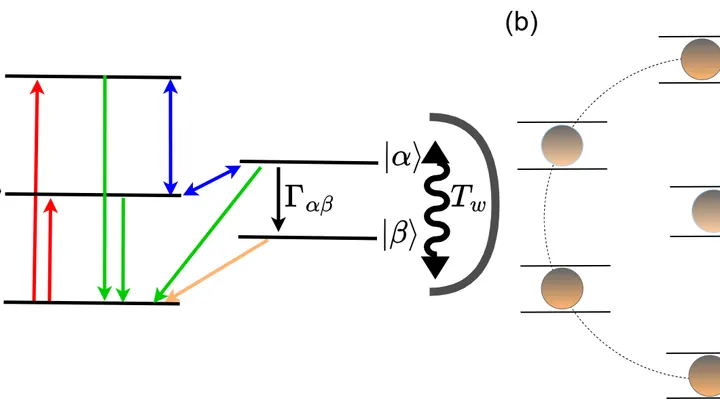
Quantum batteries lose energy due to entropy — the tendency toward disorder. Just as parallel wires pick up interference, the battery's contacts with the environment create leakage channels. The solution: braid the giant atoms, which act as both charger and storage, into a braid.
A quantum battery is not a box of electrolyte but a handful of atoms or superconducting loops, with energy stored in excited states. It can be charged in fractions of a second using collective quantum effects.