A chargecycle is one complete sequence of charging a rechargeable battery from empty to full and then discharging it back to empty. Battery lifetime is typically rated in charge cycles — for example, a battery rated for 500 cycles can undergo 500 full charge-discharge sequences before its capacity drops below a specified threshold. The concept is central to understanding battery degradation, as each cycle causes microscopic structural changes in the electrodes.
History
The concept of cycle life became important with the commercialization of lead-acid batteries in the 19th century, but the modern understanding of cycle-induced degradation in lithium-ion batteries developed in the 1990s as these batteries entered consumer electronics.
How it works
During charging, lithium ions (in lithium-ion batteries) migrate from the cathode through an electrolyte to the anode, where they intercalate into the material's crystal lattice. Discharging reverses this flow, with ions returning to the cathode while electrons travel through an external circuit, powering a device. Each cycle causes slight expansion and contraction of the electrode materials, leading to micro-cracks, loss of active material, and formation of a solid-electrolyte interphase layer that consumes lithium. These cumulative effects reduce capacity over time.
Partial chargecycles (e.g., charging from 20% to 80%) count as only a fraction of a full cycle, which is why battery health apps often recommend avoiding full discharges.
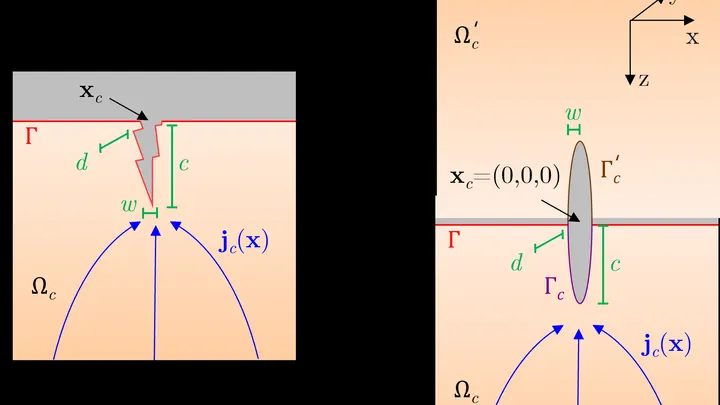
A drying puddle of mud becomes covered with cracks, like an old painting with craquelure. At first the cracks meet at nearly right angles, forming a rough grid. But if the mud is wetted again and allowed to dry, the pattern changes: cracks begin to meet in threes, at an angle of 120 degrees, like a honeycomb.
Why this happens remained a mystery for a long time.
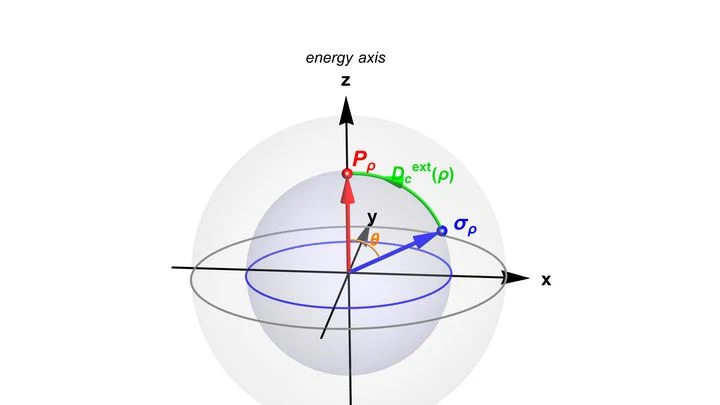
Any battery, from a AA to a quantum one, is simple in principle: there's a store of energy, and there's a way to get it out. In the quantum world, this 'way' looks like a careful switching between particle states, akin to moving a ball from a high shelf to a low one.
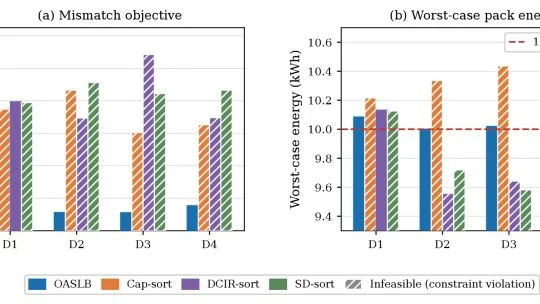
Used EV batteries behave like moody musicians: one plays too loud, another too soft, a third goes out of tune for no reason. Slapping them together randomly creates a cacophony: some cells get overloaded, others sit idle, and the system fails quickly.
Engineers turned this problem into a conductor's challenge.
An orchestra of billions of cesium atoms struck a single note, and it sounded for 17 hours without fading. That’s no exaggeration: Chinese physicists created a continuous time crystal with a record-breaking lifespan. A time crystal is a system that breaks time symmetry, spontaneously pulsating in an unchanging rhythm.
Two pendulums on a shared string trade motion: push one, and the second starts swinging, and a moment later the first gets a push back. In a thorium-229 atom, energy flows nearly loss-free between the electron shell and the nucleus.
The atomic nucleus is a natural spring of colossal power. When the protons and neutrons inside it rearrange, it enters a special long-lived state — a nuclear isomer. It stores energy like a spring compressed to its limit.
Battery aging is like metal fatigue: a crack grows inside long before the part breaks. Usually, you only learn about the problem when capacity drops below 80%—but by then, the damage is irreversible.
A quantum battery is not a box of chemicals but a chain of tiny magnets (spins) capable of storing energy. Its main trick: charge many particles at once, using their quantum entanglement. But there's a catch — not all entanglement works.
Black holes are not eternal: they slowly lose energy, emitting entropy — a measure of hidden information — as heat. This process was predicted by Stephen Hawking. But until now, it remained a mystery what happens at the very end, when the hole has almost disappeared and must return the captured data.
An ordinary phone battery breathes — not with air, but with contact. Inside a solid body, where there are no liquids, lithium presses against the electrolyte (the ion-conducting substance) during charging and pulls away during discharging, like a lung on inhale and exhale. This 'breathing' is not poetry but physics: each cycle creates and destroys the contact points through which current flows.
An optical tweezer is a laser beam that holds an atom in place, much like fingers holding a pea. Arrays of these tweezers form the basis of future quantum computers. But there's a catch: not every tweezer catches an atom. Typically, only half of the traps get filled, and for molecules, even fewer. Empty spots break the whole setup.
The fate of a civilization isn't just a matter of luck or disasters. Scientists simulated a thousand years of history under ten different scenarios, accounting for resource consumption, governance, and random shocks. The key metric turned out to be the 'activity coefficient' – the fraction of time when a civilization is technologically alive. At best, this fraction nears 100%; at worst, it drops to 38%.
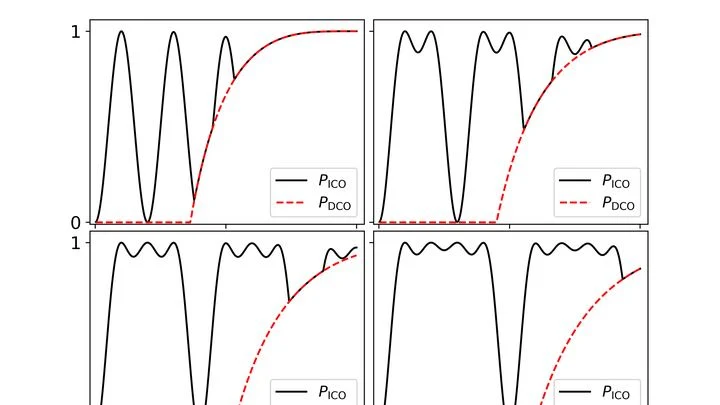
In quantum batteries, charging can be accelerated by shuffling the steps in time, like a deck of cards. Instead of a smooth energy climb, you get abrupt efficiency explosions, like microscopic supernovae inside atoms.
A metal filament as thin as a hair grows through the ceramic like a root through asphalt. In solid-state batteries, such filaments are called dendrites, and they appear when the charging current exceeds a critical threshold. The ceramic electrolyte is solid but brittle, like glass.
A tiny glass sphere floats in a laser beam like a speck of dust in sunlight. Inside it is radioactive lead, which decays from time to time. Each decay ejects charged particles, and the sphere loses or gains a tiny electric charge.
The quantum battery works like a sponge that absorbs light but won't release it without a forced squeeze. The inspiration came from bacteria's natural solar traps: capturing solar photons, they transfer energy almost losslessly, as proven by spectroscopy.
A lithium battery is like a house with a storage room: during charging, lithium goes inside; during discharging, it comes out. But if the storage room gets cluttered, some lithium stays inside forever. How much lithium returns depends on the metal the walls are made of.
The authors of the study took four metals: aluminum, magnesium, silver, and copper.
Two phones with identical batteries: one charges in a basement with a weak signal, and the process goes slower. The battery percentage here plays the role of a clock hand. Physicists applied the same logic to the quantum world. Their clock is a microscopic battery that stores energy. The charging rate depends on a hidden quantum 'mode'—like a switch.
Batteries usually have two terminals — an anode and a cathode. Engineers are trying to remove the anode from solid-state batteries (with solid electrolytes) to make them lighter and more capacious. During charging, metal should deposit itself as a layer on the contact, and then vanish completely during discharge. But after a few cycles, capacity drops.
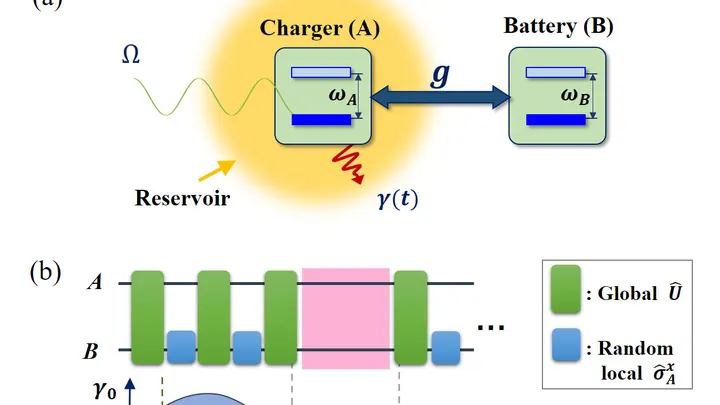
A quantum battery is a device that stores energy in the quantum states of particles. In the new work, the battery was modeled as a pair of qubits — the tiniest carriers of information that can be in a "zero" state, a "one" state, or a mixture of both.
Manganese is like bricks in a wall, and zinc is a guest that comes and squeezes in between them. If the guest sits awkwardly, it pushes a brick out of the masonry. That's roughly what happens in a zinc-ion battery: during discharge, zinc ions insert into the crystal lattice of manganese oxide, and manganese starts to wash out into the solution.
Sodium is lithium's neighbor on the periodic table, but it's hundreds of times more abundant in the Earth's crust and much cheaper. So sodium batteries could replace lithium ones in electric vehicles and energy storage.
A piece of chromium exposed to air gets covered in invisible armor, an oxide film, within a minute. That film protects the metal from rust, but for a battery it's a disaster: the film blocks chromium ions, so no current flows.
Scientists mixed five metals — chromium, bismuth, copper, tin, and nickel.
A quantum battery is not a box of electrolyte but a handful of atoms or superconducting loops, with energy stored in excited states. It can be charged in fractions of a second using collective quantum effects.