Counting Blood Cells Without Lenses express
A drop of blood lands on a tiny sensor, and within a minute the doctor knows how many different defenders are in it. That's the future of blood testing, brought closer by Danish engineers.
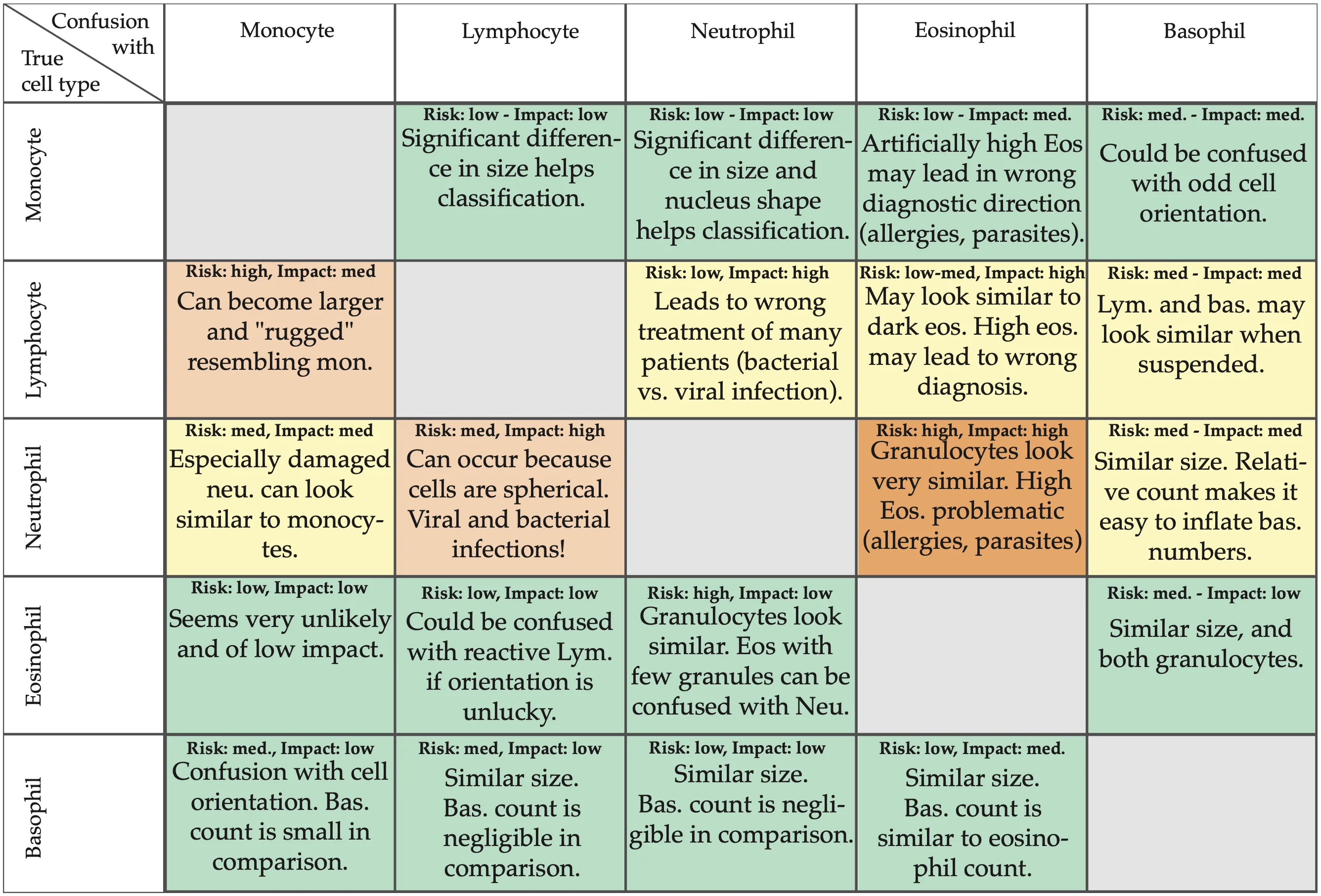
Instead of a regular microscope with lenses, they built a lensless device. A cell flows over the sensor, which records a pattern of dark and light rings — a hologram. From these rings, a neural network identifies what kind of cell it is. The first version of the device distinguished three main types of white blood cells with 89.6% accuracy. Then they simplified the design, removed the lenses, and accuracy actually improved: 92.65% for three types and 89.44% for five.
This device can already spot monocytes — large cells that are the first to attack bacteria. Doctors measure the spread of their sizes (MDW) to catch sepsis early — a blood infection where every hour counts. The engineers also taught the neural network to "enhance" images, making them sharper without extra optics.
This is just the first step. But you can already see how bulky lab analysis shrinks to the size of a palm, and ends up at the patient's bedside.
A single lensless image can capture more than a hundred cells at once — a regular microscope with high magnification sees only a few.