A Lattice That Senses Cracks Before They Appear express
Ordinary materials break in silence. First, invisible struts inside them snap, and only then does a crack appear that you can see with your eyes. Engineers at Carnegie Mellon University have taught a material to 'talk' about such hidden damage.
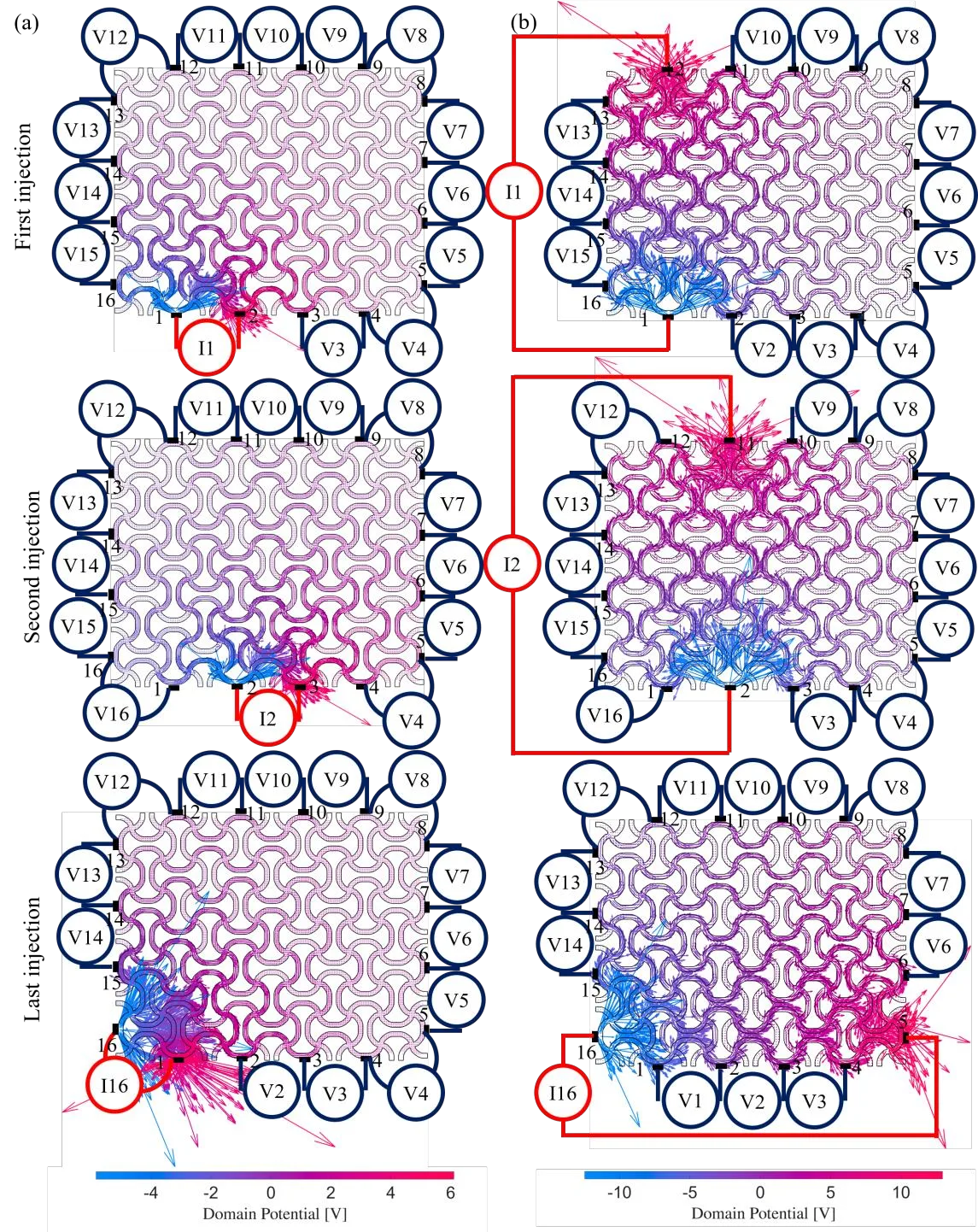
They 3D-printed a lattice resembling honeycomb but with a more intricate pattern. Carbon nanotubes, tiny conductors just a few atoms thick, were mixed into the resin. Sixteen electrodes were placed around the lattice's edges, like microphones around a stage. A weak current is sent through them, and the way it spreads through the structure is observed.
When the material is stretched, the struts in the lattice snap one by one. Each broken strut is a 'hole' in the electrical network: the current detours, and the conductivity map changes. The computer notices this instantly and shows exactly where the break occurred — even if it's far from the electrodes. This method is called electrical impedance tomography: by measuring changes in resistance, one reconstructs what's happening inside.
By changing the lattice pattern, you can tune the material's sensitivity: make it 'see' the earliest cracks or, conversely, focus on major fractures. It's like adjusting the focus on a camera — except instead of light, you're catching damage.
Such a material is a step toward 'smart' structures that monitor their own health. An airplane wing, a bone implant, or a battery casing could report a problem long before failure. And a digital copy, a digital twin, would reflect the real part's condition in real time.
Carbon nanotubes in the resin make the material conductive but don't make it heavy. A lattice with these filaments weighs as much as plastic but senses damage like a nervous system.