Black Holes in a Non-Empty Universe express
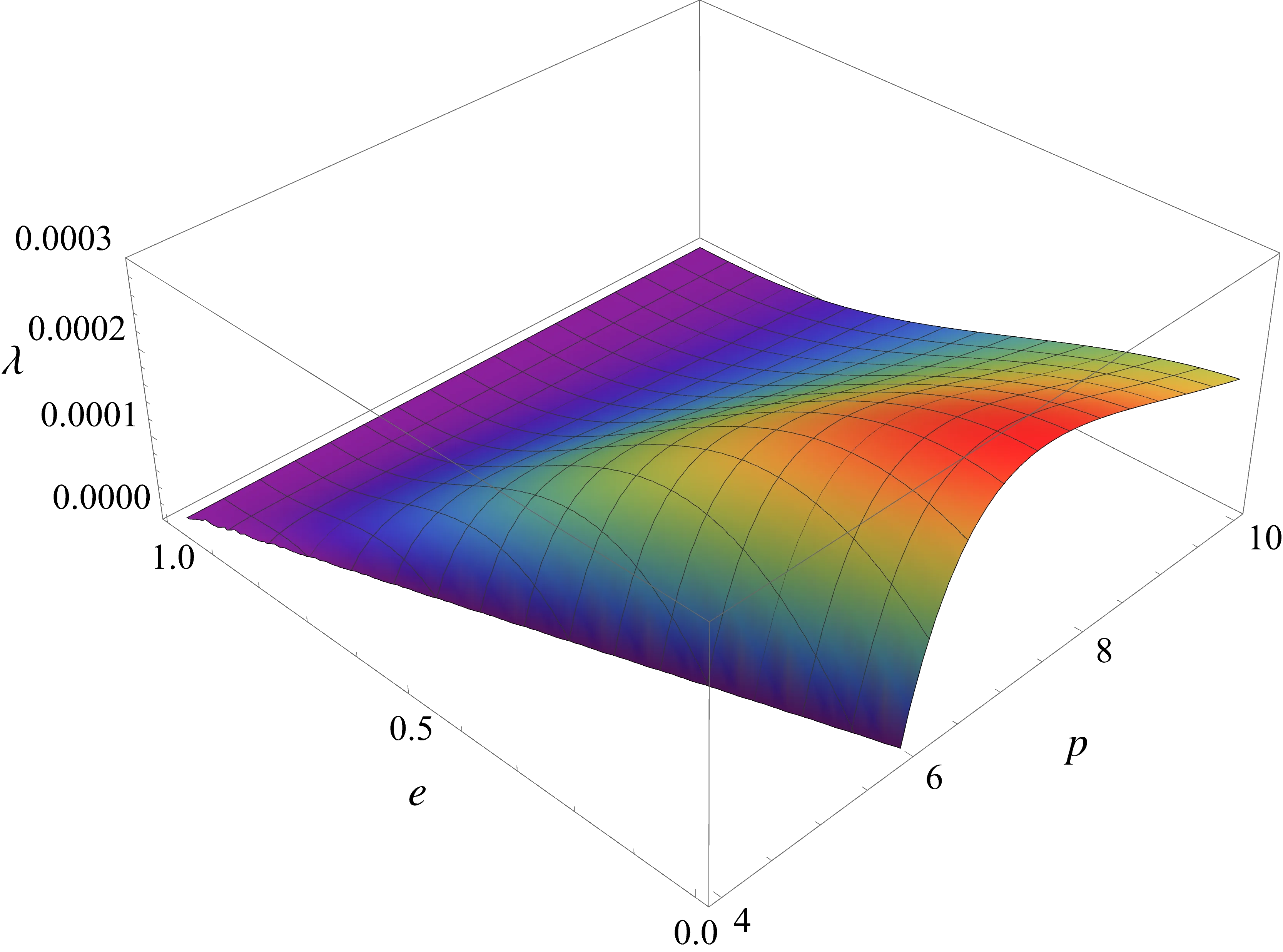
A stick thrown into a pond sinks straight down. But if the pond's water is slowly rising, the stick will be delayed and sink somewhere unexpected. So it is with black holes: we usually assume they sit in a void, but the entire universe is gently stretching. This stretch, like the rising water, slightly alters the path of anything orbiting nearby.
The authors took a simple model: a black hole in an expanding universe. It turns out that because of the expansion, a star or a small black hole loses energy a bit faster. Its orbit becomes circular sooner, and then — plummet. The time until the fall shortens. If the expansion is very weak, as in the real cosmos, the effect is barely noticeable. But if a galaxy cluster is nearby, it acts similarly and can noticeably speed up the fall.
This matters for future space-based detectors. They will catch gravitational waves — the ripples in space from such falls. If expansion is ignored, you could miscount events and misinterpret the signal itself. The rising water in the pond changes not only the stick's fate but also the ripples on the surface.
The expansion of the universe is noticeable even over the distance from Earth to the Moon: it adds about 3 centimeters per year.
In the movie 'Interstellar,' the heroes fly to a black hole without thinking about cosmic expansion, but it could have thrown off their calculations.