Cosmic Disks Flicker Like Candles express
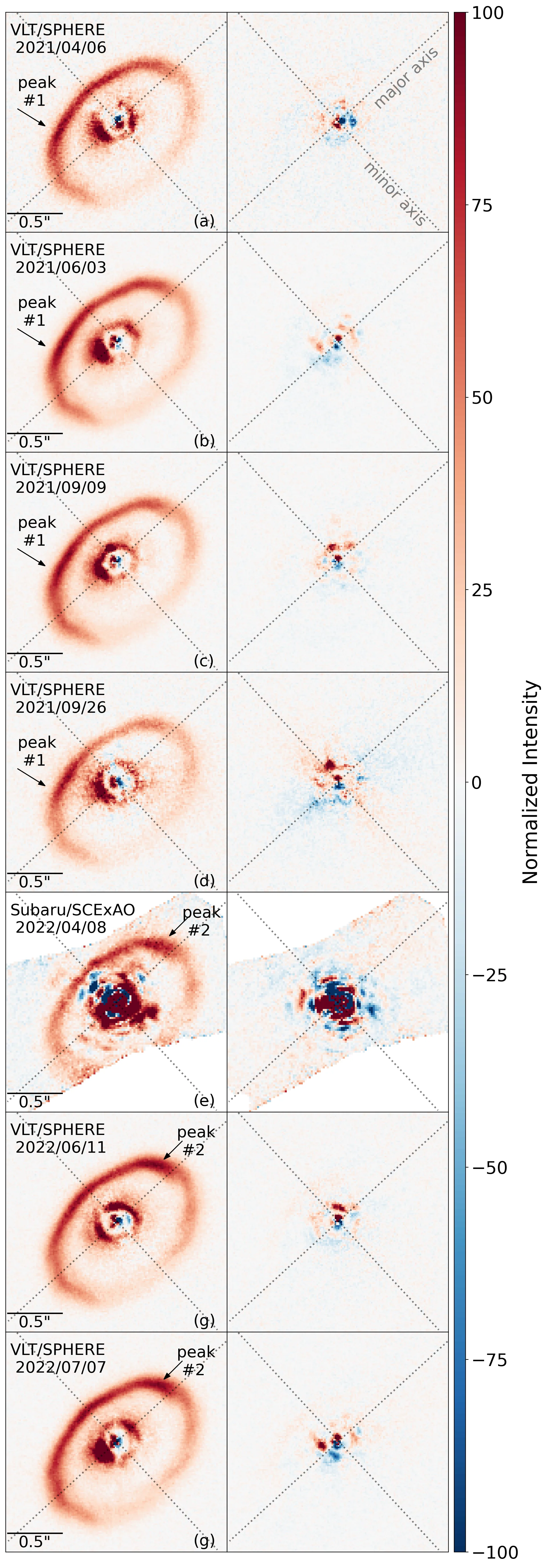
Around young stars, flat clouds of gas and dust swirl — the building material for future planets. Starlight reflects off these clouds, and astronomers see them as faint disks. But sometimes bright spots or dark bands appear in such disks. Fresh observations with the Subaru Telescope show these patterns can change within a matter of months.
The researchers examined nine stars similar to our Sun but younger. For three of them — MWC 480, HD 163296, and HD 143006—they managed to resolve the disks using a new technique that filters out the direct starlight. In the first two disks, brightness varied. In one case, a dark band shifted over a year; in another, a bright spot crept along the ring over fifteen months.
So the spots are not riding along with the gas. More likely, the star illuminates the disk unevenly: like a flashlight sweeping its beam across a wall. A shadow or glint races across the disk while the disk itself stays put. That said, exactly what creates this play of light remains unclear.
Six more stars in the sample showed no disks at all. Their disks are probably tilted so that they hide in their own shadow. But the astronomers did measure the overall light signature of these hidden systems. Each such measurement is a step toward understanding how planets assemble from dust.
Disks around young stars are so faint that their light is millions of times weaker than the star's own light. To see them, telescopes use special masks that block the star, like a hand shielding the Sun.
In Stanisław Lem's novel Solaris, the planet's ocean behaves illogically, but observing its surface echoes scientists' attempts to decipher the nature of shifting spots in protoplanetary disks.