A Powder That Remembers Motion express
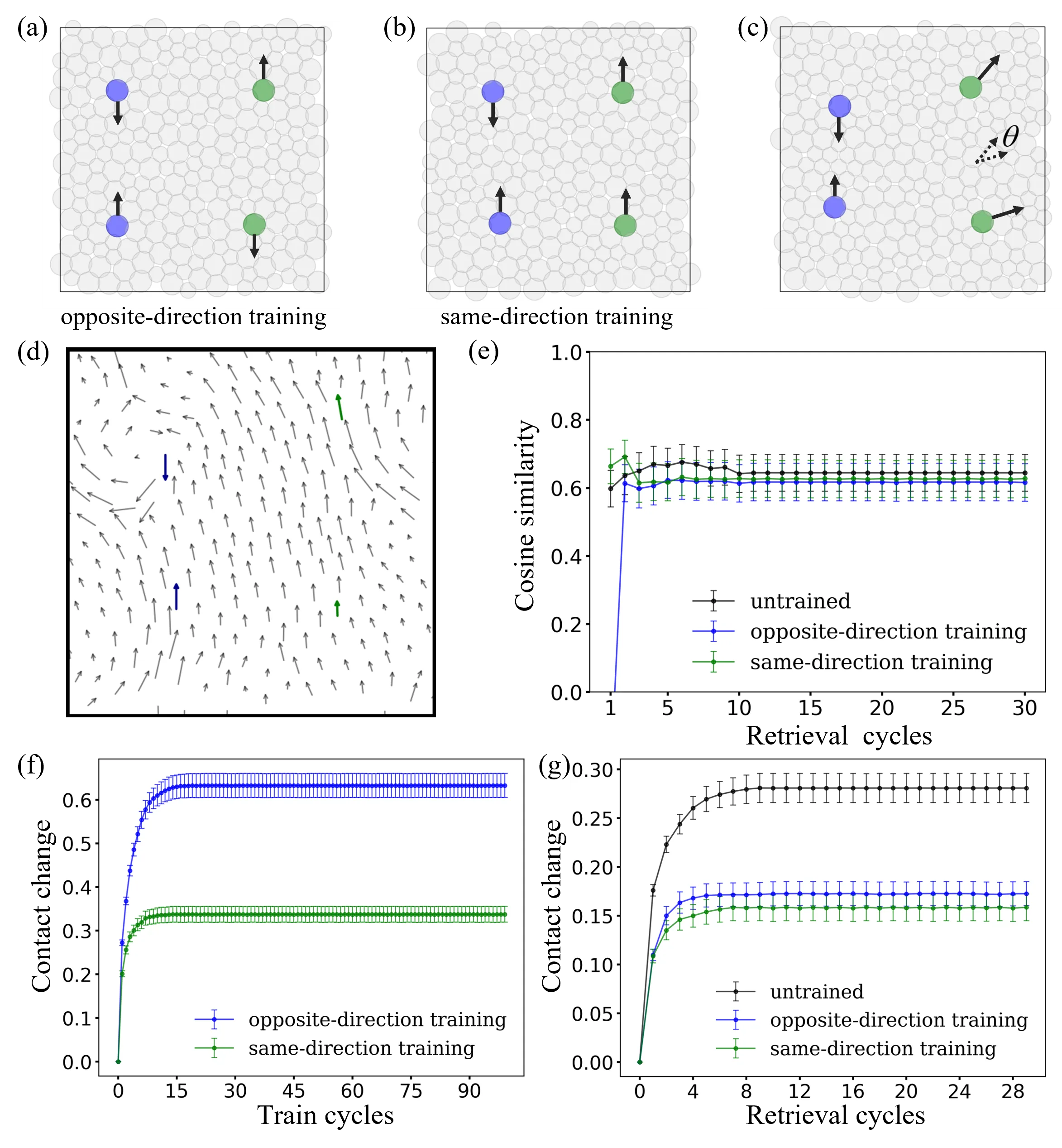
A handful of sand on a table is just a pile. But if you shake the grains just right, the pile starts behaving like a memory: it remembers which motion follows which. In the new experiment, particles were moved cyclically, and after training, they reproduced the desired pattern even without a full command.
The secret lies in the contacts between particles. When grains shift, they change neighbors and interaction forces — so the pile's 'wiring' rearranges itself. This is like how a path in the woods becomes more visible if you walk it often: each step changes the ground, and the route is remembered.
The scientists tested tasks of varying difficulty. The simple task was solved right away — the particles were already moving in the right direction. In the hard task, learning barely helped until pauses were added: the particles had time to 'settle' and remembered better. And in the medium task, simply changing the arrangement of inputs and outputs did the trick.
The experiment shows that associative memory doesn't need complex circuits — just a granular medium and the right rhythm. Perhaps in the future, we'll see materials that learn on the fly, like this sand.
In the experiment, particles moved without heating — only through mechanical action, as if you were shaking a box of marbles.