Memory effects appear when a system's present behavior is shaped by its history, not just its current conditions. In physics, this is more than a metaphor: materials can 'remember' past mechanical stress, quantum systems retain correlations with their environment, and even the order in which you charge a quantum battery can change how much energy it stores. The seed idea here is that memory can be harnessed to improve energy storage, making it a resource rather than a nuisance.
History
The term 'memory effect' has been used across disciplines for over a century, but its modern quantum formulation emerged in the 1980s with the study of non-Markovian dynamics. The specific idea of using memory to enhance quantum battery charging is recent, appearing in theoretical physics literature in the late 2010s.
How it works
At the microscopic level, memory arises because a system has many internal degrees of freedom that relax slowly. When you push or heat a material, its atoms rearrange; if the relaxation is slow, the new arrangement persists long after the external force is gone. In quantum systems, memory is encoded in the phase relationships between states, which can be preserved or erased depending on how carefully you control the interaction with the environment. The order of operations matters because each step modifies the system's state, and later steps see a different starting point.
In practice
Memory effects are exploited in shape-memory alloys for actuators, in magnetic data storage, and in the design of quantum batteries where controlled memory can increase stored energy.
Fun fact
The Mpemba effect, where hot water can freeze faster than cold, is a classic example of a memory effect because the water's thermal history influences its freezing dynamics.
A banknote taped to the finish line makes your hand fly faster. In the lab, that banknote was replaced with a 50-pence coin, and the finish line with a target on a screen. The researchers recruited 28 young people and 28 older adults, seated them at a robot handle, and asked them to steer a cursor toward the target. Sometimes they were paid for speed and accuracy, sometimes not.
An older person says with confidence that the word "sunflower" was on the list, even though only "almond" was there. Both words are tied to oil, and that semantic thread was enough for the brain to fill in the memory. Memory works like a compass: one needle points to meaning, the other to the order of events. With age, one of the needles starts to outweigh the other.
The classroom goes quiet after the lesson, but the echo still rings in the child's head: faces, objects, places. It is this echo, not the lesson itself, that decides what will stay in memory. For the first time, researchers have caught it in children aged 6 to 17.
Children memorized scenes inside an MRI scanner: they were shown a room, then an object or a face in a particular spot.
After a big police raid in a city, a few criminals remain. Some hide in dark alleys, others slowly gather strength for a new job. The police need not only to catch them now but also to prevent them from taking over the streets again. This is roughly how blood cancer treatment with hunter cells works.
These cells are created from the patient's own immune cells.
A person flips a coin to make a decision. They stand still — the coin lands heads. They take a few steps, and flip again. It would seem walking shouldn't affect the coin. But what if the walk itself changes how often they decide to simply repeat the previous toss?
That's exactly what researchers tested.
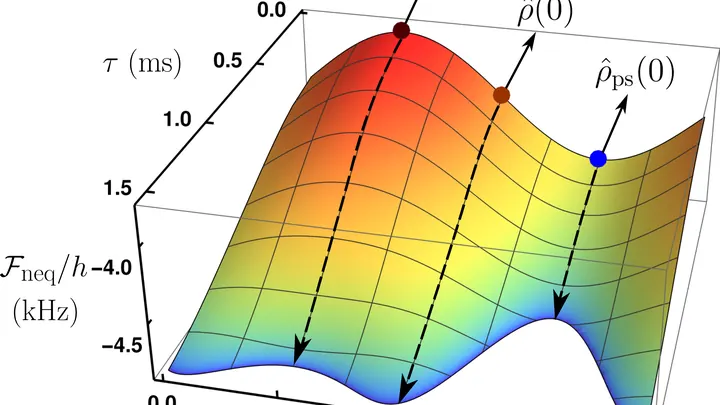
Hot water sometimes freezes faster than cold. Ice forms more quickly from boiling water. This paradox, discovered by schoolboy Erasto Mpemba, long puzzled physicists. It turns out: the farther a system is from equilibrium, the faster it relaxes back to it.
The Mpemba effect remains controversial today: too many variables, hard to reproduce.
The meditating brain is an orchestra, and attention is the conductor. When you're focused on your breath, all instruments play in harmony. But suddenly, a thought-cello plays a false note: that's mind wandering. An experienced conductor doesn't panic: they instantly catch the dissonance and gently guide the orchestra back to the main melody — the breath.
After a stone is thrown, the circles on water vanish, but the liquid retains microscopic oscillations. The slightest gust, and ripples appear again. Neural networks behave similarly. When electrical signals quiet down, the memory of them remains in the contact points — synapses.
In a hot mug, water sometimes freezes faster than in a warm one. This paradox is over half a century old and is called the Mpemba effect. It is usually attributed to fluid motion or evaporation. Now physicists have shown that a similar trick is possible without water, just through radiation of heat.
Hot water sometimes freezes before cold: this is the Mpemba effect. In the quantum realm, a similar paradox appears: the more the equilibrium is disrupted, the faster it recovers. It's like fleeing from disorder (entropy) in reverse: the system rushes toward order, and a large initial imbalance only helps.
A tightly stretched sheet lies on a table for days. Outwardly it's still, but the fabric fibers retain tension — loosen one edge slightly, and wrinkles will run across it, rearranging the whole pattern. That's roughly how a layer of epithelial cells behaves at rest. It doesn't just freeze; it accumulates mechanical stress — a kind of cellular memory of past movements.
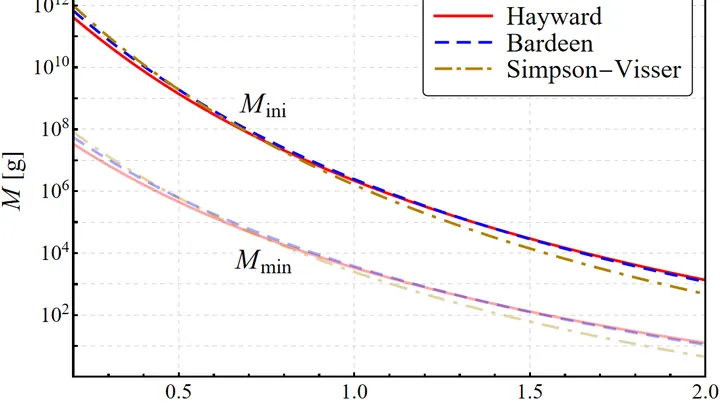
A sugar cube weighs about a gram. But a black hole that could hide inside such a cube would weigh as much as a small mountain — billions of tons. Yet even such tiny things, born in the first instants after the Big Bang, should have vanished long ago.
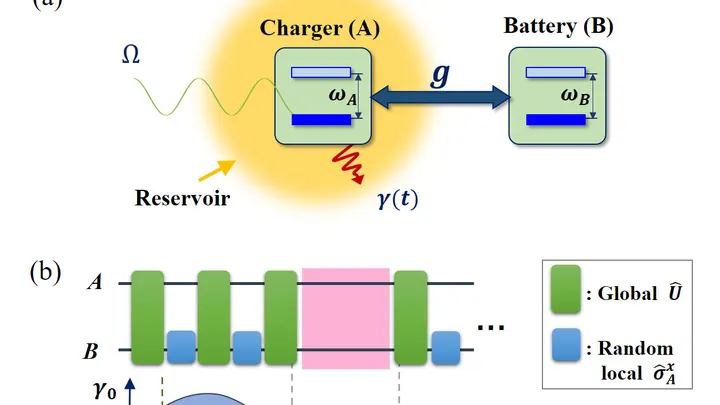
Quantum batteries harness quantum effects to circumvent the limitations of ordinary devices imposed by entropy — a measure of disorder and energy losses. Imagine a bucket under a powerful jet: filling is lightning-fast. But the bucket has holes: the environment constantly drains the energy.
Three twins on the run constantly change clothes. That's roughly how neutrinos behave — nearly elusive particles that pass through us by the trillions every second.
An ordinary phone battery breathes — not with air, but with contact. Inside a solid body, where there are no liquids, lithium presses against the electrolyte (the ion-conducting substance) during charging and pulls away during discharging, like a lung on inhale and exhale. This 'breathing' is not poetry but physics: each cycle creates and destroys the contact points through which current flows.
Your hand rests on the table, and two short vibrations arrive at your wrist — one after the other. You need to say which is stronger. The task seems simple, but the answer depends on which vibration came first. If the first is weak and the second is strong, the difference feels larger than when they are swapped.
A stone falls into a pond, and ripples spread in all directions. In much the same way, a massive body creates ripples in spacetime. Only it's not water that oscillates, but the very fabric of reality, and instead of circles, there are gravitational waves.
In quantum batteries, charging can be accelerated by shuffling the steps in time, like a deck of cards. Instead of a smooth energy climb, you get abrupt efficiency explosions, like microscopic supernovae inside atoms.
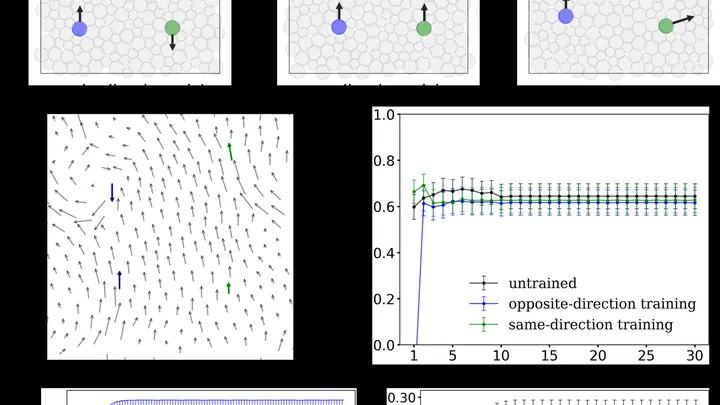
A handful of sand on a table is just a pile. But if you shake the grains just right, the pile starts behaving like a memory: it remembers which motion follows which. In the new experiment, particles were moved cyclically, and after training, they reproduced the desired pattern even without a full command.
The secret lies in the contacts between particles.
Two phones with identical batteries: one charges in a basement with a weak signal, and the process goes slower. The battery percentage here plays the role of a clock hand. Physicists applied the same logic to the quantum world. Their clock is a microscopic battery that stores energy. The charging rate depends on a hidden quantum 'mode'—like a switch.
Ordinary computer memory constantly uses energy to store ones and zeros. Superconductors, on the other hand, carry current with zero loss — if you could build memory from them, it would barely draw any power. The catch is that superconductors can't remember: their state changes too easily.
Uranium ditelluride crystals turned out to be the exception.
The familiar picture: gravity always attracts. But if a mass is in quantum superposition (that is, in two places at once, like an object in a double-exposure photograph) everything flips. Quantum theory allows a particle to be both here and there in a literal sense: its position is described by a wave function smeared across space.
A handful of sand on a vibrating table is like a crowd on a dance floor that still holds the rhythm of the old song for a second after the DJ has switched to a new one. Scientists made a thin layer of grains bounce on a vertically shaking platform and abruptly changed the shaking intensity.
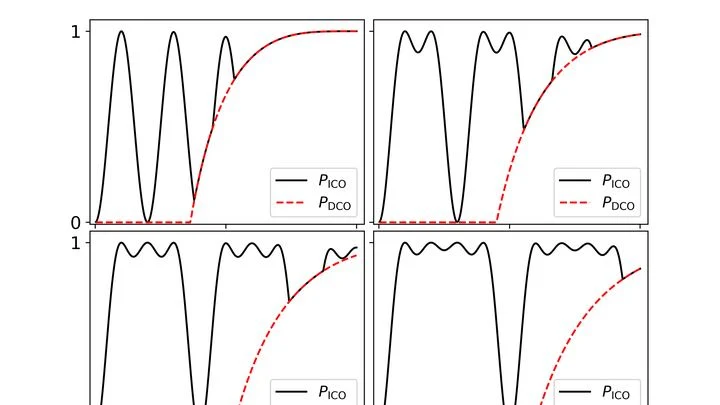
Two people read the same book, but one turns the page first and then looks at the text, while the other does the opposite. It would seem the result is the same. But in the quantum world, the order of operations changes everything.
This work examines models that output sequences of symbols, like a ticket machine.
A quantum battery is a device that stores energy in the quantum states of particles. In the new work, the battery was modeled as a pair of qubits — the tiniest carriers of information that can be in a "zero" state, a "one" state, or a mixture of both.
Over the course of a day, the brain accumulates impressions the way a room accumulates stuff. At night, during deep sleep, it doesn't just rest: it tidies up: it sorts through the day's events and decides what to keep and what to toss. Scientists built a computer model of the brain that learns from a few examples during the day and 'replays' them at night, as if dreaming.
You're trying not to think about the argument you had this morning, but vivid images keep popping into your head. At the same time, you're preparing a report and holding numbers in your mind. It doesn't go well: memory interferes with work, and work prevents forgetting. Scientists set out to see how the brain copes with this dual load in people with varying levels of anxiety.
A quantum system, like a person in a noisy room, gradually loses the thread of conversation: its state dissipates into the surroundings. But sometimes, as if suddenly recalling an important thought, it can recover part of the lost information. Physicists call this phenomenon non-Markovian dynamics: the environment's memory of the system's past allows information to flow back.
Two glasses of water: one scalding hot, the other just warm. The warm should cool first — but in the 1960s, a student from Tanzania noticed that hot ice cream freezes faster. This paradox was named the Mpemba effect. Recently, physicists found its quantum analog.
According to physicist Hugh Everett, every observation splits the universe into parallel branches. Normally, your memory of the outcome locks you into one branch, like a key keeping a door shut. A new protocol, reality steering, shows you can pick that lock: erase the memory, and the barrier fades, letting you slide into another reality.
Primordial black holes, hypothetical objects that emerged in the first instants after the Big Bang from the collapse of superdense fluctuations, should have vanished long ago according to Stephen Hawking's classic prediction: they would completely evaporate via quantum radiation, much like a puddle of…
The Mpemba paradox, hot water sometimes freezes faster than cold, has gained a quantum sequel. In the microworld, a particle pushed farther from the finish line gets there first. Experimenters demonstrated this on a single spin: like a racer, they pushed it farther from equilibrium, and it reached it faster than after a weak nudge.
Everything tends toward equilibrium: tea cools, a pendulum swings to rest. The measure of this movement is entropy — growing disorder. But sometimes hot water freezes before warm. The Mpemba effect isn't just a curiosity: it shows up in the quantum world too. Scientists have devised a way to control this paradox.
Gravity works like an invisible photographer. When a piece of metal falls, inside it, according to Albert Einstein and the electromagnetism of James Clerk Maxwell, an electric field is born — that's how spacetime curvature…
An orchestra without a conductor, where each musician hears only the hall's echo, can create a powerful melody. That's how a quantum battery works: many particles, immersed in a warm environment, don't dissipate heat but exchange it synchronously. Instead of chaos, an orderly charge emerges.
A chain of twenty-four atoms, arranged with optical precision, begins its evolution from a state resembling a chessboard: every other atom is excited, and neighboring excitations are forbidden. After a few microseconds, the global picture becomes so entangled that the original pattern is no longer discernible.
In a dark room, a resonator catches light the way a spiderweb catches dew drops. A laser pulse bursts in, and the mechanical membrane starts to vibrate in sync, leaving a trace in the very fabric of the system. That is how memory is born: not in a silicon cell, but in the dance of photons and phonons.