Popular

Disordered Systems cond-mat.dis-nn

8 articles

Glasses and spin glasses; properties of random, aperiodic and quasiperiodic systems; transport in disordered media; localization; phenomena mediated by defects and disorder; neural networks.

articles

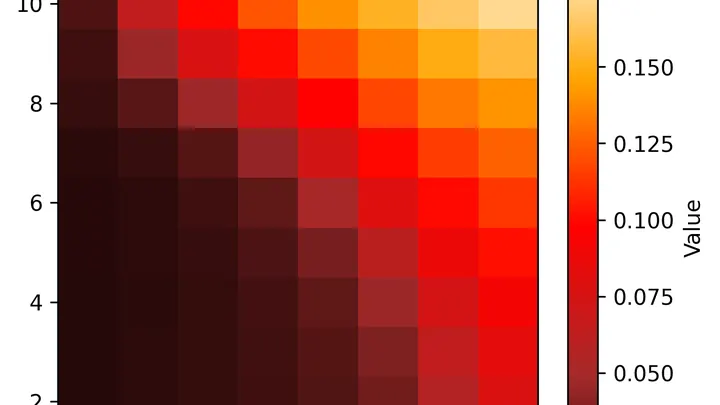
How Noise Turns Order into Chaos on a Quantum Chip

Physicists ran two programs on a superconducting chip: an orderly one and a chaotic one. By measuring the distances between energy levels, they found that in chaos, these levels keep a respectful distance, like people in a crowded room forming a circle. On a graph, this looks like a 'donut'—an empty
arXiv:2506.04325v1 · 2025-06-04

Taming Quantum Chaos through Learning

To control many quantum particles, scientists used trial and error: a computer agent, seeing only part of what's happening, learned to limit the growth of connections between particles. Normally, these connections (entanglement) quickly fill all space, like chaos. But the agent places 'bottlenecks'
arXiv:2508.06612 · 2025-08-08

The Quantum Mpemba Mystery: When Greater Chaos Speeds Up Order

Hot water freezes faster than cold—that's the Mpemba effect. In the quantum world, its counterpart is a system with a highly broken symmetry restoring order faster. Scientists controlled this on a superconducting chip, turning an accelerated 'tightening' of disorder on and off. This could help quant
arXiv:2508.07707 · 2025-08-11

Time crystals without chaos

Time crystals are matter that pulses in time like a perpetual metronome. Previously, stability was achieved by introducing chaos into the atomic lattice. The new scheme replaces chaos with a smooth electric field in a chain of super-sized atoms, making the crystal more durable and easier to work wit
arXiv:2512.16097 · 2025-12-18

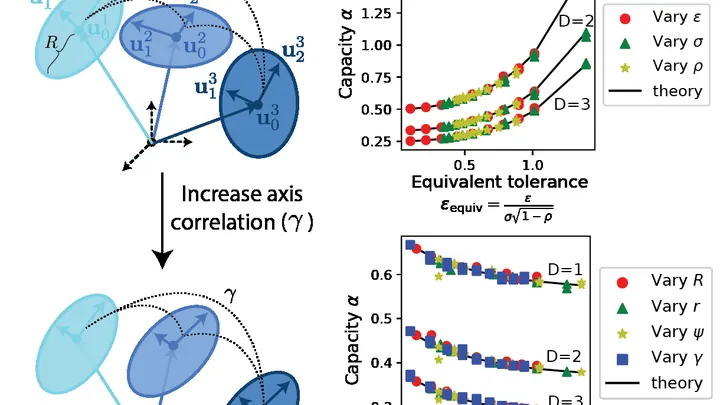
When Disorder Gifts Superfluidity

A quantum experiment showed: strong disorder doesn't destroy flow; it transforms it into the perfect kind—frictionless. Particles simulated on a processor, under chaotic conditions, suddenly flowed like a single fluid.
arXiv:2512.21416 · 2025-12-24

Quantum Hook: Cool Down Faster by Making a Loop

Physicists have found a quantum cousin of the Mpemba paradox: in a chain with asymmetric jumps, relaxation speeds up if you first briefly transfer energy to the opposite end. The discovery links boundary asymmetry with loss dynamics and promises progress in controlling quantum devices.
arXiv:2601.14083 · 2026-01-20

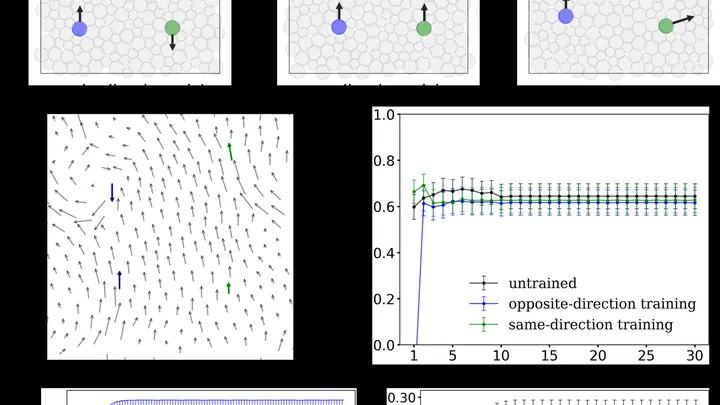
Quantum Particles Remember Their Past

Quantum systems usually quickly forget their initial state, but physicists found a way to slow this process. On an IBM processor, 144 qubits evolved for 5000 cycles, and entropy — a measure of disorder — grew so slowly it resembled a black hole evaporating in slow motion. This proves the ability to
arXiv:2603.12675 · 2026-03-13

Permanent Chaos: How Disorder Emerges in Static Quantum Systems

In frozen quantum objects like crystals, chaotic disorder has been discovered. Previously, it was only seen in systems continuously shaken by external forces. Scientists used a clever trick — a quantum clock mechanism — to 'awaken' chaos in stillness. This discovery links the microworld with black h
arXiv:2606.30635 · 2026-06-29