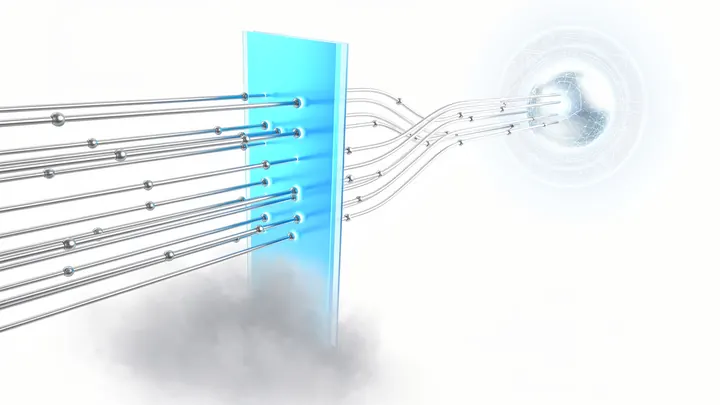
Reservoir computing is a machine learning paradigm that leverages the intrinsic dynamics of a physical or simulated system—the 'reservoir'—to process temporal data. Instead of training the entire network, only a simple readout layer is trained, while the reservoir remains fixed. This makes it highly efficient for tasks like time-series prediction, pattern recognition, and signal processing, and it can be implemented in unconventional hardware, from optical systems to magnetic devices.
History
Reservoir computing emerged in the early 2000s from two independent developments: echo state networks by Herbert Jaeger and liquid state machines by Wolfgang Maass.
How it works
The reservoir is a dynamical system that maps input signals into a high-dimensional state space, where nonlinear transformations make the data more linearly separable. The readout layer, often a linear regression, learns to map these states to desired outputs. Because the reservoir's internal connections are not tuned, training is fast and requires minimal computational resources, making it suitable for real-time and edge applications.
In practice
It is used in robotics for motor control, in telecommunications for channel equalization, and in scientific research for modeling complex dynamical systems, including quantum systems and fluid dynamics.
Fun fact
Physical reservoirs can be made from almost any nonlinear system, including a bucket of water, a chaotic laser, or even a soft robot arm.
In a hall of mirrors, a person walks up to a curved mirror and sees themselves now as a dwarf, now as a giant. Popular machine learning models behave in much the same way when asked to guess biological age from blood tests or brain scans: they stretch age at the extremes, underestimating it in older people and overestimating it in younger ones.
Imagine a corridor where the echo returns with a delay, and that echo suddenly starts answering questions. That is exactly how a reservoir computer works: a single node that receives a signal, delays it, and sends it back, creating a complex network of virtual neurons over time.
Imagine a corridor where the echo returns with a delay, and that echo suddenly starts answering questions. That is exactly how a reservoir computer works: a single node that receives a signal, delays it, and sends it back, creating a complex network of virtual neurons over time.
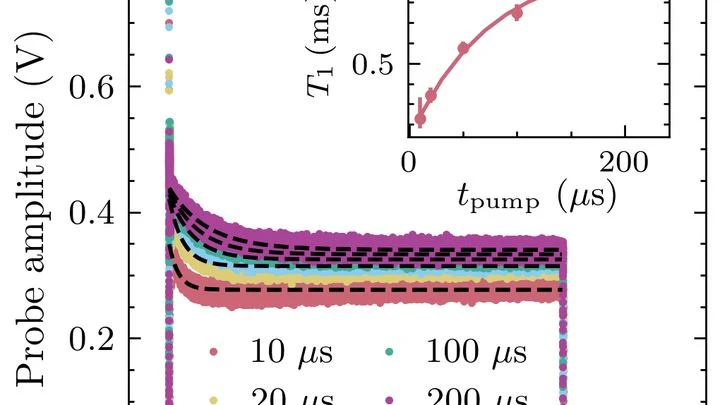
A beam of light enters a glass cell filled with cesium vapor and changes the internal state of the atoms: this is how information is recorded. A moment later, another beam reads it out by how the atoms absorb light. It's not a hard drive, but rather a notebook that turns its own pages.
Eight such "pages" are created by an acousto-optic deflector — a device that bends light with sound.
When a fluid flows around an obstacle, it spawns vortices and shock waves. Describing their behavior means solving a nonlinear equation in which the flow velocity depends on itself. Classical supercomputers spend days on this, while quantum computers have barely been used: their native language is linear operations, but fluids are inherently nonlinear.
A drop of ink in a glass of water spreads in intricate swirls. Similarly, a quantum particle exchanging energy with its environment changes its state in a complex and entangled manner. Describing this dance between particle and environment has long baffled scientists.
Hot water sometimes freezes faster than warm water: this odd fact is known as the Mpemba effect. Now something similar has been found in the quantum world: a state with weak entanglement (a special quantum connection between particles) can beat a more entangled one to the finish line.
Holding in mind the exact position of a pen as it's slowly moved is a routine task for the brain. For artificial neural networks, it's nearly impossible. Standard recurrent networks like GRU and LSTM tend to break continuous motion into rigid steps: the pen doesn't glide smoothly but jumps from point to point.
The brain doesn't just react to the world: it's constantly guessing what will happen next. This principle is called predictive coding: neurons compare expectations with reality and update their internal picture when an error occurs. But how such a complex system could be wired into the living tissue of the cortex remained unclear.
Predicting the yield of a chemical reaction is a bit like trying to guess the harvest knowing only the soil composition. Traditionally, chemists have relied on long columns of numbers, quantum descriptors, that describe electron energies but say nothing about molecular shape.
A basin of wet sand. You press in one corner, and water starts moving. But how exactly? Instead of an even circle, it might spread in tongues, linger in some spots, and rush through others. Underground, the same thing happens: oil, water, or gas migrate through rocks not by the textbook, but following the chaos of fractures and heterogeneities.
In calm water, the route is clear. But in turbulent flows, a robot needs a different strategy. Typical approaches demand an accurate map of currents, but in reality, you can't get one. Nature does it differently: fish feel pressure and vortices right against their bodies.
After a stone is thrown, the circles on water vanish, but the liquid retains microscopic oscillations. The slightest gust, and ripples appear again. Neural networks behave similarly. When electrical signals quiet down, the memory of them remains in the contact points — synapses.
A search party combs a foggy field. At first, people spread out wide: a high 'temperature' of search means a great variety of attempts. Upon finding a trace, they close in. But the speed of convergence is critical — narrow the circle too early, and the best find stays aside. The coordinator assesses the spread of searchers and commands when to speed up or slow down.
In a soup pot, you only need two thermometers to gauge the temperature everywhere — if you know heat travels in circles from the bottom. Science works the same way: from a handful of measurements, you want to reconstruct the full heat picture.
The system captures the gist of heat flow, compressing it into a handful of governing numbers.
Power systems with solar panels and wind turbines are like a chess game: cloud cover and load changes are the opponent's moves, impossible to foresee. To maintain balance, operators used to run through dozens of scenarios (uncertainty) — that took too much time and computing power.
Imagine a fleet of many ships, resembling a galaxy — a vast stellar system where every element follows the overall dynamics. From time to time, one ship breaks down, exploding like a supernova — a catastrophic event that can disrupt the integrity of the entire formation. If the damaged unit isn't replaced in time, the fleet loses combat capability.
The standard way of digitizing speech: taking volume readings thousands of times per second. It's like tasting broth with a teaspoon: each sip is watery, with almost no detail. The data stream swells, though the substance is minuscule.
Scientists proposed first "simmering down" the audio signal.
An experienced detective doesn't calculate a criminal's path using the laws of physics: he checks a file of similar cases. The new prediction method works the same way: instead of complex equations, it has a vast archive of trajectories that have already happened — planetary motions, currency exchange rates, signals from space.
For a long time, identifying quantum phases was like interrogating a witness: you had to reach every corner of the system to uncover its secret. In the era of Landau, order was tied to symmetry breaking and a local parameter — everything plain as day.
Gravitational microlensing is a fascinating cosmic effect predicted by Einstein and developed by Zwicky. A massive body passing between us and a distant star bends its light like a lens, creating characteristic magnifications and distortions.
A quantum computer is like a finicky musical instrument: the slightest change in temperature, humidity, or string tuning, and the melody sounds different.
At a weather station in Brazos County, Texas, rain is recorded on magnetic tape: every day, four years straight. Nine hundred millimeters in a good season, a hundred in a bad one. Then the tape falls silent. Drought creeps in without a sound — the slow fading of the earth's pulse. The standard SPI-3 index only catches on a month or two later, once the moisture is already gone.
Gold doesn't lie on the surface: it's hidden in tons of barren rock. To extract a gram of precious metal, prospectors sift through cubic meters of dirt.
The brain doesn't learn every task from scratch: it transfers experience from one activity to another. But how do you know which tasks are truly related? Neuroscientists came up with a clever trick: let an artificial network "peek" at brain activity during one task and try to predict activity during another. If it works well, the tasks are close.
Air flowing over a wing or turbine blade behaves like a string: it starts smooth and layered: that's the laminar regime. But as speed increases or external ripples appear, the string breaks into chaotic vibration — turbulence. Predicting the exact moment of breakdown is crucial: it affects drag, heating, and noise.
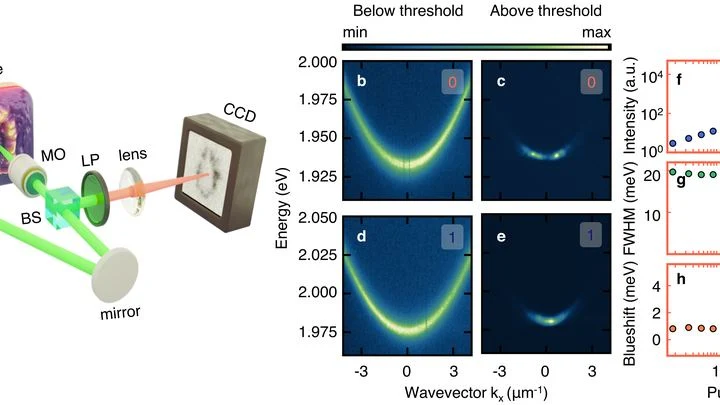
Generative neural networks that create images typically rely on digital randomness. But a team of researchers built a system where randomness is born not in code, but in a tiny optical cavity filled with an organic dye.
In the 1990s, philosopher John Searle devised a thought experiment: a person sits in a room and, without knowing Chinese, follows instructions to produce correct answers in Chinese. From the outside, it seems they understand the language, but inside, it's just mechanical rule-following.
A supermarket cashier at rush hour doesn't memorize every scanned item: they keep the running total in their head and watch the queue. The brain allocates its resources similarly: the expensive, precise cortex (responsible for deliberation) and the simpler, economical subcortical nuclei (where habits live) work in tandem.
A photographer shoots a night forest, trying to catch fireflies in the frame. The flashes are rare and faint, while around there's the noise of wind and distant lights.
An X-ray tomograph is like a carpenter who examines a log from all sides to see where the void is inside. It takes dozens of flat shadow images, rotating the source and detector around the object. Then a 'reconstruction' program glues these shadows into a 3D model. The quickest reconstructor is the FBP algorithm (filtered back projection).
A melody plays, and the brain doesn't just listen note by note. It works like a conductor who already knows the score: each next note is expected because the previous ones still echo in memory. But how do neurons hold on to that echo?
Imagine a river that doesn't flow in an open channel but through the inside of a sponge, with its currents shifting from place to place. That's a good way to think about the brain's glymphatic system: a network of ultra-fine channels around blood vessels, through which cerebrospinal fluid seeps into the tissue and washes away the waste that has piled up during the day.
A library of 27,000 books, and every one of them is about concrete. Each contains a mix recipe, temperature, and strength. But the information is scattered across paragraphs, tables, and footnotes. For a human, gathering it all together would take years. The program did it in an hour.
Light is the fastest courier, but it can't wait. For quantum computers to exchange messages, we need memory that can catch a photon and hold it until the recipient is ready. In warm metal vapor, atoms buzz around like bees in a hive, and each movement scrambles the recording. As a result, stopped light quickly turns into mush.
Seismologists listen to the Earth the way a doctor listens to a heart. Surface waves from earthquakes travel across the planet, and their speed reveals what lies beneath our feet — solid rock, melt, or water. Usually, this requires building complex physical models.
A neural network learning something new is like a traveler in mountainous terrain. Each piece of learned knowledge is a depression in the landscape into which the traveler rolls and gets stuck. To escape and reach a new basin, energy is needed. But as the traveler gains experience, the walls of their pit become steeper, and each subsequent climb requires more effort.
Water in a river flows around rocks, air bends around an airplane wing: these motions are described by equations that are hard to solve even on a powerful computer. Neural networks can approximate such solutions, but they often err when data is collected at only a few points or is noisy.
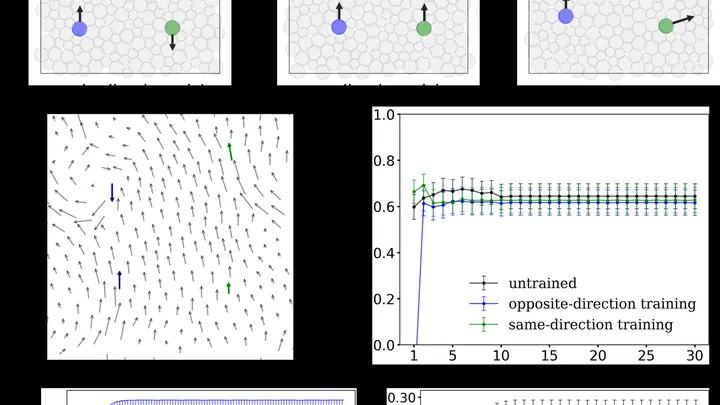
A handful of sand on a table is just a pile. But if you shake the grains just right, the pile starts behaving like a memory: it remembers which motion follows which. In the new experiment, particles were moved cyclically, and after training, they reproduced the desired pattern even without a full command.
The secret lies in the contacts between particles.
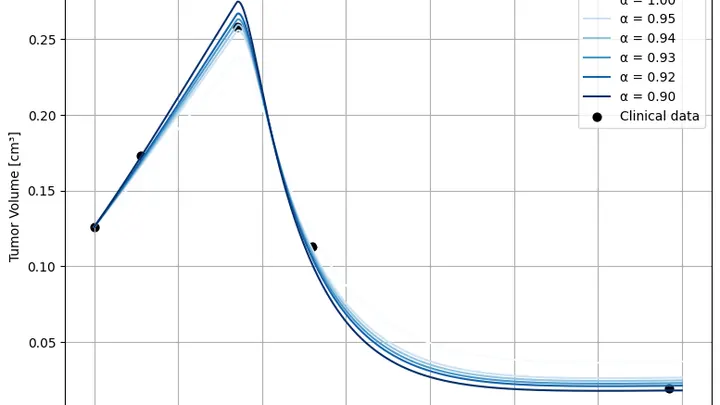
A tumor doesn't grow like a tree; it grows like a city: today's skyline is shaped by yesterday's construction and the fires of the day before. Standard tumor growth equations don't account for this: they only look at the current moment, as if the city were rebuilt from scratch every day. The authors added "memory" to the model: now the equation remembers what came before, and that changes the forecast.