Neural network data reconstruction refers to using artificial neural networks to piece together or interpret complex, noisy, or incomplete datasets. In particle physics, this often means reconstructing the properties of particles from the fragmented signals they leave in detectors. These networks learn patterns from vast amounts of training data, allowing them to filter out noise and identify the most likely original event that produced the observed detector response.
History
The application of neural networks to particle physics data reconstruction gained momentum in the 1990s, but became transformative in the 2010s with the rise of deep learning and increased computational power.
How it works
A neural network is trained on simulated or known data, where the input is the raw detector signals (e.g., energy deposits, track positions) and the output is the desired reconstruction (e.g., particle type, momentum). During training, the network adjusts its internal parameters to minimize the difference between its predictions and the true values. Once trained, it can process new, unseen data, effectively 'filling in the gaps' and extracting the underlying physics from the messy measurements.
In practice
This technique is used extensively at the Large Hadron Collider to identify and measure particles from collision debris, and in medical imaging to reconstruct clearer images from lower-dose scans.
Fun fact
Some neural networks used for particle reconstruction can process millions of collision events per second, making real-time data filtering possible at high-energy physics experiments.
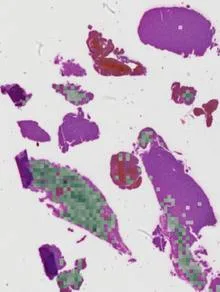
Imagine trying to figure out what happened in a room from the sound that lingers after a gunshot. The shot is gone, but the echo still bounces off the walls. That's roughly how a neuropathologist views a brain tissue section where the tumor itself is absent: the biopsy only captured healthy tissue that reacted to the disease.
A cartographer receives a sheet with distances between hundreds of unnamed islands. No island is labeled, but the distances repeat, forming triangles and quadrilaterals. From these repetitions, the cartographer reconstructs the map of the archipelago, not knowing which island is which. This is roughly how the new work in molecular spectroscopy works.
In the Antarctic ice, a ghost particle leaves behind only a faint flash of blue light. The IceCube detector captures these flashes, and from them we need to infer where the particle came from. The PolarBERT model has learned to do this, but what exactly it sees inside has remained a mystery.
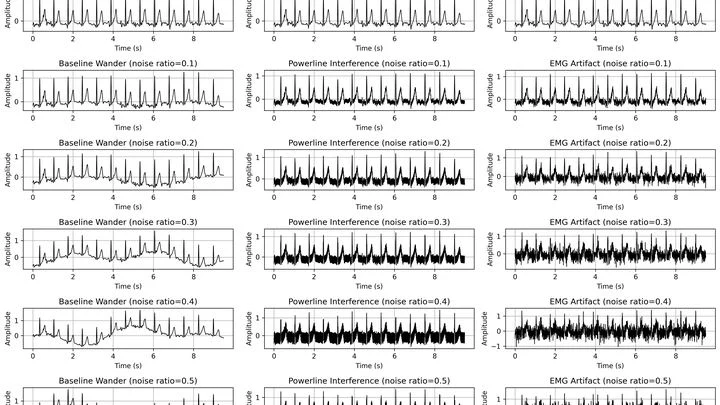
An electrocardiogram is like a recording of a conversation where the heart whispers and a construction site roars in the background. Atrial fibrillation, where the atria quiver instead of contracting, changes that whisper almost imperceptibly.
A quantum computer is like an orchestra where each musician, a qubit, plays their part but keeps hitting wrong notes. To keep the music from turning into cacophony, you need a conductor who instantly hears the off-key notes and corrects them.
A cookbook without a shopping list: that's what a scientist faces when looking at a scheme of chemical reactions. The arrows and formulas on paper look neat, but once you start hunting in the lab for molecules that will actually behave that way, a real quest begins.
Holding in mind the exact position of a pen as it's slowly moved is a routine task for the brain. For artificial neural networks, it's nearly impossible. Standard recurrent networks like GRU and LSTM tend to break continuous motion into rigid steps: the pen doesn't glide smoothly but jumps from point to point.
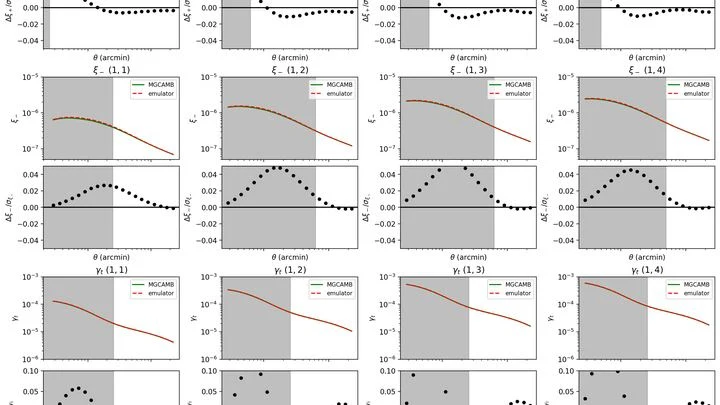
In the vast cosmic ocean, dark matter gathers into clumps and filaments, like plankton in currents. But if gravity doesn't work exactly as Einstein said, these patterns change — barely noticeably, like ripples from an invisible wind. You can spot such ripples by comparing sky maps with computer simulations.
An array of radio telescopes is like a camera missing several lenses. Ever since Karl Jansky picked up the radio hiss of the Milky Way, astronomers have been trying to piece together a whole picture from fragmentary signals. But the antennas are spaced apart, and the mathematically “developed” image — the dirty map — ends up smeared.
Imagine an experienced chef during rush hour: suddenly a stove fails or a key ingredient runs out. Instead of panicking, he instantly reworks the recipes — speeding up some dishes, slowing down others, reallocating resources on the fly. This principle of dynamic adaptation underpins a new generation of ultra-reliable networks.
X-ray magnetic circular dichroism is a precise tool that has long allowed the separation of spin and orbital magnetic moments. However, the classical approach resembles judging an orchestra by its volume: it relies on sum rules, reducing the entire fine structure of the spectrum to a couple of integrals.
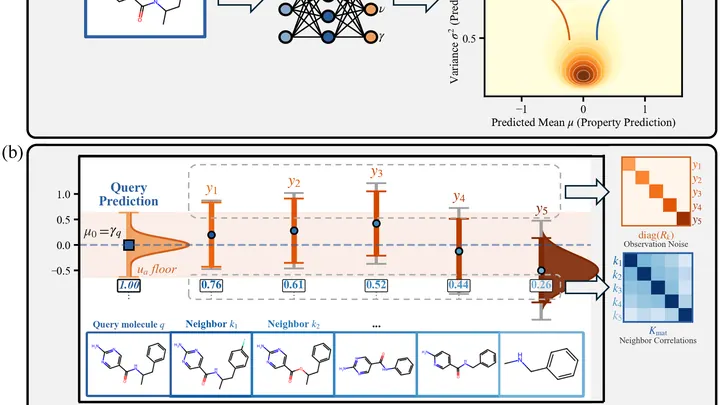
Predicting the properties of a new molecule is like guessing the flavor of an unfamiliar dish. The program works like an experienced chef: it “tastes” similar molecules whose properties are already known, and based on their “flavor,” it refines its guess.
Building a light chip is like a game where you have to guide a beam through a maze of tiny mirrors and beam splitters. Each element acts like a railroad switch: it either lets light pass straight through or directs it to an adjacent track. The goal is to produce a specific light pattern at the output while using as few 'switches' as possible.
Usually, engineers spend years finding the shortest route for each task.
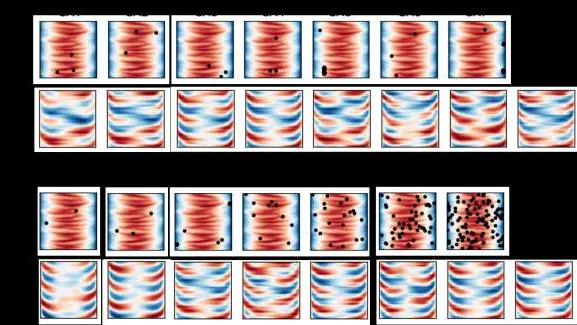
Inside a fusion reactor, plasma rages — a gas heated to millions of degrees. There are no direct windows, and cameras and sensors quickly fail. Engineers see only fragments of information: a few sensors at scattered points. It's like trying to grasp a symphony from the sound of three microphones in a vast hall.
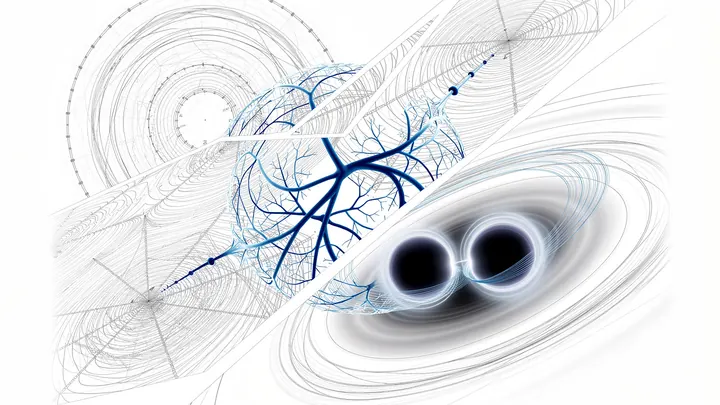
Isolating the signal from a single pair of supermassive black holes is like hearing a dancer's footsteps amid the roar of a hurricane. Somewhere in space, these monsters spin in a slow gravitational tango, distorting spacetime itself.
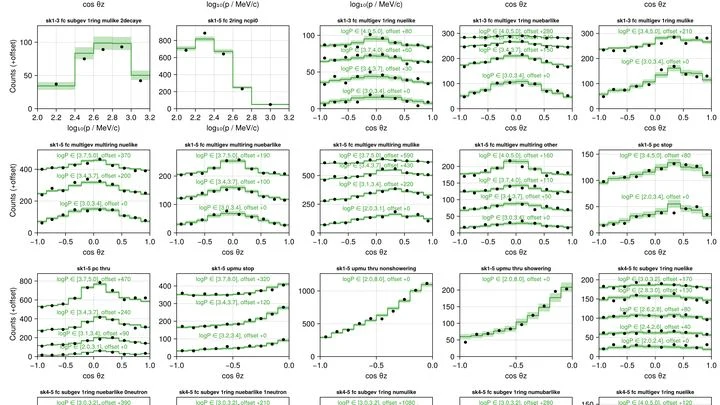
Neutrinos are often compared to a radio broadcast picked up by different receivers. One station sends a signal, but antennas in Japan, Antarctica, and at the bottom of the Mediterranean Sea hear it differently — due to distance, interference, and antenna orientation.
Imagine an interpreter sitting in a meeting room, translating every word. But then they notice their translation could improve if they learned from their mistakes. They start noting which phrases caused confusion and adjust them. Within an hour, their translation is more accurate and the meeting runs smoother.
A photographer shoots a night forest, trying to catch fireflies in the frame. The flashes are rare and faint, while around there's the noise of wind and distant lights.
A rock concert blares at full volume, and you're trying to catch your friend's whisper. That's roughly how radio detectors feel when they pick up signals from cosmic dust particles. A particle slams into the atmosphere and spawns an air shower, a cascade of millions of secondary particles, and this shower emits a short radio pulse.
Two ultra-dense stars spiral around each other and eventually collide. This dance lasts only moments, but it sends powerful ripples through space — gravitational waves. After the merger, a rapidly spinning blob remains, ringing like a bell, and that ring carries information about what the stars were made of.
The vessels inside the skull resemble a mountain road's hairpin turns — sharp bends, narrowings, unexpected curves. When a traffic jam forms on such a serpentine, blood stops reaching the brain properly. To predict trouble, doctors need to see the entire flow: where it accelerates, where it swirls into eddies. The full picture comes from a special MRI, like slow-motion cinematography of fluid.
Imagine a river that doesn't flow in an open channel but through the inside of a sponge, with its currents shifting from place to place. That's a good way to think about the brain's glymphatic system: a network of ultra-fine channels around blood vessels, through which cerebrospinal fluid seeps into the tissue and washes away the waste that has piled up during the day.
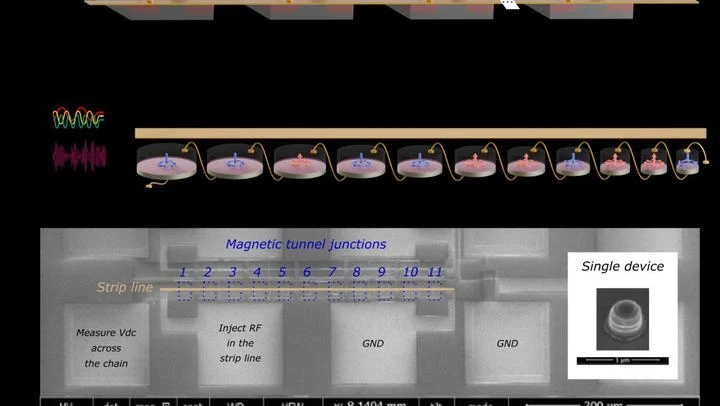
A radio receiver picks up only one station because its resonant circuit is tuned to that station's frequency. Magnetic vortices in a new type of computing element work in much the same way.
A library of 27,000 books, and every one of them is about concrete. Each contains a mix recipe, temperature, and strength. But the information is scattered across paragraphs, tables, and footnotes. For a human, gathering it all together would take years. The program did it in an hour.
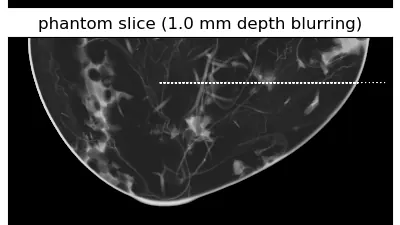
The X-ray machine moves around the breast in an arc, taking several images from different angles. From these flat frames, the computer assembles a 3D picture, like putting together a mosaic from pieces. But if the mosaic pieces are crumpled or smudged, the picture turns out blurry. In tomography, the role of "crumples" is played by noise and imperfections in the imaging.
A tomograph is like a photographer who walks around an object and takes pictures from different sides. Usually, it snaps at regular intervals and uses the same amount of light for each shot. But if you need to shoot quickly and not waste extra film, you have to choose: which angles matter more and where to direct more light.
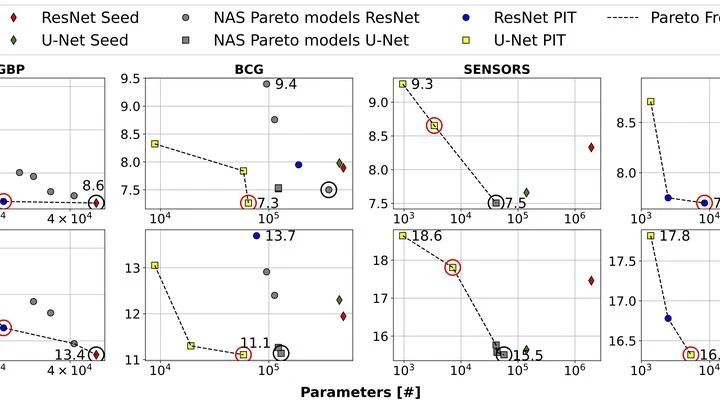
Smartwatches measure your pulse with light: an LED shines through the skin, and a sensor picks up the reflected signal. By analyzing the fluctuations in this signal, you can estimate blood pressure, but accurate calculation requires a powerful neural network — usually running in the cloud, so data leaves the device.
At the Large Hadron Collider, protons collide, and from the flash dozens of particles are born. Among them may be traces of rare processes — for example, the decay of a Standard Model Higgs boson into two W bosons. But these particles fly apart so quickly that their tracks merge into a single wide jet.
A laser strikes a tiny glass grating, and electrons passing through it are accelerated. You can't see inside, so you judge what's happening by the energy of the electrons after acceleration, like judging the shape of a stone by the splash it makes.
Scientists built a digital twin: a computer model that mimics the behavior of the real accelerator.
When a planet passes in front of a star, the light pierces its atmosphere and absorbs the flavor of gases. Each gas leaves its color fingerprint in the light — a bitter or sweet stroke. Scientists try to read this recipe: what substances and in what proportions are mixed in the air of an alien world.
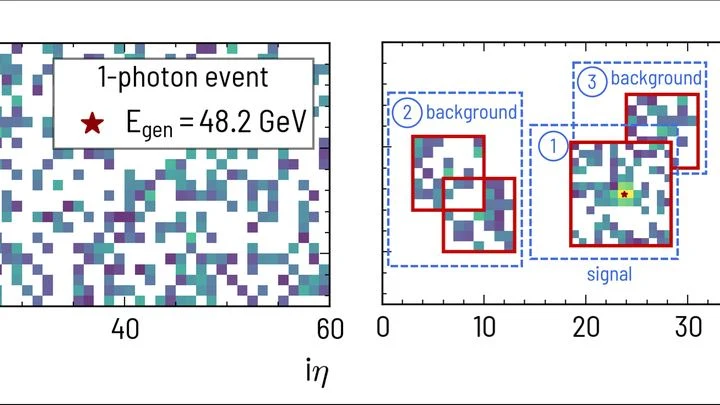
In the Large Hadron Collider's detectors, millions of particles are born every second. Their energy flashes in the calorimeter look like raindrops on a window pane: individual drops are visible, but when there are many and they merge, it's hard to make out each one. Physicists need to know exactly how much energy each particle carried and where it landed.
Astronomers measure distances in the universe using explosions of special stars — Type Ia supernovae. These flashes always have nearly the same brightness, like light bulbs of known wattage. Knowing how much light reached us, you can calculate how far away the explosion is.
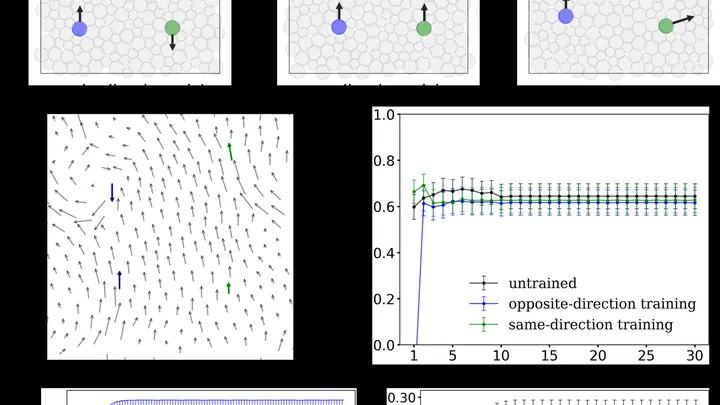
A handful of sand on a table is just a pile. But if you shake the grains just right, the pile starts behaving like a memory: it remembers which motion follows which. In the new experiment, particles were moved cyclically, and after training, they reproduced the desired pattern even without a full command.
The secret lies in the contacts between particles.
Inside a piece of diamond hides a tiny defect — a nitrogen atom next to a vacancy. This defect catches magnetic fields like an antenna catches radio waves and responds with flashes of light. Such sensors already measure temperature inside living cells and find defects in microchips.
The heart doesn't contract all at once but as a wave: an electrical signal travels through the muscle, and behind it, like ripples spreading on water, a contraction rolls through. In arrhythmia, this wave goes awry: it stalls in one spot, loops in another, and the pump starts working in a disorganized way.
A particle beam in an accelerator is like a swarm of gnats: each one flies at its own speed and angle. To keep the swarm from scattering and to hit the target, engineers need to know exactly how all particles move at once — all six coordinates of their motion. But conventional sensors only show a flat shadow of the swarm on a screen, like a smudge on glass after an impact.
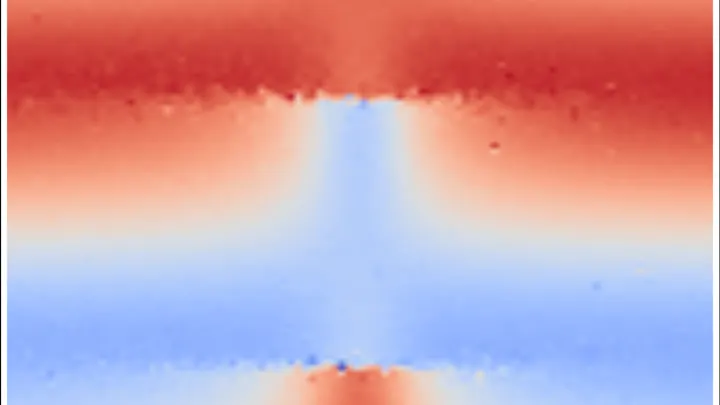
The proton is not a smooth ball but a tangle of quarks and gluons in constant motion, exchanging energy. Finding out exactly how energy, pressure, and spin are distributed inside it is impossible to do directly: measurements yield only sparse, noisy points. It's like trying to guess a face from a few blurry photos taken from different angles.
A crystal that inside resembles a sponge with a labyrinth of pores turns out to be capable of performing computations. The material, named DUT-8, consists of metal nodes and organic linkers forming an intricate lattice. Under the influence of different gases, this lattice slightly changes shape, like a house of cards that rearranges with a gentle breath.
When chemists see how concentrations of substances change, they need to figure out which reactions are behind those changes. It's like trying to reconstruct a recipe from photos of plates at different stages of a meal. Previously, this often involved derivatives — instantaneous rates of concentration change.
Cosmic particles with energies millions of times greater than anything our accelerators can produce slam into the atmosphere and create a shower of secondary particles. This shower emits radio waves that antennas on the ground pick up. But the signal is weak: it's swamped by the radio noise of our galaxy and the receivers' own noise.