Magnets That Take Their Time to Demagnetize express
A tiny molecule made of just a few atoms can behave like a permanent magnet. It becomes magnetized and is in no hurry to demagnetize, even when the external field is removed. Such molecules are called single-molecule magnets, and they interest scientists as a possible basis for ultra-dense information storage.
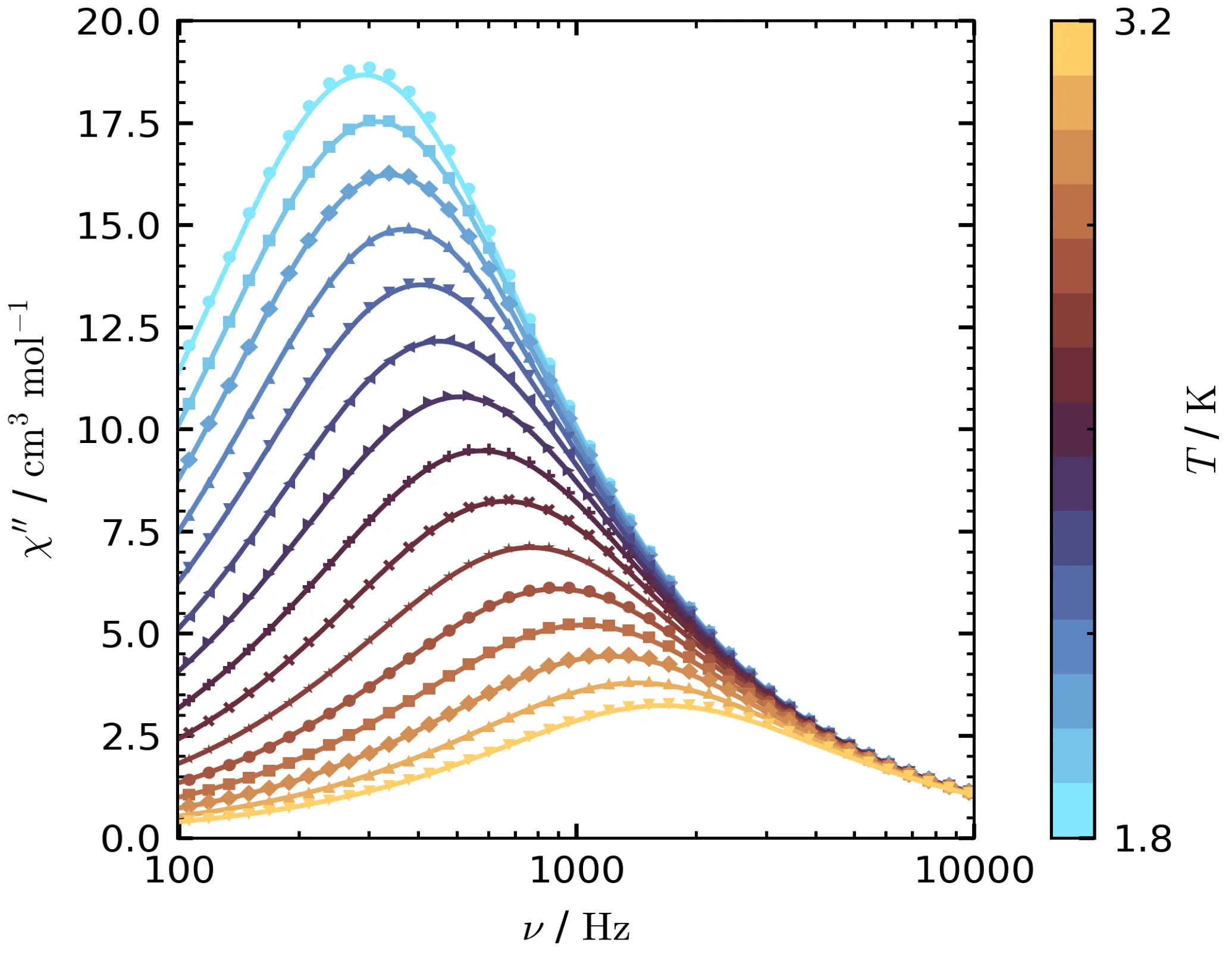
Previously, the behavior of these molecules was described using simplified models. Now physicists have built a full calculation "from scratch": they took the equations of quantum mechanics, added the interaction of the molecule with environmental vibrations, and calculated how the molecule responds to an alternating magnetic field. The result was compared with experiment for three compounds where magnetic ions of ytterbium, terbium, and dysprosium are diluted in a non-magnetic yttrium polymer matrix. The agreement was good both at low and high temperatures.
This approach shows for the first time that the complex behavior of molecular magnets can be predicted without fitting parameters. It is a step toward designing materials with desired magnetic properties on a computer, rather than searching for them blindly in the lab.
Single-molecule magnets can store one bit of information in a single molecule: this is millions of times denser than modern hard drives.