Copper instead of silver: how lasers strengthen solar cell contacts express
A solar panel is like a layered cake: a silicon base with thin metal strips on top that carry electricity to the wires. For a long time, these strips were made of silver: it conducts current excellently and doesn't harm silicon. But silver is pricey, so engineers are looking for alternatives. Copper costs a hundred times less and conducts almost as well, but it has a nasty habit: it tends to seep into silicon and disrupt its function.
In the new study, researchers took ready-made solar cells with copper contacts and ran a laser over them. The laser beam doesn't cut or melt everything in its path: it strikes precisely, like a jeweler's soldering iron. At the spots where copper touches silicon, intense local heating occurs for an instant. That's enough to fuse copper and silicon into a sturdy Cu3Si layer — a kind of bridge that firmly bonds the metal to the semiconductor and stops copper from going further.
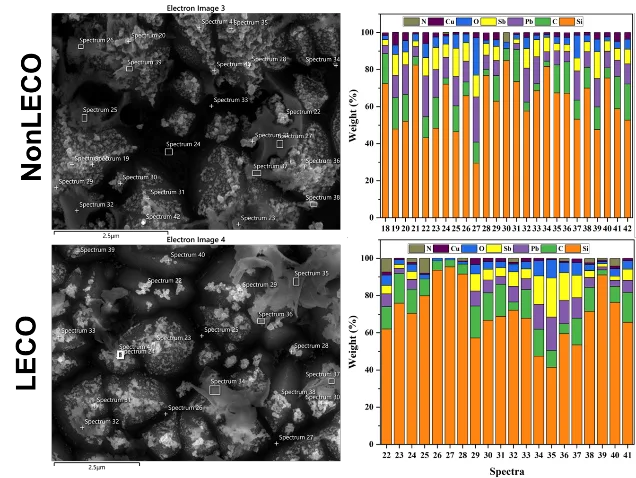
To verify the layer actually formed, the samples were examined under an electron microscope with atomic resolution. The images show that in laser-treated areas, copper and silicon formed a smooth, clean alloy, while in untreated areas, impurities and voids accumulated at the interface. After acid etching, the treated contacts remained intact, while untreated ones began to disintegrate. This means laser heating makes the contact not only conductive but also chemically resistant.
The practical benefit is clear: solar panels with copper contacts reinforced by laser perform just as well as those with silver, but cost significantly less. And since laser processing can be easily integrated into existing production lines, the method can be quickly adopted in factories. Copper, once a finicky substitute for silver, becomes a reliable and cheap conductor of solar electricity after a brief laser 'zap'.
The temperature at the laser heating point exceeds 1000°C for a fraction of a second — enough to melt copper, but too brief to damage the surrounding silicon.