Invisible Rings Snuff Out Starlight express
A star shines billions of times brighter than its planet. To see the planet, you need to quench the starlight, like shading your eyes with your hand to spot an airplane against the sun. Telescopes use a mask with a clever pattern that twists the star's light into a ring and cancels it out, while the planet's light passes through almost untouched.
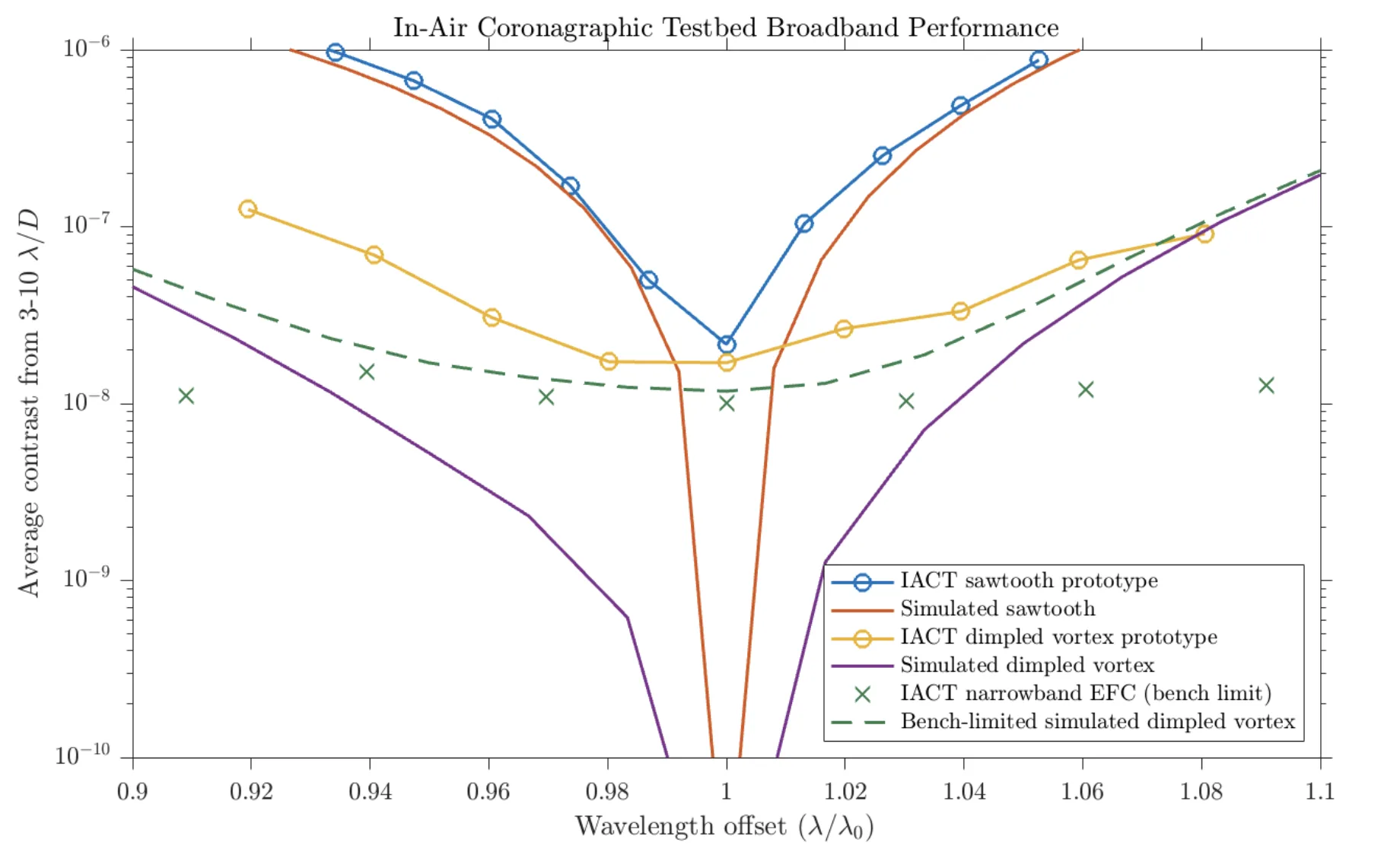
Earlier masks only worked with one polarization of light, like glasses that let through only waves tilted a certain way. Half the light was lost. Now, by etching tiny pits into the mask, the effect works for any polarization. In the lab, the mask was tested on a rig simulating a space telescope, and it dimmed starlight by a factor of one hundred billion.
This achievement is a step toward a telescope that could hunt for planets around other stars and, possibly, signs of life on them. The mask already works in air, just as it would in space, and is ready for flight.
Starlight is dimmed by a factor of one hundred billion — imagine spotting a firefly next to a stadium floodlight.
In the movie Interstellar, observing planets around a black hole would have required such masks — otherwise the light from the accretion disk would have blinded the cameras.